
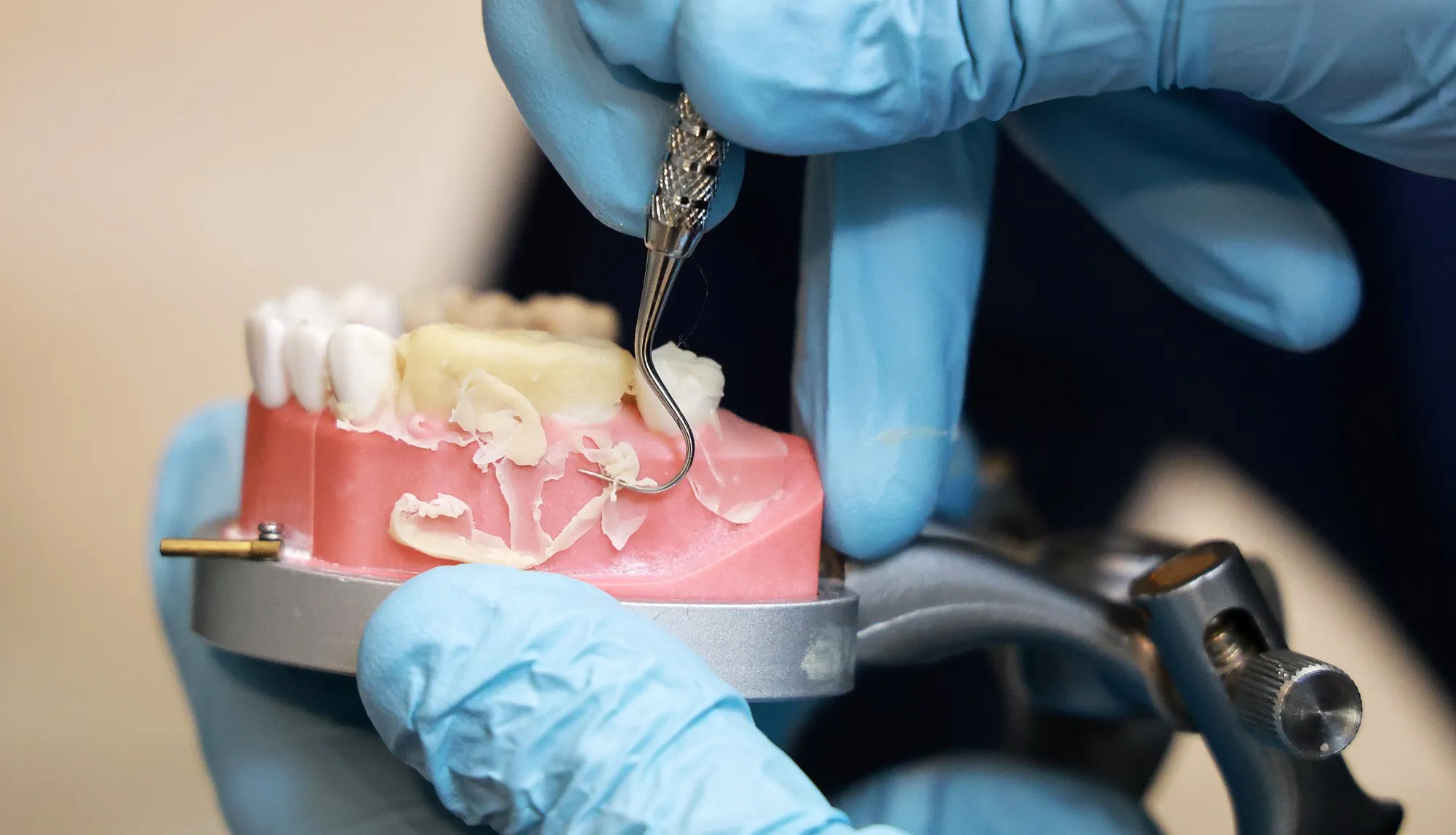
Replacing a filling or shaving down a crown is a routine part of dental care. But those procedures can also send plastic particles down the drain — waste that South Florida’s wastewater systems aren’t designed to catch.
Read more Wheel of Fortune announcer Jim Thornton fired after pedophile chat incident
Roughly 90% to 96% of fillings placed in Florida today are plastic-based, and almost none of the resulting waste is filtered before it reaches municipal water.
“These resin-based composites are just the cheapest thing to give people, and the fastest,” said Jensen Beach dentist Colt Canepa. Like all of the roughly 2,208 general dental practices across the tri-county area, his office flushes the plastic from shaved-off crowns and other dental appliances down the drain daily.
That plastic gets ground into microplastics during adjustments and ends up in municipal water, where its tiny size makes it impossible to filter out.
Canepa, who calls this “the plastic era” of dentistry, estimated that each dental office flushes about a shot-glass worth of microplastics and nanoplastics — smaller than micro — down the drain per day, a practice he worries is adding to the region’s plastic pollution problem.
Plastic already makes up an estimated 83% of South Florida’s waste pollution, numbers from TrashBlitz — crowdsourced environmental data collected during cleanup events — show.
Grinding down old fillings and crowns is only part of the picture.
Dental offices are also heavy consumers of single-use plastics for infection control — gloves, suction tips, disposable cups and protective barriers. The Eco-Dentistry Association estimates U.S. dental offices go through 1.7 billion plastic sterilization packets and more than 680 million plastic chair and equipment barriers every year.
A single operatory room can generate up to 384 grams of plastic waste a day — roughly the weight of nine golf balls — broken down into items like aprons and bibs, gloves, impression materials, face masks and suction tips, and a clinician seeing 10 patients a day can generate 400 to 800 grams of plastic waste a month from saliva ejectors alone. Every routine dental procedure utilizes an average of 21 single-use plastic items, resulting in approximately 354 grams of plastic waste per appointment.
Some see this as part of a pattern.
“A lot of different materials that we might once have used — something traditionally made of wood or stone — are now made of plastic,” said Erica Cirino, communications manager for Plastic Pollution Coalition and author of Thicker Than Water: The Quest for Solutions to the Plastic Crisis. “It’s really all around us.”
She said it starts with significantly limiting plastic production.
“The more plastic we produce, the more microplastics will be produced,” she said. “Plastics never break down — they only break into smaller pieces.”
Dental waste rules haven’t kept up
Dental waste is regulated, but only for an outdated material, Canepa said.
Offices are required to have filters that catch the silver‑mercury dust from amalgam fillings, the material dentists used before switching to plastic. The filters rely on the weight of the debris. Metal is heavy, so it sinks to the bottom, while plastic doesn’t.
“We’re required to have a filter that all our pipes drain into that captures the silver mercury dust from a dental office, even though only about 4% of all fillings are that anymore, and these filters rely on gravity sedimentation because metal is heavy, so it sinks down,” Canepa said. “These little plastic particles float right through it.”
Dentistry moved away from amalgam fillings after public concern grew that mercury exposure from the material could pose health risks. Patients began favoring resin composites, which are tooth-colored, mercury-free and cheaper to make.
“Instead of putting silver fillings in people’s teeth in this day and age, some 90% to 96% of all fillings that go in a person’s teeth are resin-based composites, the tooth-colored stuff,” Canepa said.
A handful of practices still offer amalgam fillings, he said, but “most dentists are losing their training in it, and it’s so difficult to do.”
Patient preference plays a role too.
“People don’t want to see silver in their teeth, and very reasonably so. As a result, even if those things are made of plastic, people are still going to pick them,” Canepa said.
Dental schools are part of the plastics pipeline as well. Nova Southeastern University’s College of Dental Medicine, South Florida’s most prominent dental school, sees heavy daily use of these materials, but did not respond to requests for comment.
Other dental schools in the area, however, are so small they don’t generate much waste — in fact, Miami Dade College’s Dental Hygiene Program’s recycling container has been in service for about a decade and still isn’t full.
Amalgam waste is separated and kept for recycling, according to LaKisha Moss, a dental hygiene associate of science program coordinator.
Read more Asking Eric: I don’t like the plans my son has for my funeral
And while the University of Florida’s dental school uses the same materials dental offices use, they don’t regulate or measure their plastic waste, a media spokesperson told the South Florida Sun Sentinel.
“Ninety to 120 students, every single night, probably shave down five plastic teeth practicing for their exams — every single night, for four years straight, right down the drain,” Canepa said.
Plastic isn’t the only material available. Ceramic dental appliances are also tooth-colored, but they typically cost about $400 more than resin composites.
“Not many people have that kind of money, so they just go, ‘give me what you’ve got,’” Canepa said.
Canepa’s ideal fix would be a filtration system built specifically to catch ground plastic — similar to the systems already used at dental laboratories, which manufacture crowns and dentures. Those labs run special filtered vacuums in their workspaces to capture the nanoplastic dust produced during grinding.
“We don’t have anybody that actually comes in and inspects us for how we’re disposing of this waste,” he said.
The Florida Board of Dentistry has regulation authority over the issue but did not respond to a request for comment.
The Florida Department of Environmental Protection told the South Florida Sun Sentinel that while the state has wastewater requirements aimed at keeping dental amalgam waste out of sewer systems, there are no state wastewater regulations specifically addressing microplastics.
“I’m choosing not to eat with a plastic fork or a plastic straw because I don’t want to have plastic in my body,” said Cirino, of the Plastic Pollution Coalition. “But we may not think about our dental appliances or fillings because it’s just a part of our healthcare.”
Plastic’s path to the reefs
Tracy Mincer, an associate professor of biology and biogeochemistry and chair of the Department of Natural Sciences and Mathematics at Florida Atlantic University’s Honors College, has spent years researching microplastics recovery from wastewater. He said one of the biggest obstacles is that these particles are difficult to measure in the first place.
Mincer is working with researchers at the University of Connecticut on a system that uses mussels to naturally filter microplastics out of wastewater, testing early versions at UConn’s wastewater treatment plant to see whether the approach could scale up.
“Measuring really small plastics is difficult,” he said. “We can speculate, but it’s really hard to make policy or tell people where the dangers are if we can’t measure them right.”
In simple terms, tiny plastic particles get washed down the drain and travel with wastewater to a treatment plant. Some get caught in the solid waste there and are removed, eventually heading to a landfill or, in some cases, being used in fertilizer. But the smallest particles can stay suspended in the water, potentially breaking into even smaller pieces during treatment, before leaving the plant with the treated water and eventually reaching rivers, coastal waters or the ocean.
Once microplastics reach the ocean, they can get caught up in what he calls “marine snow” — clumps of organic material that small marine animals feed on. Those animals absorb the plastic into their bodies, and it moves up the food chain as they’re eaten by larger organisms.
Coral can be among those small marine animals. As they feed on marine snow, they take in the microplastics — adding another layer of stress to the already ailing reefs spanning roughly 360 miles from the Dry Tortugas through the Florida Keys and up the southeast coast to Martin County — reefs also contending with heat, disease and bleaching.
“Corals can ingest microplastics, and after they’re ingested, they can interfere with feeding behavior, how corals clean themselves, and other normal physiological processes,” said Dorothy-Ellen Renegar, a research scientist at Nova Southeastern University’s National Coral Reef Institute.
A study published in Science found corals in contact with plastic debris had nearly 90% higher odds of disease, a link researchers trace to the bacteria and chemicals hitching a ride on the plastic itself.
For reefs already under pressure, Renegar said, geography doesn’t help.
“The reefs here in Southeast Florida are very close to what is a very highly urbanized coastline, so there’s a lot of wastewater discharge,” she said. “There’s inlet discharge, ports, a lot of boating activity, so our reefs are particularly vulnerable to anything that’s human related because of their location.”
Read more The fall of Rudy Giuliani: From ‘America’s mayor’ after 9/11 to ‘tragic American figure’