
Orange County commissioners are set to tackle the issue of data centers, the giant computing facilities that power AI but have prompted a nationwide backlash and become a key campaign issue in Florida’s race for governor.
Read more The 6 essential indoor gardening tools to help your plants thrive through the fall
The board may propose a moratorium at its meeting today.
The county’s development regulations do not specifically address data centers, which could be allowed under existing industrial zoning, despite fears that they could impact public resources, including water demands.
There are not currently any proposals to build a hyperscale data center in Orange County.
Commissioner Kelly Martinez Semrad asked in June for the county to schedule a discussion and also recommended a moratorium of “at minimum” a year.
County staff could use the developmental pause, she said, to focus on the impacts of data centers on the county’s natural resources, community character, economic landscape, zoning law implications and water and energy demands. And that should happen before the county considers any prospective data center applications.
“Rather than predetermine whether data centers are to be encouraged, prohibited, or restricted, the primary objective is to allow county staff sufficient time to proactively study the impacts these intensive utility-scale operations have on community welfare and Orange County’s ability to efficiently manage its water and energy supplies,” she wrote.
Across the country, communities and voters have raised concerns about data centers, which look like giant warehouses, some dwarfing the footprints of factories and stadiums, and can need more power than a small city, the Associated Press reported earlier this year. The demand for electricity can have a ripple effect that raises prices for everyone else.
The Lake County Commission voted last week for a 90-day pause on accepting applications for any large-scale data centers, Central Florida Public Media reported. In June, Commissioner Anthony Sabatini pushed for that pause, noting other Florida counties — including Citrus, Nassau and Pasco — have already imposed some form of moratorium because data centers can be “serious commitments to utilities and land use.”
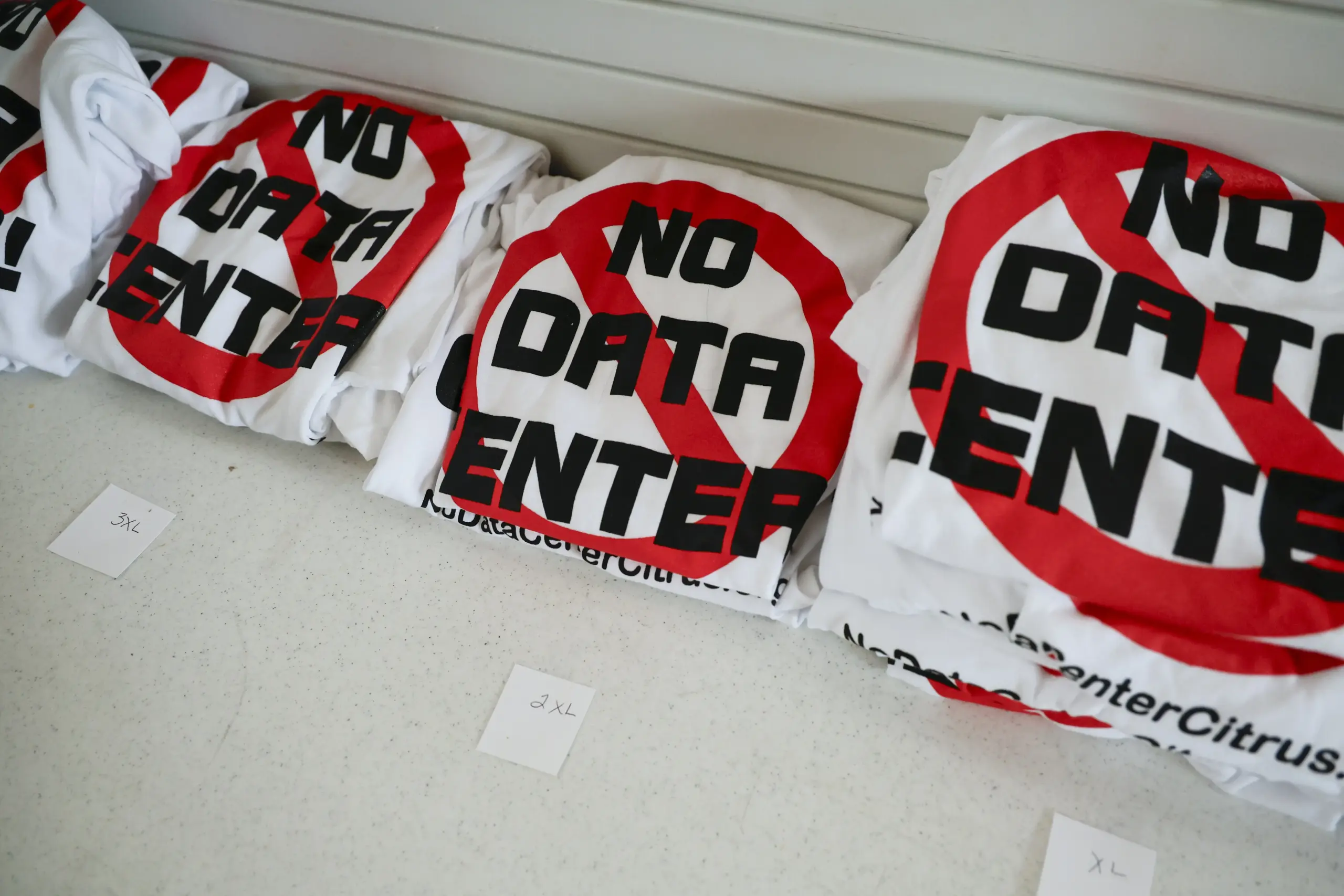
Last month, fierce community objections in Citrus County prompted a developer to withdraw a plan to build a massive data center in the town of Hernando. Duke Energy then revealed it’s been approached about building some data centers that would rank among the most power-hungry in the world, according to the Tampa Bay Times.
Two weeks ago, however, President Trump mocked rising worries about data centers on his Truth Social media site.
“The only reason communities throughout the U.S.A. should not want Data Centers is if they want to end up being backwards and poor,” he posted. “If they want to be successful and rich, with far lower taxes and jobs all over the place, let Data Reign.”
But the public is worried about them, and about half of U.S. states have imposed some restrictions.
In May, Gov. Ron DeSantis signed into law SB 484 which created requirements for the approval and operations of giant data centers, focusing particularly on power and water use and protecting communities from harm.
The signing took place in Polk County where Florida’s first “hyperscale” data center might be built.
Read more At Disney Springs, a new film gets up close with the capybara
The bill ensures local governments maintain authority to reject data center development in their communities and prevents data center costs from being passed on to consumers, including electricity costs for residential customers.
A Gallup survey in March showed seven in 10 Americans oppose constructing data centers for artificial intelligence in their local area, including nearly half, 48%, who are strongly opposed. Barely a quarter favor such projects, with 7% strongly in favor.
In Florida’s race to succeed DeSantis, Democrat David Jolly has said he’d support a one-year, statewide moratorium on data centers, if elected. Republican Byron Donalds has said he supports new centers, though he noted state and local regulations can help decide where they go.
Commissioner Nicole Wilson said a local conversation is needed and a moratorium should be an option.
“We are already struggling with the cost of increasing power demands and water demands and we know land in Orange County is very much at a premium,” she said. “I think we have to do something that is protective.”
She questioned whether communities could count on “real meaningful protections” from Washington.
Semrad said she hoped the discussion would find board consensus for a moratorium and spur the county to develop its own rules and regulations for the location and operation of data centers, computing facilities that enable AI programs.
She said she was concerned AI data centers might seek locations in rural areas and invite sprawl.
Kim Dinkins, policy and planning director for 1000 Friends of Florida, a not-for-profit group focused on smart growth, said the organization has prepared but not yet released a “best practices” guide for handling data centers.
“Local government should look at their current landscape,” Dinkins said. “We don’t need to use agricultural lands for data centers…We have a lot of industrial designated places in the state that haven’t been developed yet.”
She urged local governments, “Ask all kinds of questions.”
Dinkins said measurable standards need to apply before construction starts and after operations begin.
Data centers pose issues for local government to regulate from size to resources to noise.
“Find out as much as you can to protect your citizens from impacts as much as possible,” she said.
Read more Show off your feathered friends with the best bird leashes