
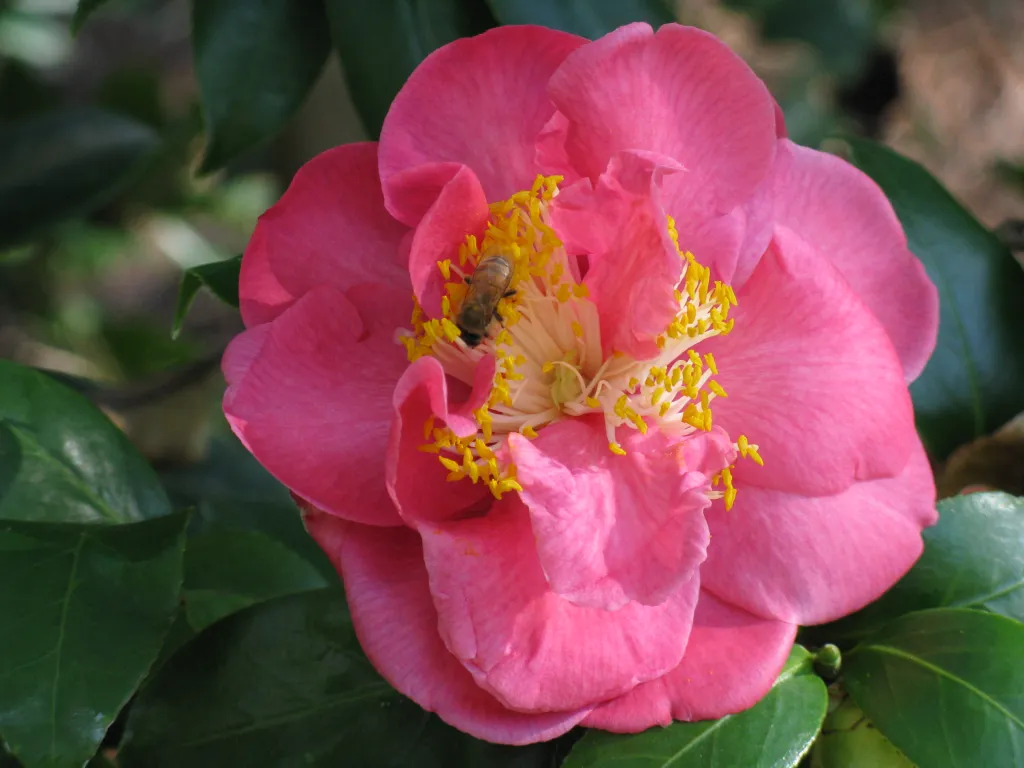
Q: Some of the leaves on our camellias are turning a brownish, grayish color on top but they are green on the bottom. Some of the leaves have started falling off to where I have stems with no leaves. What should I do?
Read more Comical ‘Theatre People’ gently spoofs, salutes artists | Review
A: Even the healthiest camellias can develop blemishes on the surface of their leaves. Normally this is a form of algal leaf spot with the gray to brown colors you describe. Often these combinations of a fungus and algae grow on shaded leaves in areas with poor air movement.
Algal leaf spot normally causes minimal harm and is found on older leaves that, within a year or two, drop from the camellias. Fungal leaf spots and diseased stem portions can also develop and may be contributing to the plant decline.
Much of these blemishes and decline can be reduced by making sure there is plenty of room for the plants to grow. Some overhead pruning may be needed but don’t totally eliminate the shade. Camellias like filtered sun.
Prune away dead stems and apply a copper fungicide following label instructions to reduce algal leaf spot and diseases that affect camellias. Repeat applications may be needed.
Q: I love hydrangeas, but haven’t had much luck keeping them large, with lots of flowers, like in Northern states. I just got two new plants for an area with morning sun and shade the rest of the day. Is that the proper lighting for them? I like pink or purple flowers not blue? When should I add lime to make them pink?
A: Hydrangeas have a tough time producing their Northernlike displays in Central Florida. Our intense sun, periods of dry weather and extended summer heat and humidity create a challenge for local growers. You have selected an ideal spot with sun in the morning and some shade the rest of the day. A site with filtered sun all day is also ideal. Now you have to provide moist, alkaline soil to keep the plants growing and produce the pink blooms. Start a successful planting in a site enriched with organic matter. This helps keep the soil uniformly moist. Then test the soil acidity. You are looking for a soil pH of 7 or above. Apply lime if need to raise the pH level. Use small quantities as needed of no more than a pound to a 10-square-foot area. Keep the soil moist, making sure the root ball is wet at each watering. Fertilize in March, May and October with a slow-release product following label instructions.
Plant Doctor: More help for plants damaged by freeze — next are kaffir lilies, shrubs
Q: There looks like small Spanish moss sprouting on one of our bushes. Does it have any negative effects on the health of the plant?
Read more Se7enbites Trina Gregory: ‘If you humanize it, you can make a difference’
A: Most of the time Spanish moss has no effect on trees and shrubs growing in local landscapes. It uses the plants as a coatrack for support while it takes water and nutrients from the air. Residents often consider it part of the normal Florida Look. In a few instances the moss can outgrow landscape plants. One instance is with crape myrtles. Spanish moss and crape myrtles seem to have a love-hate relationship. If the crape myrtles are not making good growth, the moss can take over and hide foliage sites. In this case it should be removed. Otherwise, most plants with the moss grow happily together and it can be ignored.
Q: Leaves on my azaleas have dark spots on them. Any idea what’s wrong and can I apply a control?
A: Some leaf spots are just normal on plants, and azaleas seem to develop their share. The most common is the cercospora leaf spot that starts to affect azalea foliage during summer. It’s worst on plants sheltered from good air movement that would keep foliage overly moist. Some leaf spot is normal and can be ignored. Should fungal leaf spots become a major problem — and cause lots of leaves to become blemished, turn yellow and drop prematurely — a control would be needed. Select a fungicide that is labeled for leaf spot and begin applications at the start of the rainy season. Continue if needed monthly into the fall following label instructions.
Q: I was starting to cut dead flower stalks from my amaryllis when I noticed one stalk with what looks like bulbs at the base of the wilted blooms. Can I save and plant these bulbs?
A: Use this opportunity to grow more amaryllis — but not from bulbs, from seeds. What you noticed is a capsule loaded with seeds. When it starts to yellow and crack open, harvest the waferlike seeds to sow in a potting mixture. Use a shallow tray and scatter the seed over about a 2-inch layer of soil. Cover lightly and keep moist to have seedlings sprouting in about two weeks. Continue to water when the surface begins to dry, and grow in a filtered sun location. Transplant seedlings as they continue to grow larger, and fertilize every four to six weeks during the warmer months. This adventure growing the flowering plants takes about three years before they’re blooming.
With May upon us, here’s the to-do list for Central Florida gardeners
Q: Sections of my mature ligustrum trees are dying. What could be the problem?
A: Older ligustrum trees become susceptible to what pathologist call cankers. These are usually fungal infections that have entered though wounds caused by pests, pruning or flexing of ligustrum limbs. Usually the disease organisms are weaker types but able to affect older shrubs. The only cure is to immediately prune out the dead and declining portions back into healthy wood. It would be best to cut these limbs six or more inches past where the affected portions of limbs or trunks are noted. After pruning, apply a copper fungicide or similar product following label instructions. Also, make sure the ligustrum trees remain moist, and fertilize with a slow-release landscape product two to three times a year.
Tom MacCubbin is an urban horticulturist emeritus with the University of Florida Cooperative Extension Service. Write him: Orlando Sentinel, P.O. Box 2833, Orlando, FL. 32802. Email: [email protected].
Read more Commentary: Property-tax reform requires refocusing