
It has been more than a year and a half since the moon had a successful lander touch down on its surface, despite several commercial companies having been lined up to try again in 2026.
Read more 2 Central Florida restaurants shut down after health inspections last week
One company, though, announced this month that they are on track to launch before the calendar flips to a new year.
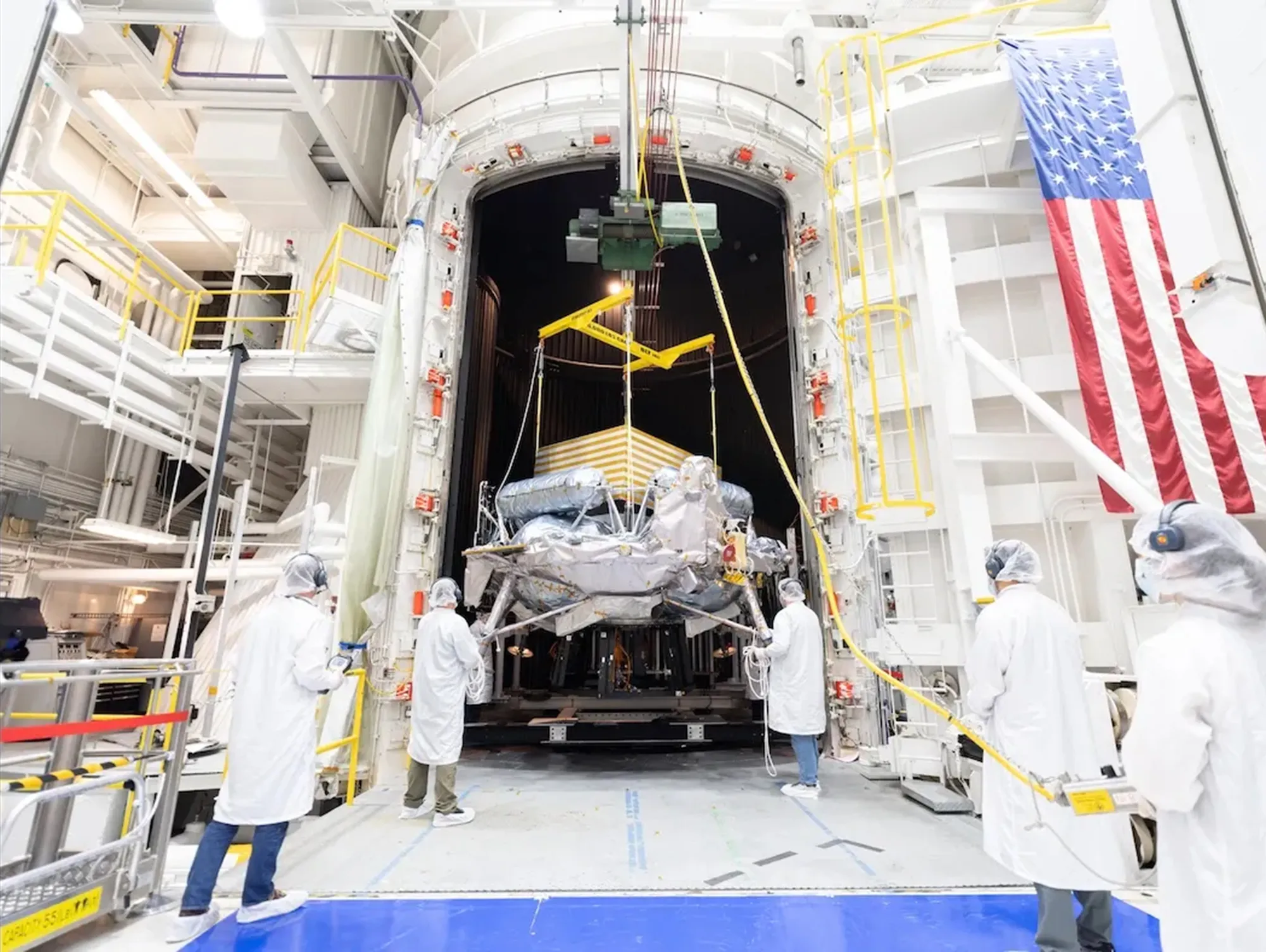
Voyager Space, which in June acquired Astrobotic Technology, said its large Griffin lander has completed acceptance testing at NASA’s Jet Propulsion Laboratory. Its next stop is what had been Astrobotic’s headquarters in Pittsburgh for final preparations before getting shipped to the Space Coast.
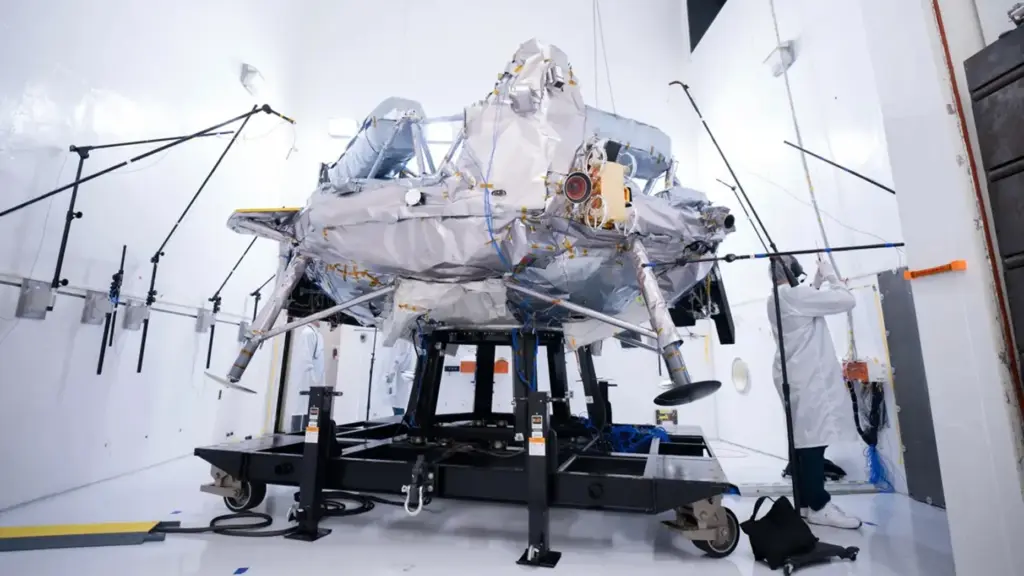 Microphones are arrayed around Voyager Technologies’ Griffin-1 lunar lander on Aug. 12, 2026 during acoustic testing that mimics the intense roar of launch. Giant horns powered by compressed gaseous nitrogen blast the spacecraft with up to 153 decibels inside a sealed acoustic chamber at JPL. (NASA/JPL-Caltech)
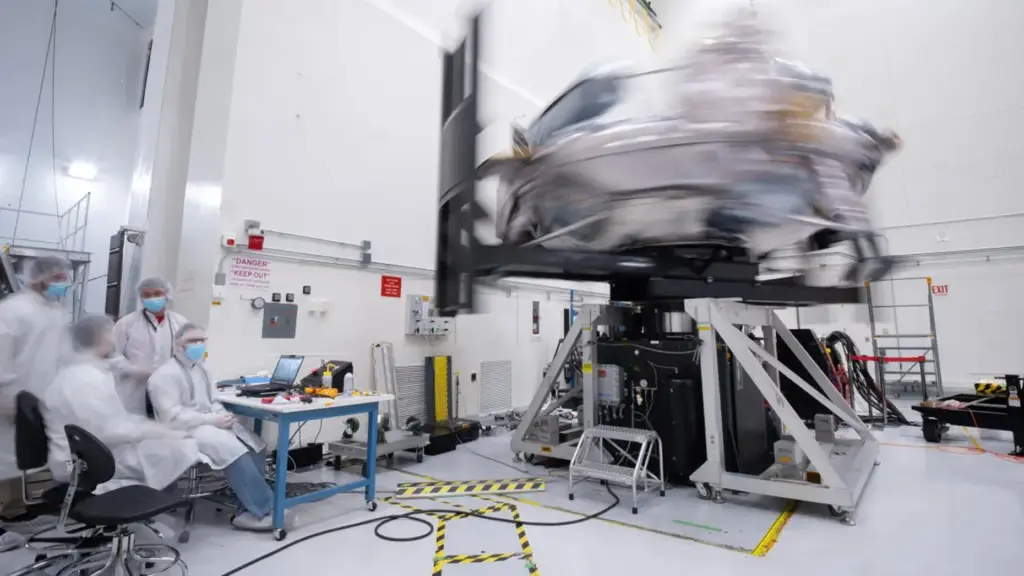 Voyager Technologies’ Griffin-1 lunar lander spins on a special table in a test to measure its mass properties, which enables engineers to look for any unexpected wobbles as they assess how the vehicle will move through space. The test took place in JPL’s Environmental Test Laboratory on July 20, 2026. (NASA/JPL-Caltech)
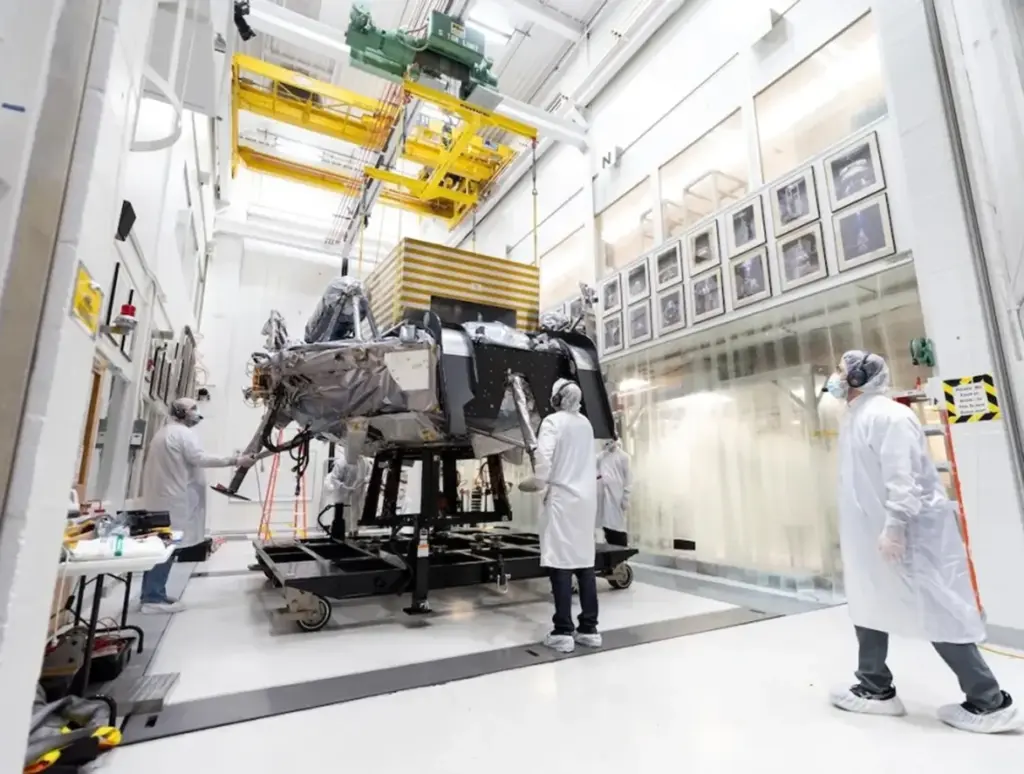 The testing team moves Voyager Technologies’ Griffin-1 lunar lander through a hallway to the 25-foot Space Simulator at NASA’s Jet Propulsion Laboratory. The corridor features photos of the historic spacecraft that have been tested in the facility since the 1960s, from the Ranger program to NASA’s Europa Clipper. (NASA/JPL-Caltech)
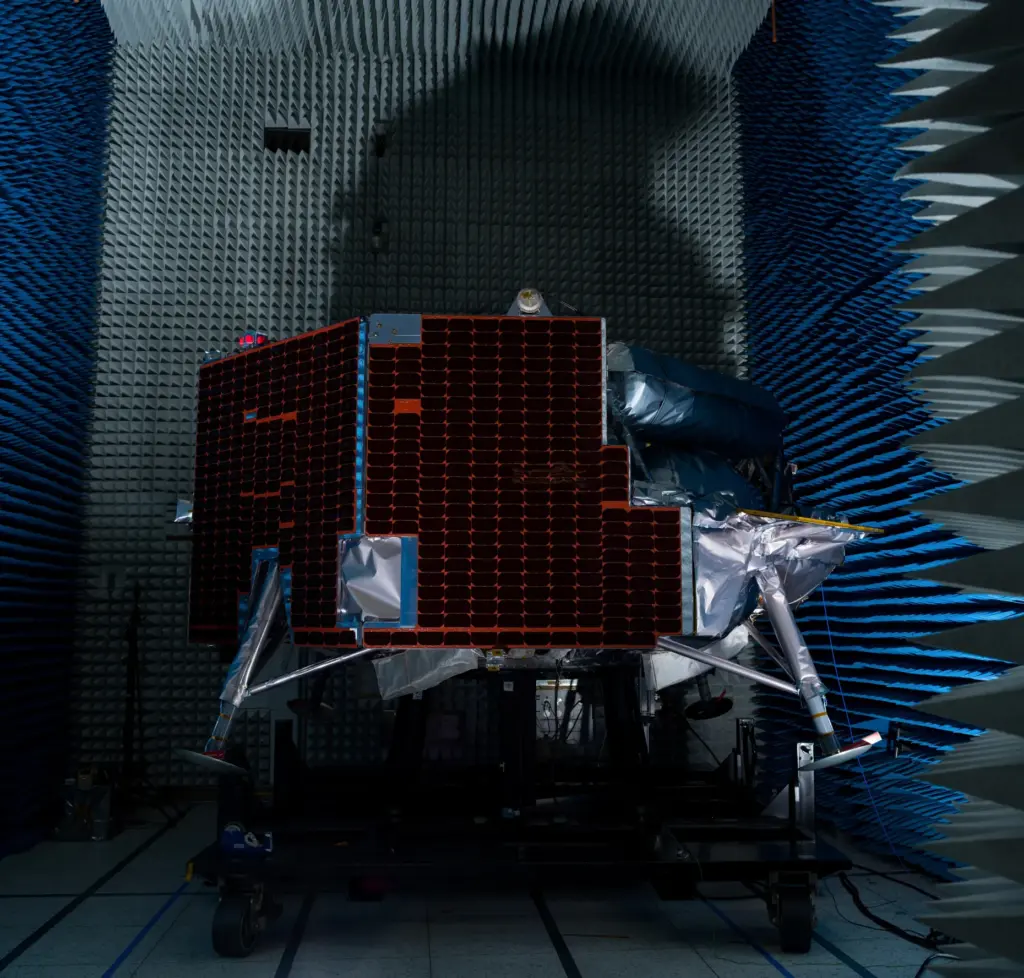 Long foam spikes that absorb sound waves and electromagnetic waves cover the walls of a specialized anechoic chamber at JPL where Voyager Technologies’ Griffin-1 underwent electromagnetic interference and electromagnetic compatibility testing. (NASA/JPL-Caltech)
“Griffin-1 marks a turning point for commercial lunar infrastructure,” said Voyager Chairman and CEO Dylan Taylor in a press release. “When Griffin touches down, it will be the largest commercial payload delivery in lunar history.”
To get it there, the company has booked a ride on SpaceX’s powerhouse Falcon Heavy rocket, which would lift off from Kennedy Space Center’s Launch Pad 39-A on what would be the rocket’s fourth mission this year and 15th ever.
NASA Administrator Jared Isaacman earlier this month signaled he expected it to launch before 2027 as well. The Griffin mission falls under NASA’s Commercial Lunar Payload Services (CLPS) program, which to date has launched four previous missions.
Isaacman earlier this year said CLPS task orders would be ramping up as the agency tries to fulfill its goal of creating a sustained moon base.
“We know so little from what is a combined 80 hours of lunar astronaut EVA time across the Apollo missions, and that was more than a half century ago. So we are not jumping right into the glass dome moon base as a service,” he said. “We intend to take an iterative approach, sending a demand signal to industry for a lot of landers and rovers and tech demonstrations and all the scientific payloads these missions can accommodate.”
He announced four additional missions under the program so far this year and said he expected to ramp up to add an additional 10 task orders each year starting in 2027. The four new contracts had brought the total of NASA missions from multiple providers to 17 in the coming years.
For Griffin, it aims to carry more than 1,100 pounds of cargo, including 10 payloads from six countries to the lunar south pole. One of those is commercial company Astrolab’s FLIP rover. Astrolab is one of two companies that was awarded the contract to eventually build and land rovers for the astronauts to use.
“This mission will help mature the capabilities necessary to support future lunar terrain vehicles (LTV), autonomous operations, logistics and especially the LTV astronaut mobility,” Isaacman said.
The Griffin mission has been long in the making, originally to have launched before the end of 2024, and originally carrying a different rover named VIPER for NASA. That payload was pulled, though, and then-Astrobotic spent more time developing the sizable lander and lining up a different customer.
As a CLPS provider, the company receives a fixed amount from NASA to provide a service, and the company has to line up their own ride to space and provide all the logistic while on the moon, including communications.
Read more With 2 weeks to go, new UNF poll shows Donalds and Jolly neck and neck
Astrobotic was actually the first company to attempt a moon lander mission under CLPS with the launch of its smaller Peregrine lander back in January 2024. A problem after deployment, though, forced the company to call off any lunar landing attempts and bring Peregrine back to burn up in Earth’s atmosphere.
This would be the company’s second attempt at a lunar landing, but it has won at least two more CLPS contracts since.
Two other companies made bigger and better headlines on their launches, first with an Intuitive Machines launch later in 2024 that actually made it to the moon, but had limited success on the surface after having tipped over after touchdown. That company saw a similar tipped lander on its second mission in 2025.
It was not until Firefly’s Blue Ghost lunar lander made it to the moon in March 2025, and stuck that landing that a CLPS mission saw a fully successful mission
That seemed to be the moment the CLPS program was going to ramp up into high gear. At 2026’s offset, both Intuitive Machines and Firefly were set to for follow-up missions while Astrobotic’s Griffin seemed on track to fly as well.
But new CLPS provider Blue Origin also had what seemed might be the first one to make it back with its uncrewed Blue Moon MK1 lander named Endurance. But then Blue Origin lost its ability to launch it into space in late May when a test at Cape Canaveral Space Force Station’s Launch Complex 36 blew up a rocket on the pad.
Firefly has since pushed their mission into 2027, which will feature a second lander along with an orbiting transfer vehicle called Dark Elytra, both headed for far side of the moon.
Intuitive Machines’ IM-3 mission will once again feature the same Nova-C lander that tipped over on its two previous missions, but that flight too has now been pushed to the first quarter of 2027. That flight will also feature the company’s first lunar communications relay satellite, Altus-1.
As for Blue Origin, the company’s lander had completed an environmental testing at Houston’s Johnson Space Center earlier this year and had integration test runs lined up. It’s essentially just waiting for its ride to be available.
The company still forecasts its efforts to rebuild Canaveral’s LC-36 will be complete before the end of the year. NASA’s particularly keen to get this mission to the moon as the MK1 lander will pave the way for the human-capable Blue Moon MK2.
NASA plans to have at least 20 robotic missions using the CLPS program for missions though 2029, helping solidify the groundwork for the moon base’s next phases with a goal of a semi-permanent crew presence.
“We are leveraging the NASA playbook from the 1960s figuring out what works and what doesn’t in this epic science of survival,” Isaacman said.
Read more Old Town merchants groove to new owners’ plans to invest in Kissimmee attraction