
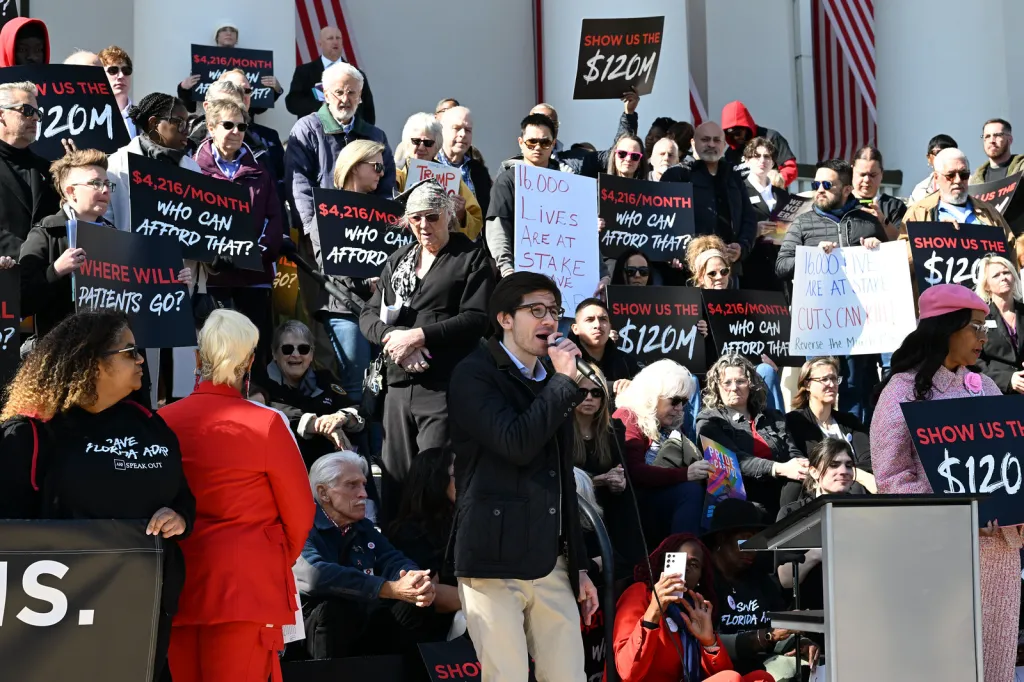
After months of rallies and lobbying by advocates, more than 12,000 Floridians who participate in the AIDS Drug Assistance Program will once again qualify to receive life-saving medication after lawmakers reached an agreement Sunday night to reverse cuts to the program.
Read more South Carolina Senate rejects Trump’s call to redraw congressional map for midterm elections
The proposed state budget for 2026-27 includes $75 million to the Florida Department of Health to run the AIDS Drug Assistance Program through next June, restores eligibility to 12,000 to 16,000 more Floridians living with HIV, and reverses the drug restrictions the Department of Health had imposed.
It also requires an independent organization to monitor the program, which would require greater transparency from the Department of Health.
“Florida’s health department walked away from people living with HIV. Lawmakers brought them back,” said Esteban Wood, director of Advocacy & Legislative Affairs at AIDS Healthcare Foundation.
As of March, the Department of Health had cut eligibility to participate in the program from from $63,840 a year (400% of the federal poverty level) to about $21,000 a year (130% of poverty).
“With the cost of living deteriorating, that is not a lot of money for folks living with HIV who have a multitude of conditions and are uninsured. We all know the cost of healthcare is through the roof,” Wood said Tuesday.
The Department of Health also had ended insurance premium assistance and dropped Biktarvy, the most prescribed HIV medication in the country. HIV medication is critical to keeping the virus suppressed.
Health officials did not respond to a request for comment on Tuesday.
On its website at the time, the Health Department said it was acting because of a $120 million budget shortfall caused by federal funding cuts.
However, Gov. Ron DeSantis signed legislation in late March appropriating $30.9 million in stopgap funding to get the AIDS Drug Assistance Program through June 30 at roughly its previous levels.
The AIDS Drug Assistance Program pays for the expensive medications for about 28,000 Floridians. As part of the new 2026-27 budget, enrollment to get into the medication program will be capped at 21,000 individuals. As of April, 17,500 people were participating, according to the AIDS Healthcare Foundation.
Read more Supreme Court rejects Florida’s bid to sue states over truck licenses for immigrants
Lawmakers are scheduled to vote on the budget on Friday. It will take effect on July 1.
Frustration on this issue has been mounting for months. State legislators, including the Republican majority party’s committee chairs, repeatedly said they were stymied in efforts to get accurate information from the Florida Department of Health about program recipients, health department spending and other issues relating to the drug assistance program.
The 2026-27 budget requires the Department of Health to submit monthly reports to the Governor’s Office of Policy and Budget that include expenditures, appropriations, cash balances, drug rebates, and enrollment data. The reports must disclose any risks to the program’s sustainability. The Department of Health must also share data with an independent agency, the Office of Program Policy Analysis and Government Accountability, which will submit an overall evaluation of the drug assistance program to the governor by Jan. 31, 2027.
Wood at the AIDS Healthcare Foundation said Tuesday that he has been dismayed by the Department of Health’s lack of transparency and welcomed this new oversight of the drug assistance program. “It needs an independent eye,” he said.
Over the last few months, advocates pushing to maintain HIV funding held more than a dozen rallies around the state, two rallies at the state capitol, a protest in front of the Department of Health offices, lobbied in Tallahassee, and ran a statewide public awareness campaign.
Behind the scenes, advocate Michael Rajner seized every opportunity to press the issue and keep it in front of Republican and Democratic lawmakers. He was part of a coalition that included representatives of the AIDS Healthcare Foundation and the Equality Florida LGBTQ+ advocacy organization.
Rajner, chair of the Broward County Human Rights Board, said many Democratic and Republican lawmakers believed the health department cuts were shortsighted once they were educated.
“It’s not every day you feel like you go to Tallahassee and your voice is heard, but this time, it was heard,” Rajner said Tuesday. “This proves advocacy is alive and works.”
South Florida Sun Sentinel health reporter Cindy Goodman can be reached at [email protected].
Read more Federal judge rejects petition to release ‘Uncle Lou’ from ICE detention