
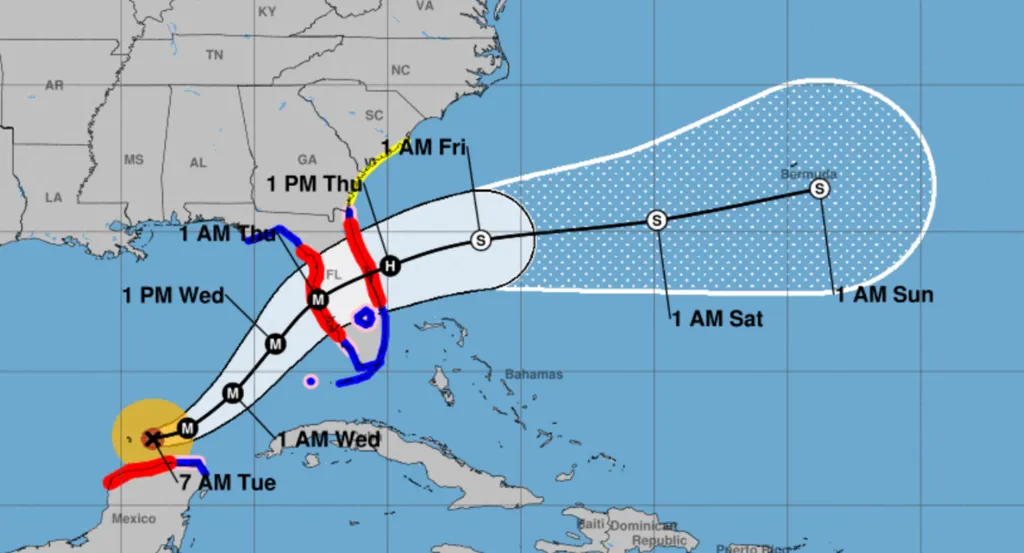
Forecasting hurricanes can be a big challenge, as small atmospheric changes can quickly shift a storm’s path or intensity. Predicting where a hurricane will go and how strong it may become requires forecasters to analyze massive amounts of data in a short period of time.
Read more Kids keep getting stuck in hospitals, even after being cleared for discharge
Now, artificial intelligence is becoming a helpful tool that meteorologists could use to improve forecasts and provide earlier warnings before storms hit. Joshua Wadler, an assistant professor at Embry-Riddle Aeronautical University who studies hurricanes and drone technology, says AI can rapidly process huge amounts of information and generate more forecast possibilities than traditional forecasting models.
Traditional weather models rely on physics-based equations to simulate the atmosphere and predict storm movement. While those models remain essential, they can take significant computing power and time to produce forecasts.
AI models work differently. Instead of relying on equations, they learn from decades of historical data and recognize patterns like ocean temperatures, wind structures, atmospheric pressure and storm behavior. By studying past hurricanes, AI models can identify similarities with current storms and help forecasters detect important changes earlier. That can be especially valuable during hurricane season, when storms can rapidly intensify in a short amount of time.
However, experts say AI still has limitations.
“Now AI models are built off of historical data,” Wadler explained. “And so if you get a storm that is very atypical or just something that really hasn’t happened before, we would expect them to struggle.”
Read more Experimental hepatitis B drug may offer ‘functional cure’ for some patients
Still, when weather patterns resemble past hurricanes, AI can be highly effective at recognizing relationships and predicting future storm behavior.
Aaron Hill, a meteorologist with the University of Oklahoma says advances in AI may eventually allow forecasters to predict dangerous weather more in advance.
“So we can make further predictions seven, eight, nine, 10 days out in the future and they’re still accurate,” Hill said. “Hopefully we can start to make predictions two to three weeks ahead of time.”
Even with those advances, experts say AI will not replace meteorologists. Human forecasters are still needed to interpret information, communicate risks and help people make decisions before storms hit.
As hurricane forecasting technology continues to advance, meteorologists say artificial intelligence will serve as another tool to help improve forecasts and give communities more time to prepare.
Read more Today in History: May 29, first woman races in the Indianapolis 500