
Since 2020, roughly 30 tropical systems have undergone rapid intensification at some point in their lifecycle — a jump nearly five-fold since 1980. And that period of intensification can be the difference between if you need to prepare for a Category 3 storm or a Category 5.
Read more Low wages, empty plates, heavy toll: Rethinking suicide prevention
Rapid intensification is nothing new but with Earth’s ever-changing climate, the odds of intensification have jumped significantly. Rapid intensification is defined as a storm increasing its maximum wind speed more than 35 mph in a span of 24 hours. Back in the 1980s, a storm undergoing rapid intensification at any point in its lifecycle had a 1-in-100 chance — or 1%. Today, those odds have jumped to 1-in-20, or a 5% chance.
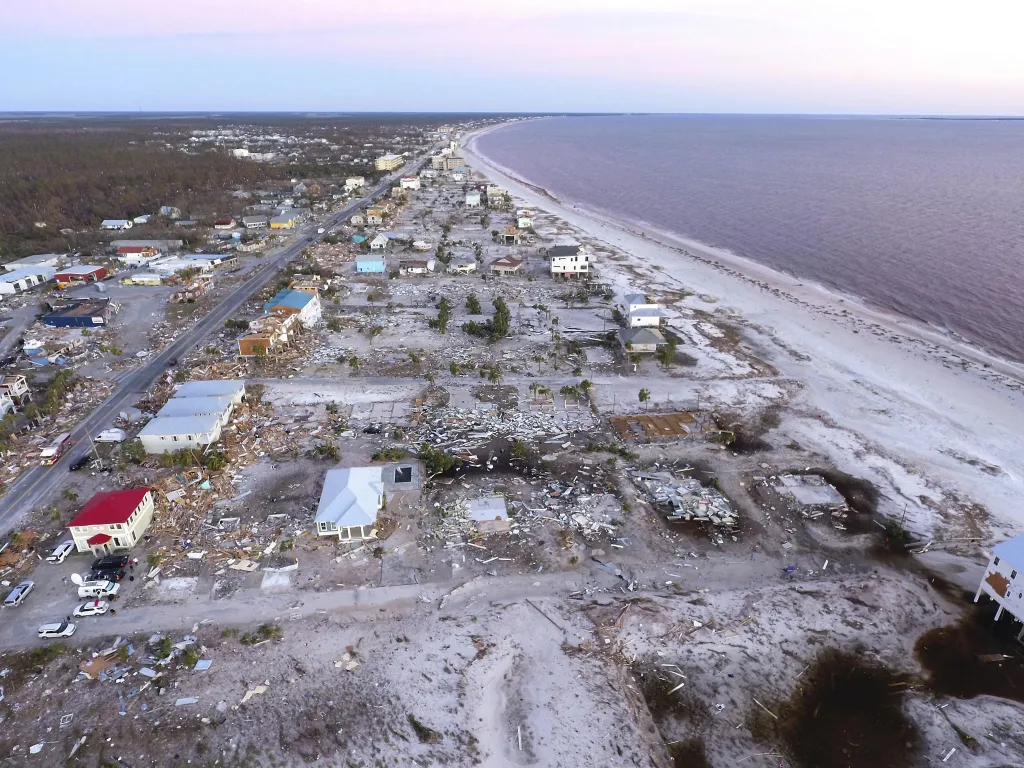
Storms like 2019’s Hurricane Michael, which struck the Florida Panhandle as a Category 5 storm as well as recent storms like Ida, Ian, Beryl and Milton have all undergone rapid intensification, with many of these storms doing so just before landfall. It’s a growing concern for residents along both the Gulf and Atlantic coasts.
States like Florida have started to combat the risk of rapidly intensifying storms by turning the focus from a storm’s cone to a storm’s risks. While you can’t stop Mother Nature, you can prepare for its worst.
John Scott, Brevard County’s Emergency Management Director said he — and other emergency managers across the state — plan multiple contingencies as a storm develops.
“We call it our three-board approach,” Scott said. “We’re never planning for just what the current forecast is. We’re building multiple scenarios. We have a current track option, and then a worst-case one.”
Having multiple options allows county agencies to respond appropriately in the immediate aftermath of a storm. They’ll stage for the worst-case scenario right from the start and ramp up or down their response as the storm evolves.
Read more WHO chief lands in Congo, saying Ebola outbreak ‘can be stopped’
“We’re sort of planning in that tri-parallel, so that it’s not a matter of, ‘OK, we must rebuild and start over.’ It’s just a matter of moving from one scenario to the other,” he said.
Scott says residents can do the same thing to prepare as storm season approaches.
“We try to have that same conversation with our residents. Get your disaster supply kit ready, regardless of what this (season) does. Shutters are up, those are a good thing regardless,” Scott said.
Having everything you need to brave a Category 5 storm allows you to ramp up or down your preparedness level.
Consider building a hurricane kit that can last upward of one month. Then utilize that kit throughout the season, restocking it as you encounter a storm. And remember to tune into Spectrum News, to help you “Be Prepared, Not Scared” this hurricane season.
Read more Trump administration grants rare TPS reprieve, extending protections for 11,000 Lebanese