
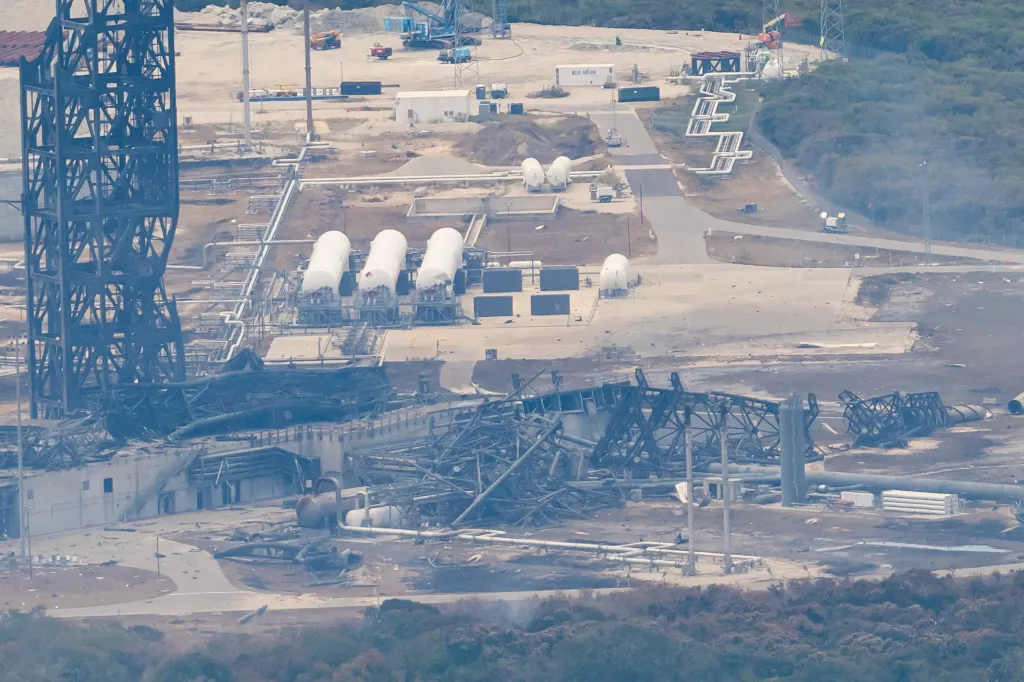
Blue Origin officials were able to get a closer look at the massive damage caused by a devastating explosion of its New Glenn rocket at its Cape Canaveral launch site on Saturday.
Read more A rematch of 1999: It’s Spurs vs. Knicks for NBA title, after teams met in NBA Cup final as well
“We have regained some access to Launch Complex 36 and are actively investigating the hotfire anomaly,” CEO Dave Limp said. “We will start clearing the pad soon and have a good rebuild plan in place.”
A static fire test of a New Glenn rocket that was being performed in preparation for what would have been the rocket’s fourth-ever flight, resulted in an explosive fireball that could be seen from Orlando and measured 2.5 on the Richter scale, according to the U.S. Geological Survey. While no one was injured in the incident, much of the launch pad and some of the surrounding infrastructure was destroyed.
Here’s our video of the explosion at Launch Complex 36. It happened about 9 pm ET (0100 UTC) as Blue Origin was beginning a static fire test of its New Glenn rocket.
Watch live views: https://t.co/tm2wZQmAVD pic.twitter.com/PmbgQC6Qmq
— Spaceflight Now (@SpaceflightNow) May 29, 2026
Images of the launch complex the day after the explosion showed that one of the two lightning towers on the site had crumbled, and were among the debris piles that included the rocket as well as the transporter erector tower that had been holding it in place.
Limp noted some good news, though. Within the close-by integration facility, a building just adjacent to the launch pad, the company’s remaining rocket hardware, including the first-stage booster that flew on the company’s second and third missions, as well as some second stages for its massive rocket “appear healthy from quick looks.”
Grateful that all personnel were safe during last nights New Glenn anomaly. That’s the most important thing. Now, let’s send our best wishes to Blue Origin employees as they work to assess the situation, determine what went wrong, and with time, rebuild.
📸 @NASASpaceflight pic.twitter.com/q1PVX63nLI— D Wise (@dwisecinema) May 29, 2026
The static fire test also did not include the payload that was supposed to fly on the rocket’s upcoming mission. The NG-4 flight had been on the schedule for as soon as next week to fly up 48 satellites for Amazon. Those remain unharmed. The mission would have been the first of 24 contracted flights by Blue Origin to proliferate the Amazon Leo satellite constellation, which is aiming to compete with the likes of SpaceX’s Starlink system.
Those missions are delayed indefinitely, though, as Blue Origin has no other New Glenn launch site other than LC-36.
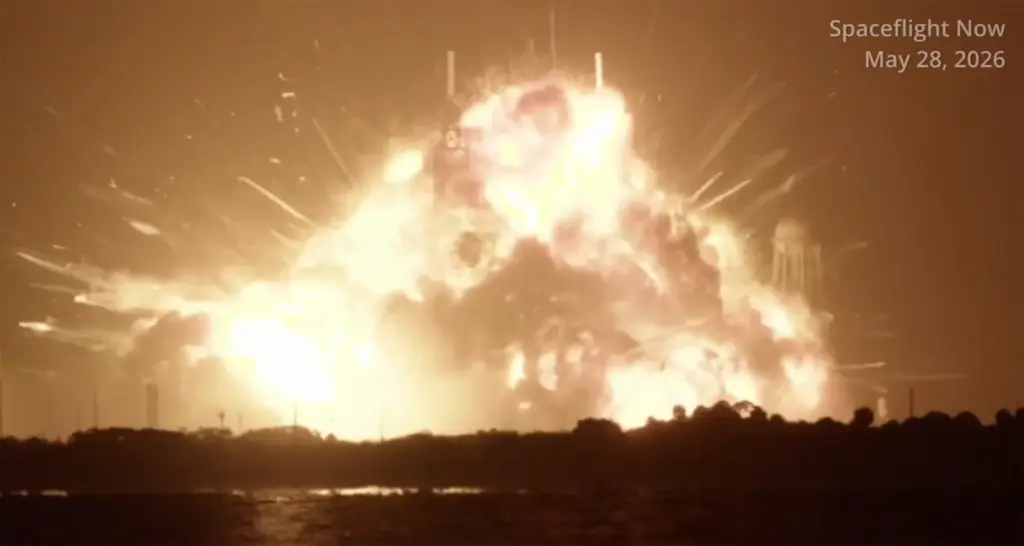 Video captured by Spaceflightnow.com shows the fireball engulfing a Blue Origin New Glenn booster at Cape Canaveral Space Force Station’s Launch Complex 36 on Thursday, May 28, 2026, during a hotfire test. (Courtesy/Spaceflightnow.com)
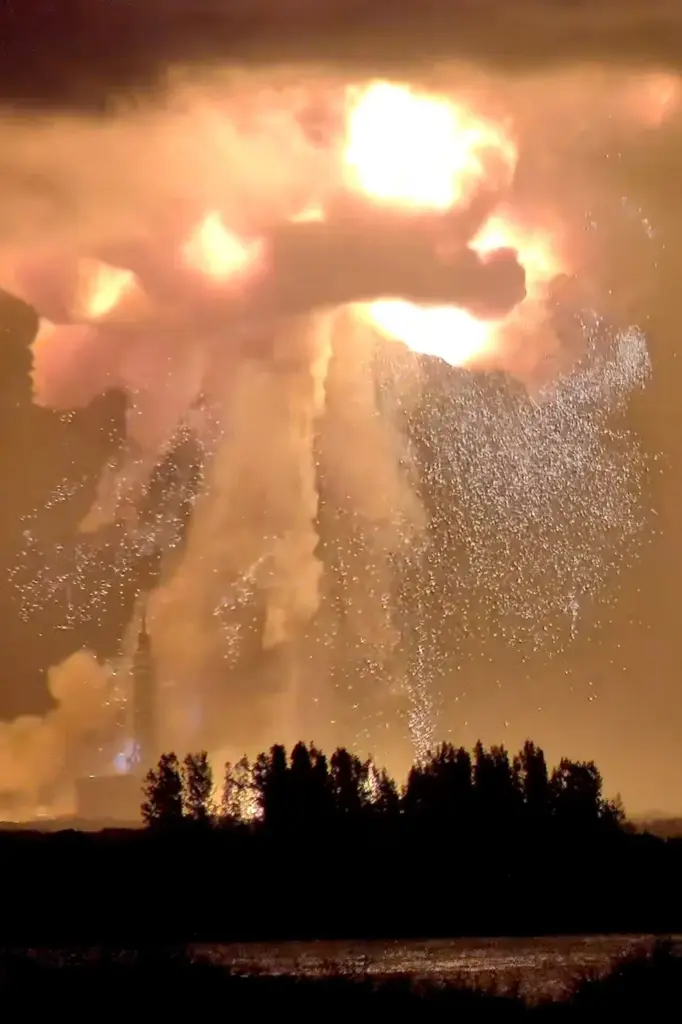 A Blue Origin New Glenn rocket explodes during an engine-firing test on Thursday, May 28, 2026, in Cape Canaveral, Fla. (@JConcilus via AP)
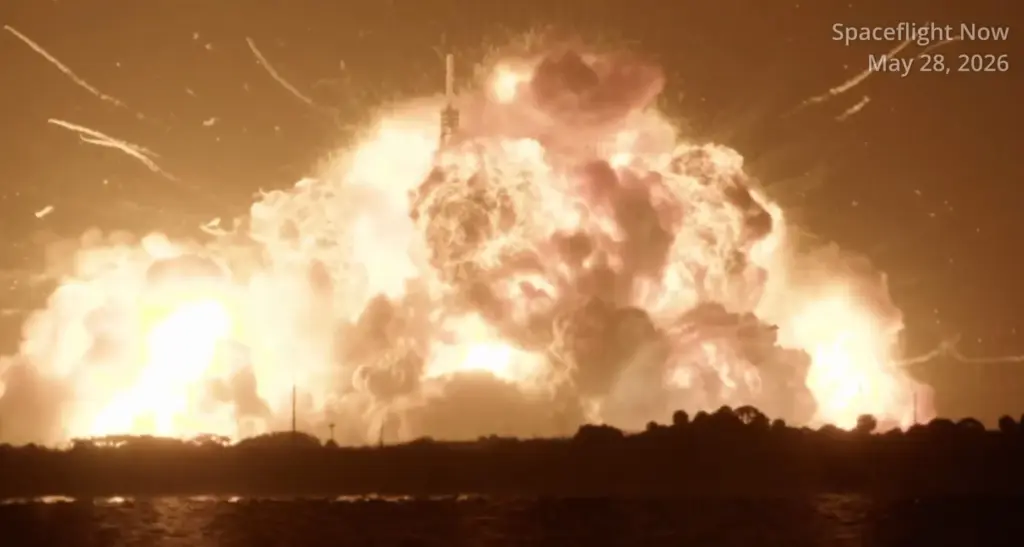 Video captured by Spaceflightnow.com shows the fireball engulfing a Blue Origin New Glenn booster at Cape Canaveral Space Force Station’s Launch Complex 36 on Thursday, May 28, 2026, during a hotfire test. (Courtesy/Spaceflightnow.com)
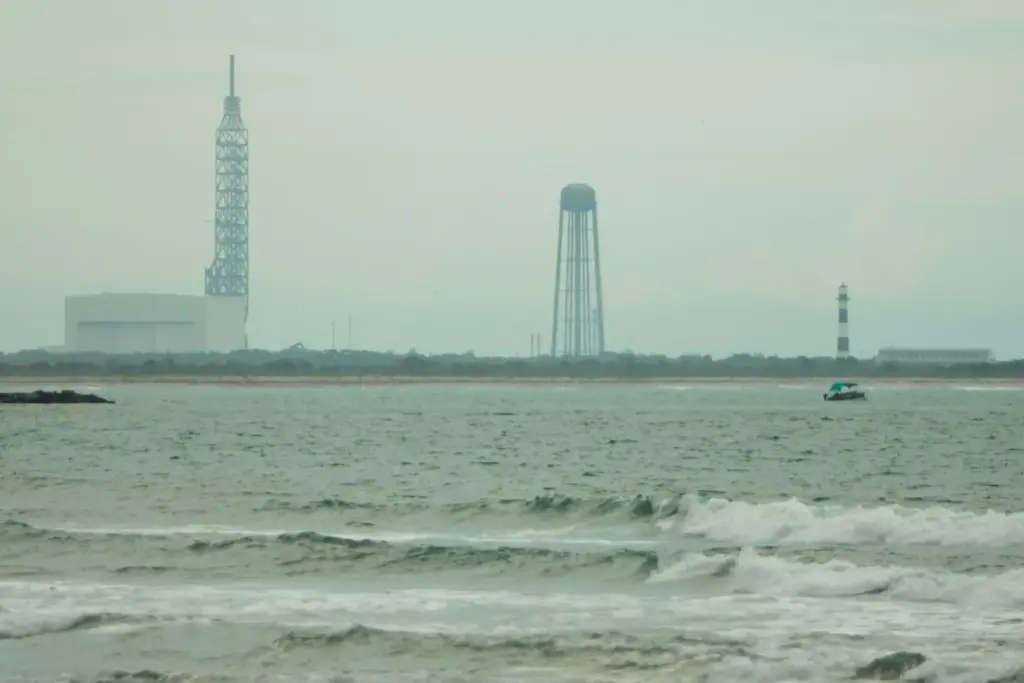 A lightning arrester and a charred water tower are seen at pad 36 in the aftermath of the Blue Origin New Glenn rocket explosion at the Cape Canaveral Space Force Station, Friday, May 29, 2026, in Cape Canaveral, Fla. (/John Raoux/AP)
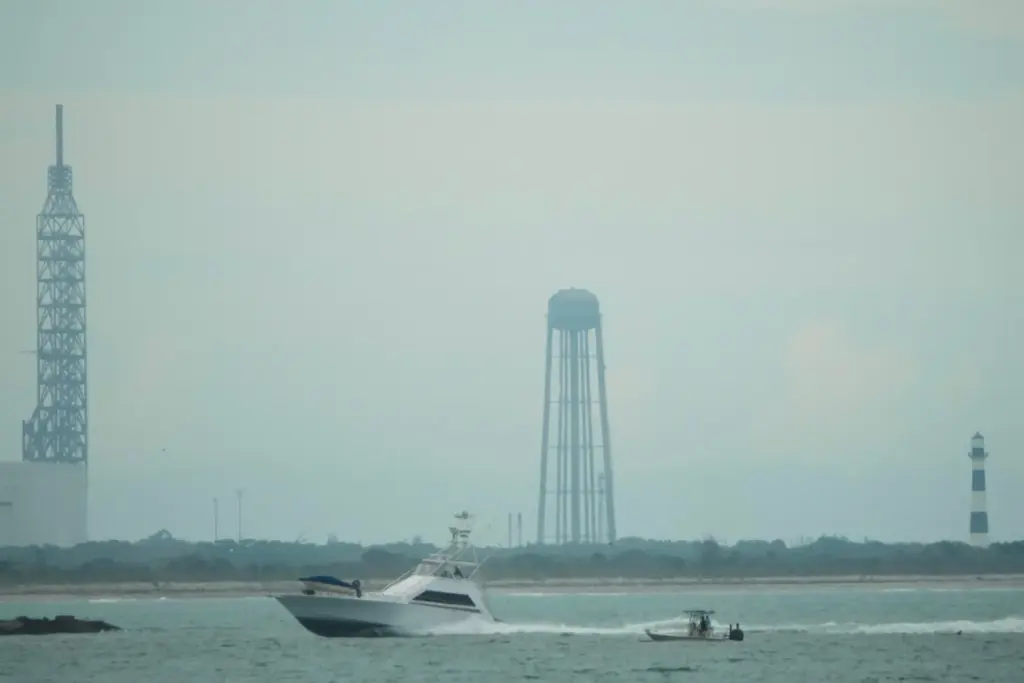 A lightning arrester and a charred water tower are seen at pad 36 in the aftermath of the Blue Origin New Glenn rocket explosion at the Cape Canaveral Space Force Station, Friday, May 29, 2026, in Cape Canaveral, Fla. (AP Photo/John Raoux)
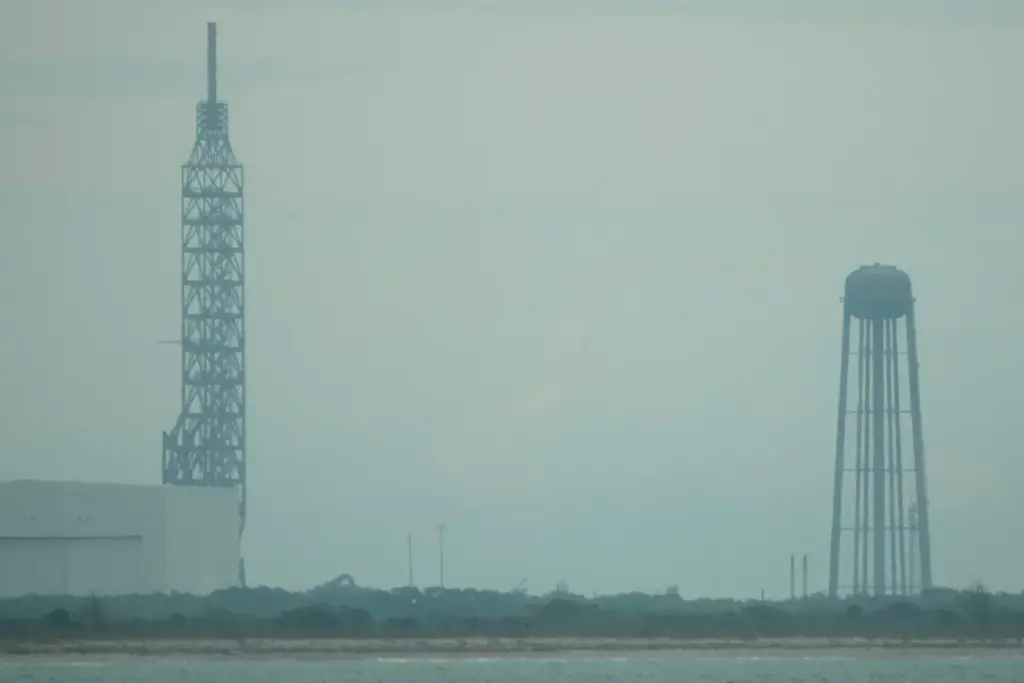 A lightning arrester and a charred water tower are seen at pad 36 in the aftermath of the Blue Origin New Glenn rocket explosion at the Cape Canaveral Space Force Station, Friday, May 29, 2026, in Cape Canaveral, Fla. (AP Photo/John Raoux)
A decade ago, SpaceX suffered a similar rocket explosion on the pad at Space Launch Complex 40 about 6 miles north of LC-36. It took Elon Musk’s company more than 15 months before it flew another launch from that pad.
That potential delay means Blue Origin will have to fall back from or work with other launch providers for several planned NASA missions. New Glenn was tapped to launch Blue Origin’s uncrewed Blue Moon MK1 lunar lander for the first time as soon as this fall for a mission to the moon’s South Pole. NASA had also just awarded two more missions for that lander to bring up the moon rovers for its future Artemis missions, although those were targeting launches closer to 2028.
Blue Origin’s larger Blue Moon MK2 lander also remains one of two moon landers NASA plans to use to bring crew down to the lunar surface on Artemis missions, but without a New Glenn to launch on, NASA may have to for now rely solely on SpaceX’s Starship to accomplish its lunar goals.
Artemis III, which is slated to fly by mid 2027, was aiming to launch on its own heavy-lift rocket, the Space Launch System, a crew on the Orion spacecraft. The four astronauts, which NASA plans to announced on June 9, would then rendezvous with one or both of SpaceX’s Starship and Blue Origin’s Blue Moon landers to test out docking during a low-Earth orbit mission. Starship, which continues to perform test flights from Texas, could push through development and potentially be ready for that mission still.
We go where we need to be, and today that was @NASAKennedy.
Some of my senior engineers and I spent time at @blueorigin with @JeffBezos and @davill, speaking with the workforce and seeing the damage at LC-36 firsthand. I appreciated the opportunity to hear directly from those… pic.twitter.com/luurpxCPtP
— NASA Administrator Jared Isaacman (@NASAAdmin) May 30, 2026
In the meantime, NASA Administrator Jared Isaacman came to Cape Canaveral to survey the damage and support the Blue Origin workforce.
Read more Trump to headline ‘Great American State Fair’ for nation’s 250th anniversary after artists drop out
“I appreciated the opportunity to hear directly from those working through the aftermath and better understand the challenges ahead,” Isaacman wrote in an update on X. “There is a lot of work to do, but this is exactly why people choose careers in aerospace, whether at NASA, Blue Origin or across the industry.”
Despite the setback, he used the opportunity to point out his stated goals for the agency, to not “sit on our hands and wait for the capabilities necessary to achieve the nation’s most pressing objectives.”
“We are going to take an active role alongside our partners, just as we did in the 1960s, to overcome setbacks, remove obstacles, and deliver the intended outcomes,” he said.
He declared NASA was committed to helping Blue Origin recover from the disaster, including plans to get its lunar landers ready while getting New Glenn back to launch readiness.
“America’s greatest achievements in space were never the result of avoiding setbacks,” he said. “They came from overcoming them. We have done it before, and we will do it again.”
Blue Origin founder Jeff Bezos was also on hand, and he thanked Isaacman and remained optimistic on the company’s response.
“Thank you for being here today. Your support means a lot to the whole team. We will get back to flight, and we will get to the moon,” he said.
New Glenn had also been vying to get full certification for national security space missions, and this upcoming fourth flight could have marked the final mission to line up approval by the Space Force so the rocket could be awarded the lucrative missions under the National Security Space Launch Phase 3 Lane 2 program.
The Department of Defense, though, had already approved the rocket for less demanding missions, and on Friday threw its support behind New Glenn by awarding the company its first DOD mission, albeit one that can’t fly until at least last 2027.
That mission would be for the National Reconnaissance Office, and was awarded in the wake of the explosion to show the Space Force and NRO’s support as committed partners, according to the acting Space Force Portfolio Acquisition Executive Col. Eric Zarybnisky.
“I am first and foremost grateful that all personnel are safe in the aftermath of the New Glenn rocket anomaly on Thursday evening,” Zarybnisky said. “I’m additionally grateful to all the first responders and the Space Launch Delta 45 team who ensured public safety.”
The single mission is targeting launch between October 2027 and March 2028, which falls in line with the 15-month repair time that could be in store for Blue Origin.
“This anomaly is a solemn reminder that the critical capability this community provides is rocket science and inherently challenging,” Zarybnisky said. “The National Security Space Launch program will continue working closely with our Blue Origin partners to help identify the root cause and implement corrective actions.”
Read more How an ambitious energy giant wielded political power in Florida