
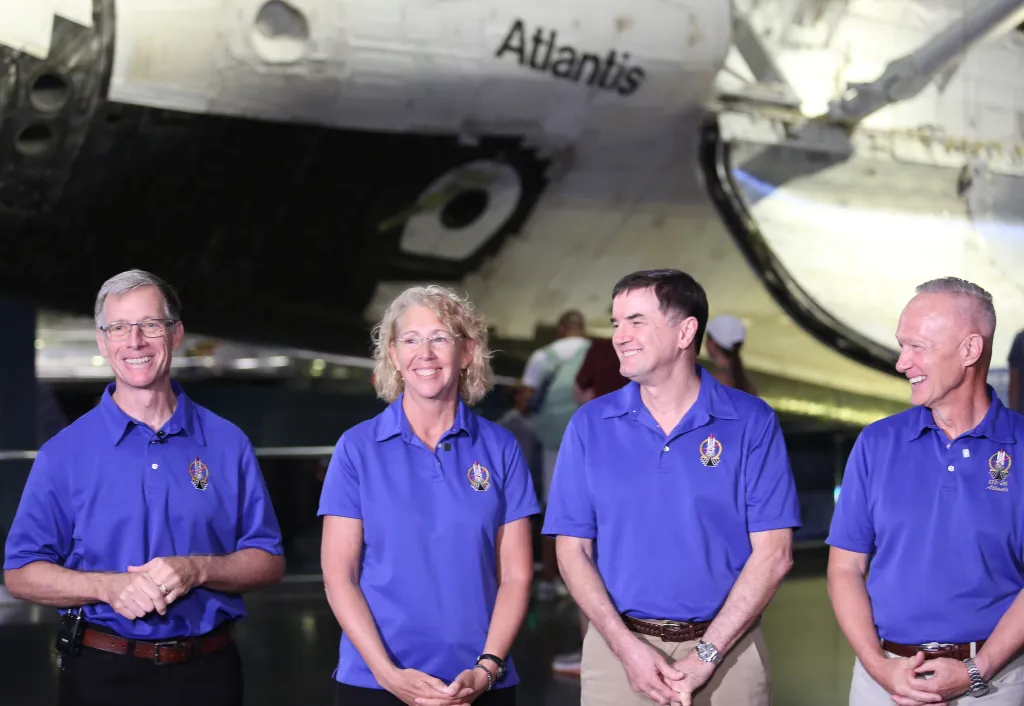
If it were up to the crew of STS-135, the final mission of the Space Shuttle Program, they would have kept flying.
Read more Sean Sweeney’s Magic journey filled with ‘pouring his heart and soul into basketball’
Space Shuttle Atlantis blasted off from Kennedy Space Center’s Launch Pad 39-A on July 8, 2011 with commander Chris Ferguson, pilot Doug Hurley and mission specialists Sandy Magnus and Rex Walheim.
The quartet returned to KSC’s Visitor Complex for a reunion Saturday just over 15 years since liftoff. They spoke to a crowd of hundreds gathered under the on-display orbiter that brought the crew back home to Earth, touching down safely on July 21 after a resupply mission to the International Space Station.
“This thing, especially when the boosters lit, you were going someplace, and hopefully it was in orbit,” Hurley said. “It was just an incredible massive vehicle. … I want to take Atlantis for one more spin. Maybe Chris and I can take it out for a quick mission.”
“Don’t forget us,” Walheim chimed in.
“We’re just the cargo,” Magnus joked.
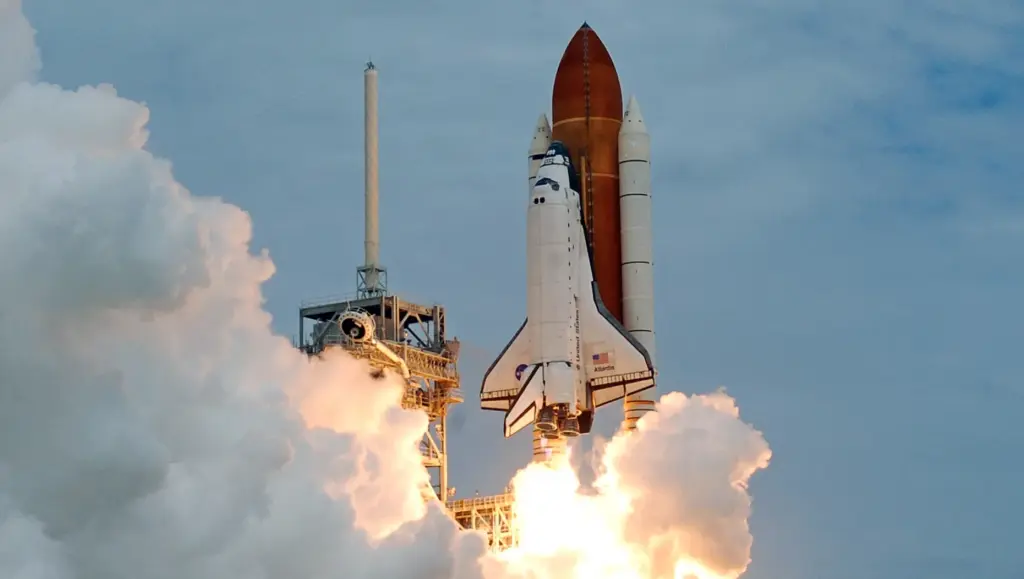 Space Shuttle Atlantis on the STS-135 mission launches Friday, July 8, 2011 on the final flight of a 30 year program. (Red Huber/Orlando Sentinel)
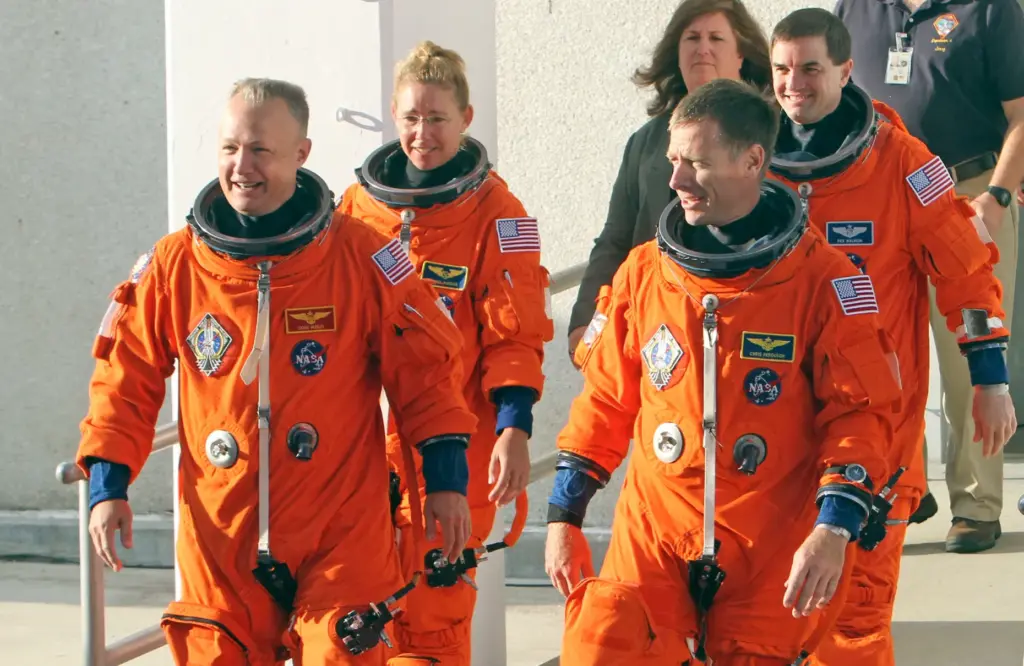 Space Shuttle Atlantis, STS-135, astronauts, from left to right, Pilot Douglas Hurley, Sandra Magnus, Commander Christopher Ferguson and Rex Walheim, leave the operations and checkout building Thursday, June 23, 2011 during a launch dress rehearsal at Kennedy Space Center. (Red Huber, Orlando Sentinel)
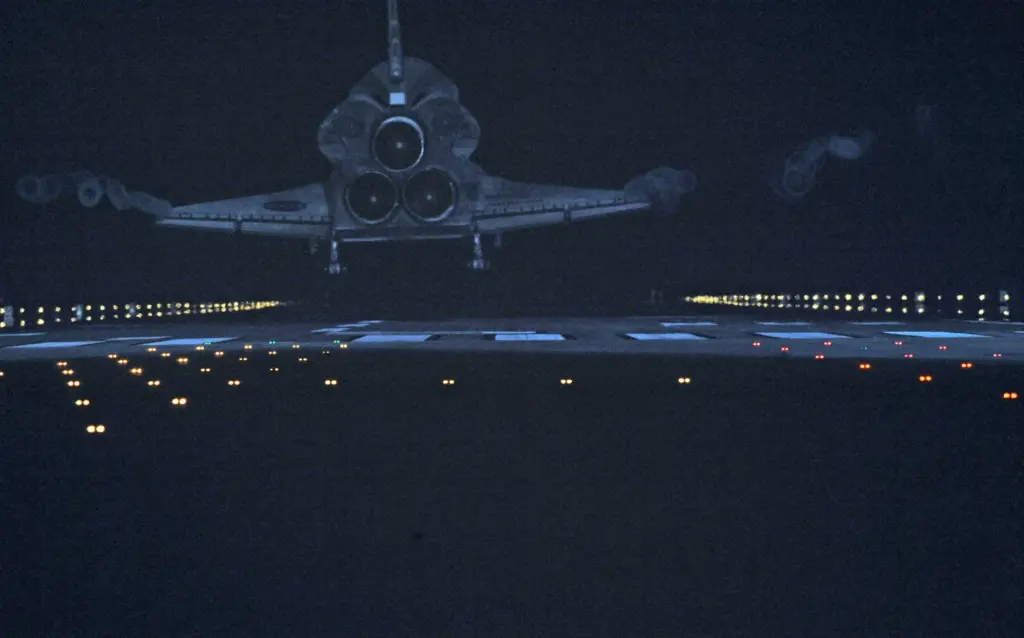 Space Shuttle Atlantis on the STS-135 mission lands at 5:57 a.m. at Kennedy Space Center concluding 30 years and 135 missions of the Space Shuttle Program on Thursday, July 21, 2011. (Red Huber/Orlando Sentinel)
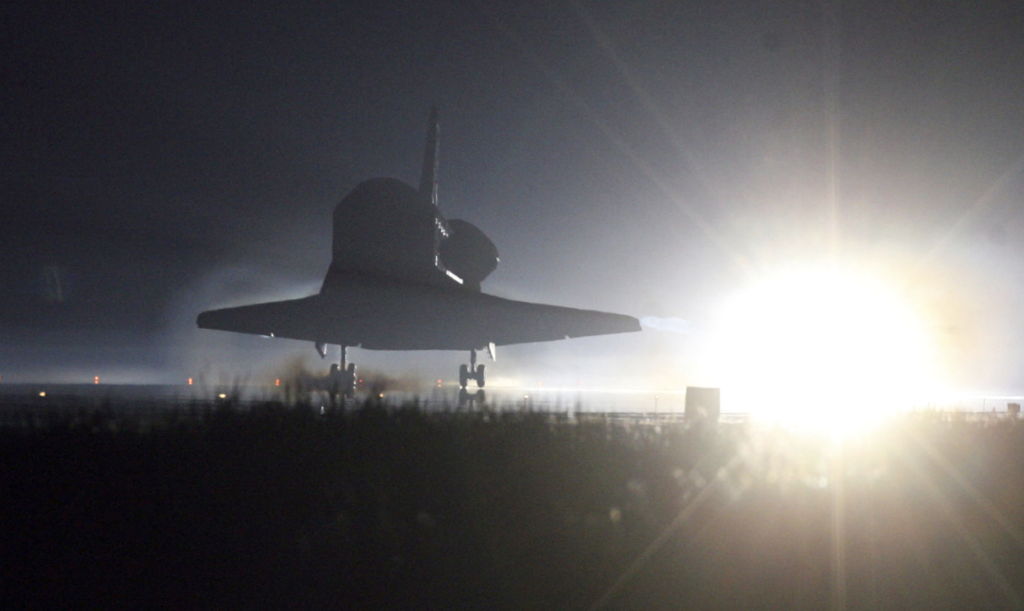 Space Shuttle Atlantis on the STS-135 mission lands at 5:57 a.m. at Kennedy Space Center concluding 30 years and 135 missions of the Space Shuttle Program on Thursday, July 21, 2011. (Red Huber/Orlando Sentinel)
 Space Shuttle Atlantis lifts off the pad for STS–135 at Kennedy Space Center Friday, July 8, 2011. (Gary W. Green/Orlando Sentinel)
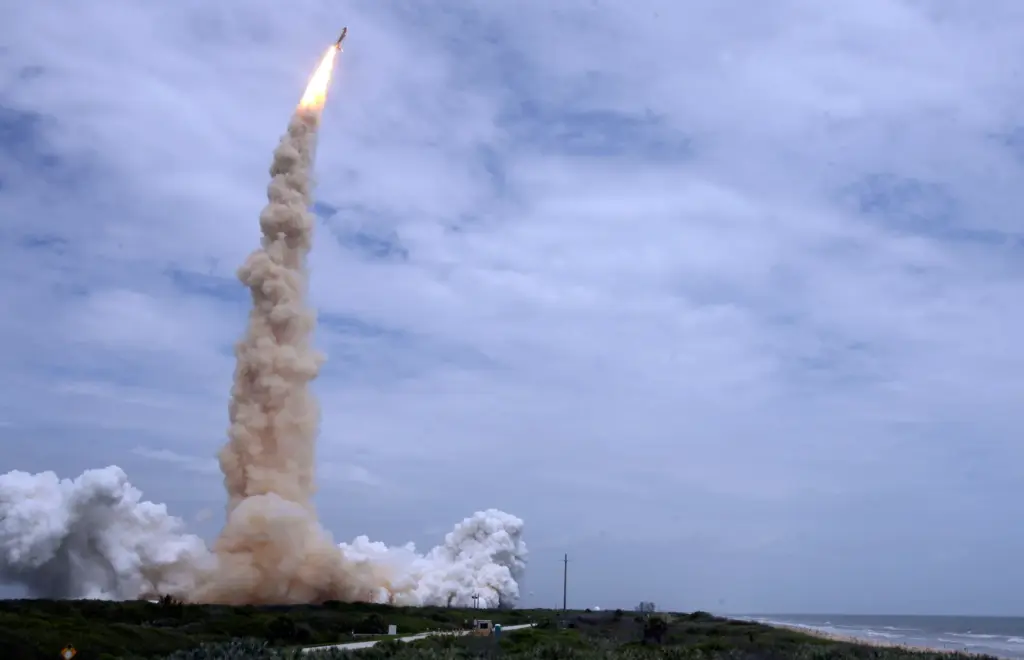 Space Shuttle Atlantis on the STS-135 mission launches Friday, July 8, 2011 on the final flight of a 30 year program. (Red Huber/Orlando Sentinel)
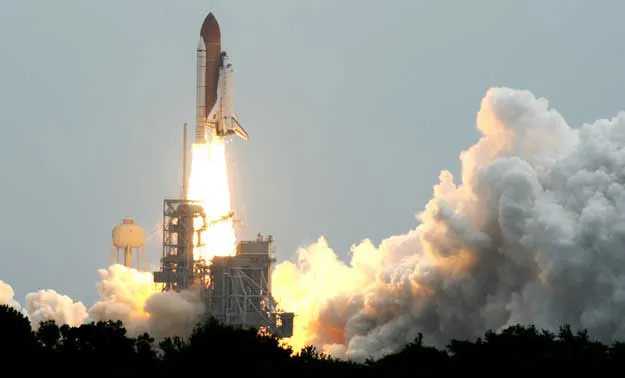 Space Shuttle Atlantis on the STS-135 mission launches Friday, July 8, 2011 on the final flight of a 30 year program. (Tom Burton/Orlando Sentinel)
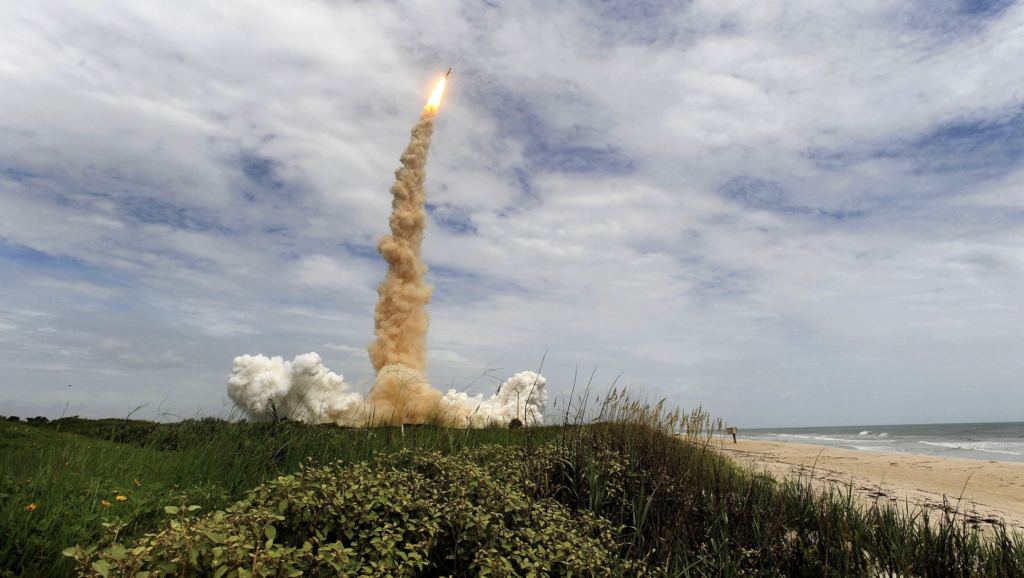 Space Shuttle Atlantis on the STS-135 mission launches Friday, July 8, 2011 on the final flight of a 30 year program. (Red Huber/Orlando Sentinel)

It was the last time NASA astronauts launched from Florida until SpaceX’s Crew Dragon flew on the Demo-2 mission in May 2020 nearly nine years later.
Hurley was on both flights.
“The decision was made that budgetarily we weren’t going to do it. We were going to end this whole program,” he said. “I think we could have continued to fly it for many more years.”
While Hurley flew on that historic SpaceX flight, Ferguson left NASA after the mission and joined Boeing to develop Starliner, the other commercial spacecraft that was supposed to replace the space shuttle. He was even tapped to command its first crewed mission, but he stepped down from that role before it ever flew.
“It took us longer than we thought it would. I still have a headline at Boeing from the local Houston newspaper that said commercial crew will fly in 2016,” he said. “Well, we sort of know how that all worked out.”
While SpaceX did bring crewed launches back to Florida, it still came years after originally planned, and Starliner has only made one crewed flight in 2024. That one, though, was plagued with problems that ultimately led NASA to elect to keep its two astronauts on the space station and fly Starliner back without crew.
Starliner’s next mission, which might not come until 2027, will only fly up cargo, and crew won’t fly until NASA certifies it’s safe for humans.
“Nobody expected it to be that long,” Ferguson said. “I think in hindsight … we know these programs — they’re tough, right? And it’s tough to get enough alignment and confidence that we build a safe vehicle for launching.”
The Space Shuttle Program itself took years longer than planned to get off the ground. The first flight of Space Shuttle Columbia came April 12, 1981, nearly six years after the last U.S.-based astronaut launch — the Apollo-Soyuz mission — and nearly nine years since the last Skylab flight in 1973 and 10 years after the Apollo lunar missions.
Magnus said these lulls in operations come with a cost, and it’s one NASA faces again with the plan to decommission the International Space Station before a commercial replacement is available.
“We learned the lesson of how important it is to have a transition plan as you’re moving from one program to another,” she said. “It’s another opportunity to take the lesson from the shuttle into that program and figure out how we can smoothly transition, so we don’t have this fits-and-starts kind of transition.”
Read more US attacks Iran over ship being hit in Strait of Hormuz; Tehran responds by hitting Arab states
When Atlantis flew its final mission, there were more than 6,000 employees supporting its flight. That workforce was nearly obliterated after it touched down.
“That’s not good. We lose operational experience. We lose technical experience. We lose workforce. It’s not a great way to run the space program,” Magnus said.
Atlantis was the fourth of five orbiters to debut with its first mission, STS 51-J, launching Oct. 3, 1985. It flew 33 of the program’s 135 missions. After landing, it stayed in Florida and has been on display at KSC since 2013, suspended as if it’s in orbit with its massive payload doors open.
Magnus said when she first saw it, it was almost jarring.
“It was a little bit of a sense of displacement because we had just been on the vehicle it seemed like yesterday, and here it was, hanging majestically in this marvelous building,” she said. “I really think this display does credit to what the shuttle feels like on orbit and how we see it a lot while we’re working.”
While the past and future of NASA and where the Space Shuttle Program fits was a big theme of what the four astronauts talked about during the event, it was the details of their time on the mission that brought the biggest reactions from the crowd.
Walheim, who flew all three of his NASA missions on Atlantis, knew of a quirk of the orbiter, but forgot to tell his crewmates on their return flight.
“You start getting some vibrations from air molecules and stuff, and the pilot and commander are trying really hard to fly this vehicle, and the bathroom door comes swinging open and slamming against the ladder, and there’s this huge bang,” he said.
Ferguson grimaced at the memory.
“We were like less than a minute away from landing,” he said. “Too many heartbeats in there.”
One anecdote from Hurley illustrated the trope of men who never throw anything away, but keep it in the garage because you never know when you’ll need something.
That’s because STS-135 was a big supply run for the shuttle the space station bringing up thousands of pounds of supplies with replacement parts among other things.
When Hurley returned to the space station in 2020 on Demo-2, the treadmill broke, so he had to go find the parts to fix it.
“There was some avionics box that needed to go onto the treadmill. I pull it out. It says ‘STS-135’ on the logistics tag,” he said. “There I am on a Saturday in 2020 fixing the treadmill with a part I brought up nine years prior. … The treadmill was working the next day.”
Ferguson was happy to finish the mission without any drama.
“It’s not over until your wheels on the ground,” he said. “When you had a little time alone at the end of the day, you’re like, ‘Wow, I am really glad we had the chance to do that,’ and I’m really glad that everything turned out OK because we wanted the nation to remember the shuttle program on the highest note possible.”
Read more US attacks Iran over ship being hit in Strait of Hormuz; Tehran responds by hitting Gulf Arab states