
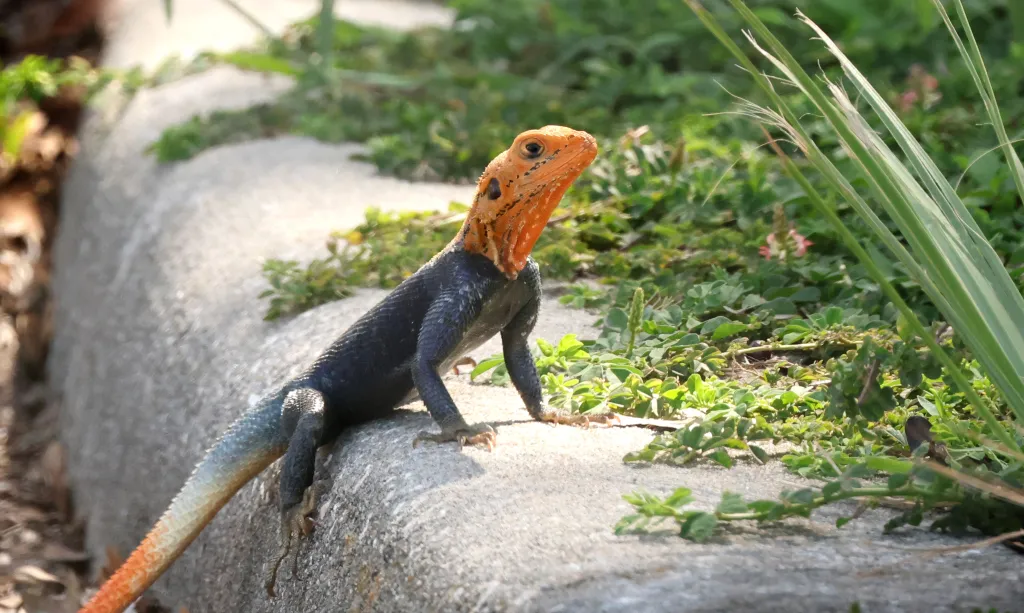
In a flash of curled tails, mottled stripes and neon scales, invasive lizards are moving into Central Florida. And they’re here to stay.
Read more Commentary: The Supreme Court is preserving, not perverting, the Constitution | Counterpoint
The reptiles, ranging in size from a few inches to several feet, have been increasingly sighted in the region, often traveling from South Florida, where they originally landed by hitching rides on international ships or through the exotic pet trade, according to the Florida Fish and Wildlife Conservation Commission.
They include the brightly colored Peter’s rock agama, spotted around Lake Eola in downtown Orlando, at Walt Disney World’s Magic Kingdom and on the University of Central Florida campus, among other local areas, according to reports on iNaturalist, an online platform for wildlife sightings.
The Argentine black and white tegu, a South American native that can grow to nearly five feet long, has been seen wandering in Altamonte Springs and Geneva as well as further east near Cocoa and Melbourne, according to iNaturalist posts and FWC.
Experts worry about potential ecological domino effects, as the intruders often compete with or eat native species and throw ecosystems off balance. Invasive lizards can also cause electrical or plumbing problems by crawling into manmade systems, and they can carry diseases like malaria and salmonella, said Matthew Atkinson, a herpetologist at UCF.
“There are some human-level impacts to this, from just kind of an ornamental perspective, just kind of a nuisance perspective, as well as some potential health risks,” Atkinson said.
Climate change, especially warmer winters, has likely spurred their spread to the area, he said, and more species could be on their way. Most of the lizards are tropical and thrive in a built environment where they can bask in the sun one second and dart off to hide the next.
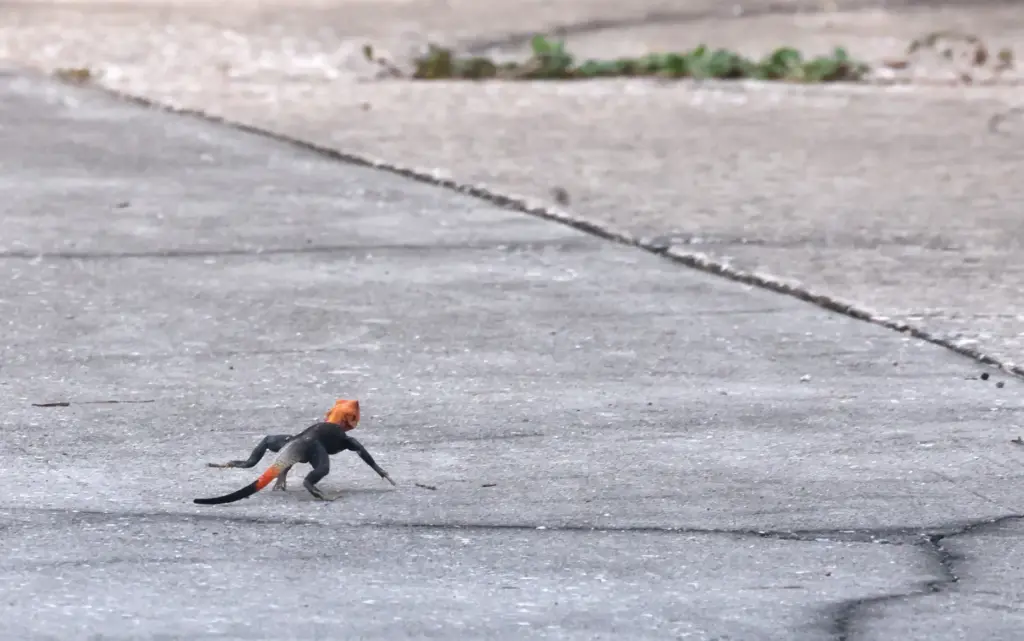 A colorful Peter’s rock agama —an invasive species of lizard from Africa— skitters across the parking lot at the old Orlando Sentinel building on Orange Avenue in Orlando, Thursday, July 2, 2026. First introduced into South Florida in 1976 in the pet reptile trade, the lizards have proliferated and are now being seen regularly in Central Florida. (Joe Burbank/Orlando Sentinel)
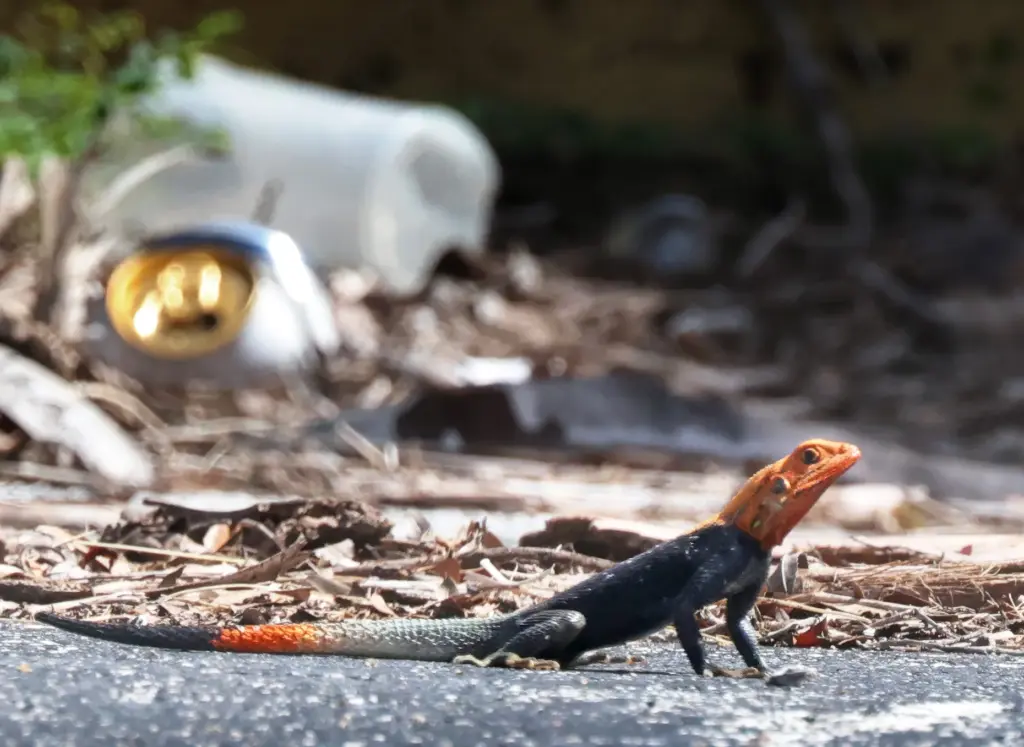 A colorful Peter’s rock agama —an invasive species of lizard from Africa— suns itself in the parking lot at the old Orlando Sentinel building on Orange Avenue in Orlando, Thursday, July 2, 2026. First introduced into South Florida in 1976 in the pet reptile trade, the lizards have proliferated and are now being seen regularly in Central Florida. (Joe Burbank/Orlando Sentinel)
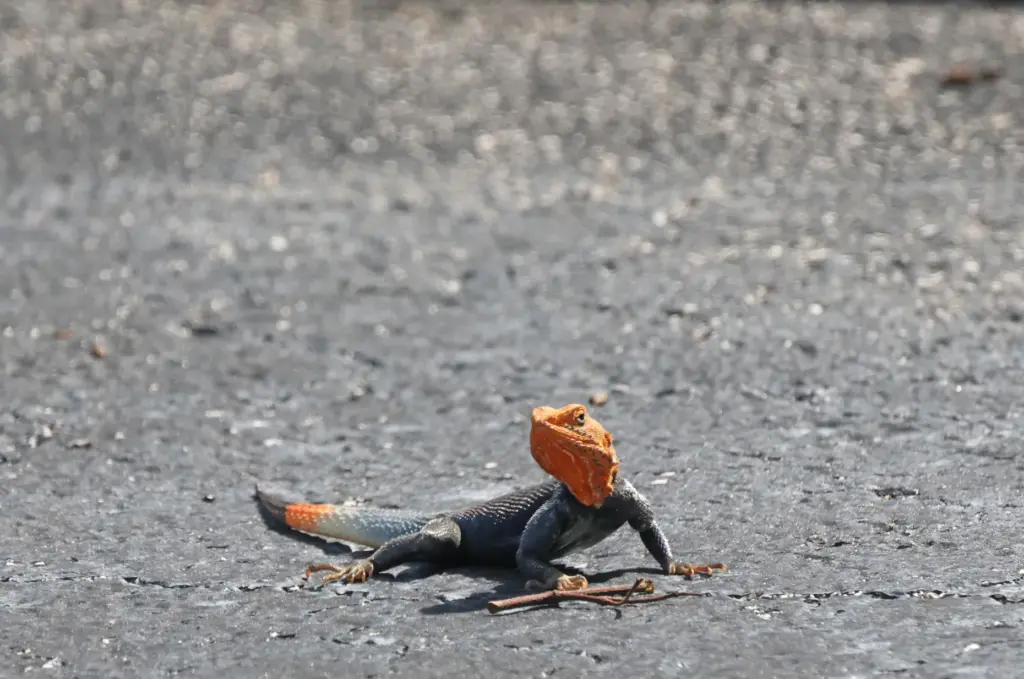 A colorful Peter’s rock agama —an invasive species of lizard from Africa— suns itself in the parking lot at the old Orlando Sentinel building on Orange Avenue in Orlando, Thursday, July 2, 2026. First introduced into South Florida in 1976 in the pet reptile trade, the lizards have proliferated and are now being seen regularly in Central Florida. (Joe Burbank/Orlando Sentinel)
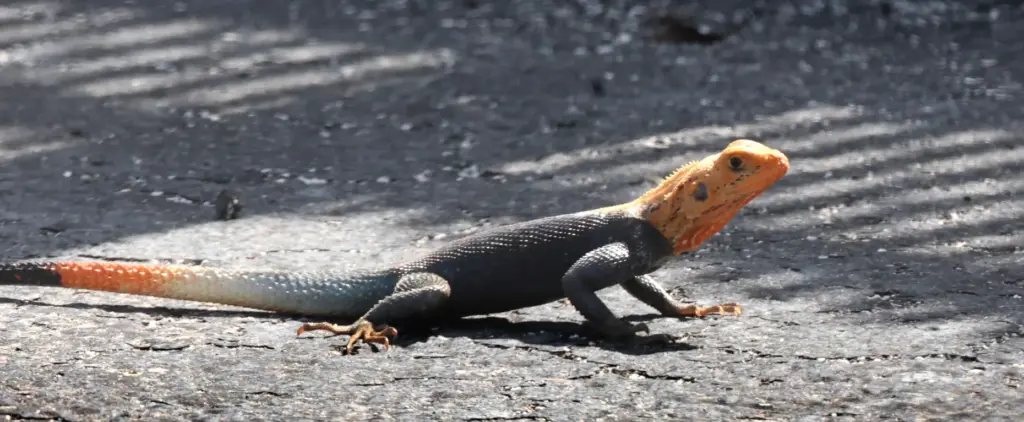 A colorful Peter’s rock agama —an invasive species of lizard from Africa— suns itself in the parking lot at the old Orlando Sentinel building on Orange Avenue in Orlando, Thursday, July 2, 2026. First introduced into South Florida in 1976 in the pet reptile trade, the lizards have proliferated and are now being seen regularly in Central Florida. (Joe Burbank/Orlando Sentinel)
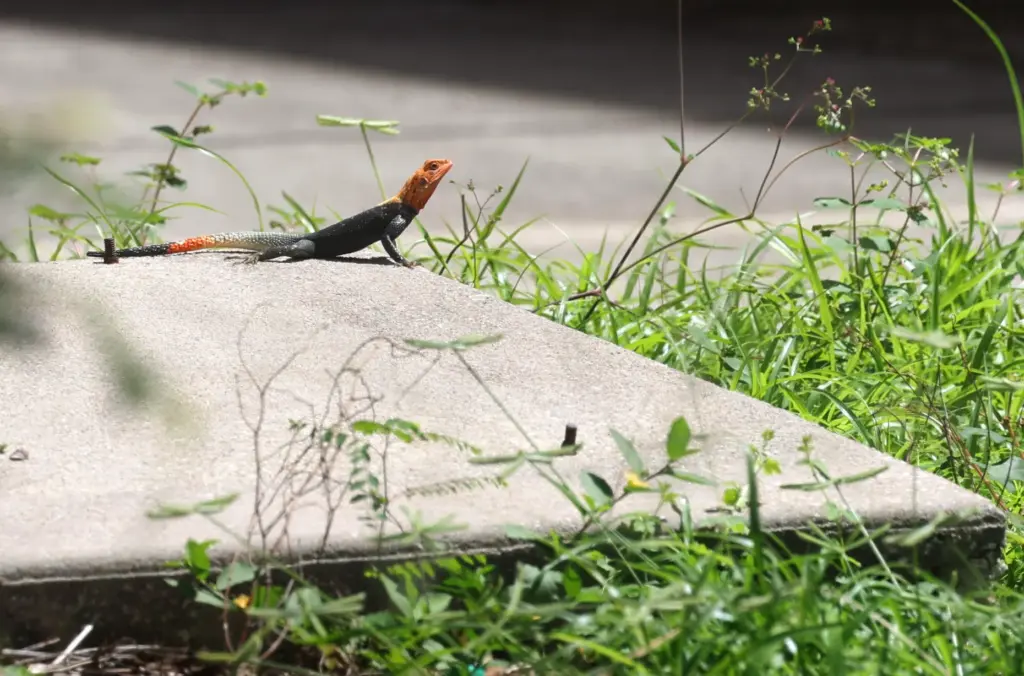 A colorful Peter’s rock agama —an invasive species of lizard from Africa— perches on a concrete slab at the old Orlando Sentinel building on Orange Avenue in Orlando, Thursday, July 2, 2026. First introduced into South Florida in 1976 in the pet reptile trade, the lizards have proliferated and are now being seen regularly in Central Florida. (Joe Burbank/Orlando Sentinel)
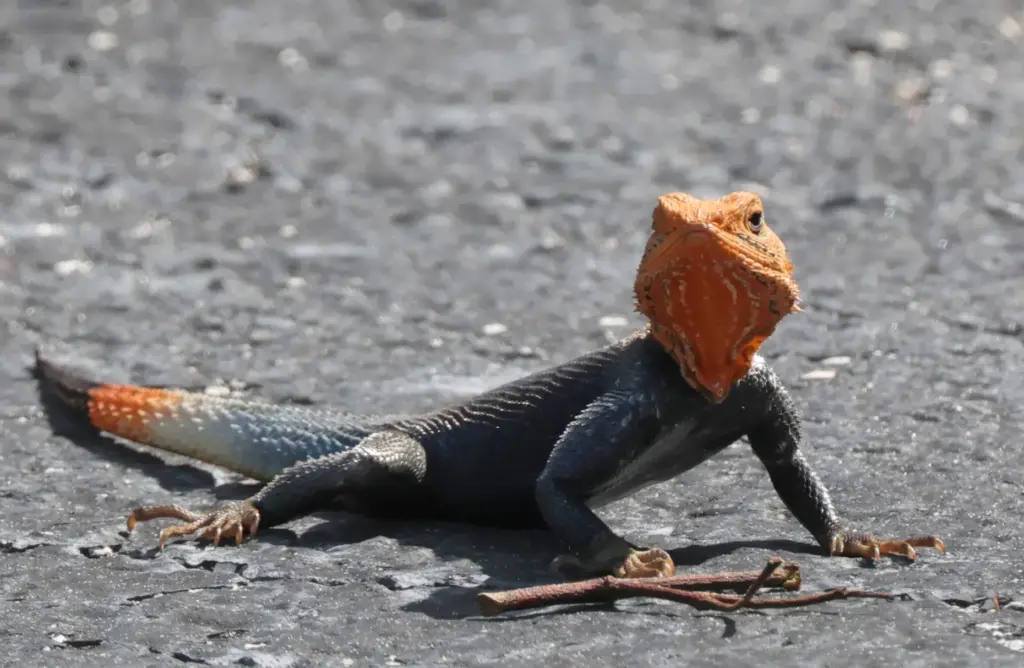 A colorful Peter’s rock agama —an invasive species of lizard from Africa— suns itself in the parking lot at the old Orlando Sentinel building on Orange Avenue in Orlando, Thursday, July 2, 2026. First introduced into South Florida in 1976 in the pet reptile trade, the lizards have proliferated and are now being seen regularly in Central Florida. (Joe Burbank/Orlando Sentinel)
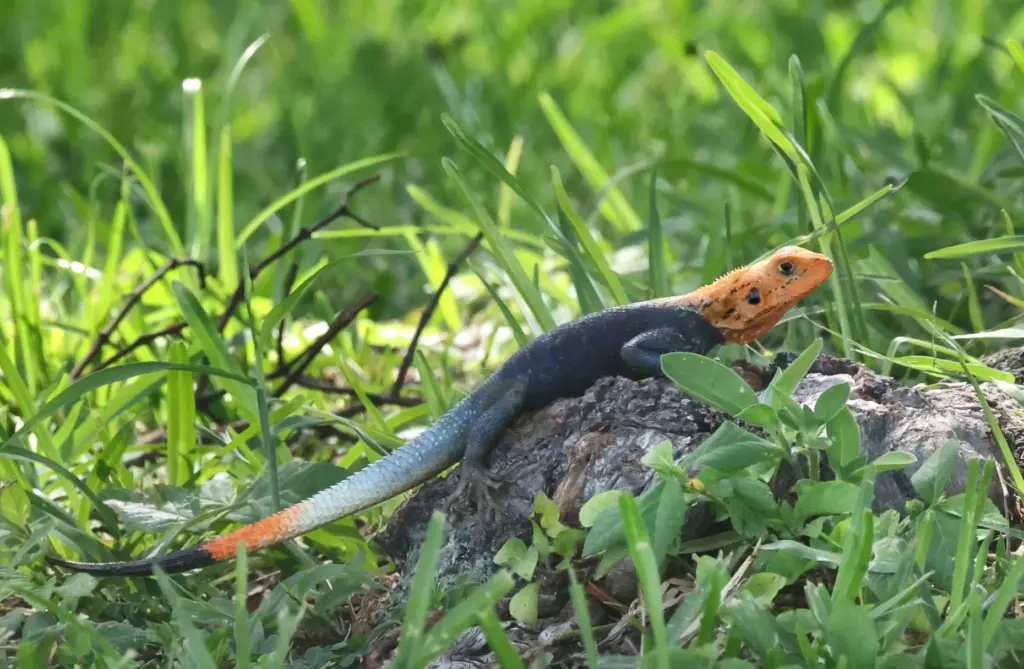 A colorful Peter’s rock agama —an invasive species of lizard from Africa— stalks through the grass along Concord Ave. in downtown Orlando, Thursday, July 2, 2026. First introduced into South Florida in 1976 in the pet reptile trade, the lizards have proliferated and are now being seen regularly in Central Florida. (Joe Burbank/Orlando Sentinel)
So their presence is going to be a “consistent issue” in urbanized Central Florida, Atkinson said. “It’s kind of a lost cause down here, for lack of a better word,” he added.
But scientists are keeping track, often with the help of local residents who photograph and report lizard sightings, as the state works to trap the most dangerous invaders.
“It’s all about just reporting and monitoring and removing whenever possible,” Atkinson said.
Steven Collins, an Orlando resident and engineer, describes himself as “obsessed” with using online platforms like iNaturalist to log photos of wildlife in his free time. The bold agamas have been of particular interest to him. He photographed one near Lake Eola in May, nothing but a neon blur in the tree canopy.
“It’s alarming when you’re not expecting it,” he said. “Seeing these large lizards is a little surprising.”
Native to Sub-Saharan Africa, breeding male agamas can grow to a foot long and sport a vivid color-blocked pattern, according to FWC. Their heads are orange, stark against the dark blue hue of their torso, which fades to white, then orange and finally black down the length of their tails. They’re easy to see but nearly impossible to catch, the agency says.
“They are very large, and they’re skittish,” Collins confirmed. “When you scare them, you’ll hear them. They kind of scamper up a tree.”
In the past decade, he occasionally spotted agamas in other parts of the state, he said, but only in the past couple years did he start seeing them as far north as Central Florida.
Around 1887, almost a century before agamas came into the picture, the brown anole arrived in the Florida Keys, and by the early 2000s they’d been documented in every county in the state, according to the University of Florida. Native to Cuba and the Bahamas, the slender 4- to 8-inch species has pushed out and sometimes preyed on native green anoles ever since, FWC says.
By the mid 1900s, northern curlytail lizards from the Bahamas were introduced as pest control in South Florida sugarcane fields, the agency reports. The stocky species, up to 11 inches long, sometimes out-competes or eats other lizards, including brown anoles.
Read more From student to teacher: Keith Traver takes over Orlando Shakes education
Recent iNaturalist posts show sightings across much of the southern and central parts of Florida, with local clusters around UCF, Valencia College’s east campus and Universal’s Volcano Bay.
The sizable agamas popped up by the 1970s. One of the state’s newest arrivals is even bigger.
Growing nearly five feet long, tegus were first documented in the early 2000s, likely as escapees from the pet trade, according to the National Invasive Species Information Center, which is overseen by the U.S. Department of Agriculture.
They’re both land dwellers and strong swimmers, with the ability to survive in marine and freshwater habitats, FWC reports. The state agency prohibits keeping the South American species without a special permit for educational, research or eradication purposes, with limited exceptions for pet owners.
Tegus are a “high priority invasive species for removal efforts due to their potential impacts on native wildlife,” a FWC spokesperson wrote in an emailed statement.
With recognizable salt- and pepper-speckled stripes, the tegu is known for its “voracious appetite and resilience,” sometimes preying on alligator eggs, ground nesting birds and endangered turtles, according to the U.S. Fish and Wildlife Service.
The federal agency detailed removal efforts on its website, including traps baited with eggs and trackers to lure tegus and study their movements.
As these species multiply in South and Central Florida — and potentially further north — it’s difficult to pinpoint how they’ll interact with each other. While those already here jockey for space, sometimes eating or conflicting with one another, other South Florida invasives like the massive Nile monitor may well be on their way into the area soon, Atkinson said.
Nile monitors are the largest lizard species in Africa, sometimes reaching over six feet long and weighing in close to 20 pounds. In South Florida, the semi-aquatic species has a high reproduction rate and is a generalist feeder, gobbling everything from crabs to snakes to small mammals, according to FWC.
Like tegus, Nile monitors are now a member of FWC’s prohibited species list.
“It’s going to be really complicated because there’s not anywhere that really has this very unique combination of a lot of different species from a lot of different places coming together in a very unique way,” Atkinson said.
However, not all nonnative species are considered invasive, a title reserved for those that cause harm to the environment, economy or human quality of life. Agamas, for example, are not considered invasive by FWC, though the U.S. Fish and Wildlife Service has previously referred to them as such on account of their competition with native species for food and habitat.
Florida happens to have the “dubious distinction” as the global epicenter of nonnative species introductions, said Steve Johnson, a wildlife ecology professor at the University of Florida.
UF reports that more than 150 nonnative reptile species have made their way into Florida since the brown anole was first documented. There are now about three times as many introduced lizard species established in the state as there are native species, Johnson said.
Scientists often don’t discover and investigate new established populations until residents report their sightings online, Johnson added. Central Florida now serves as a rough northern border for some of the invaders.
“You sort of get a drop off from Orlando. North, there’s not as many,” he said. “It’s just probably going to be a matter of time before they show up, and I wouldn’t be surprised.”
Read more Wally Funk, aviation pioneer who was the oldest woman to travel into space, dies at 87