
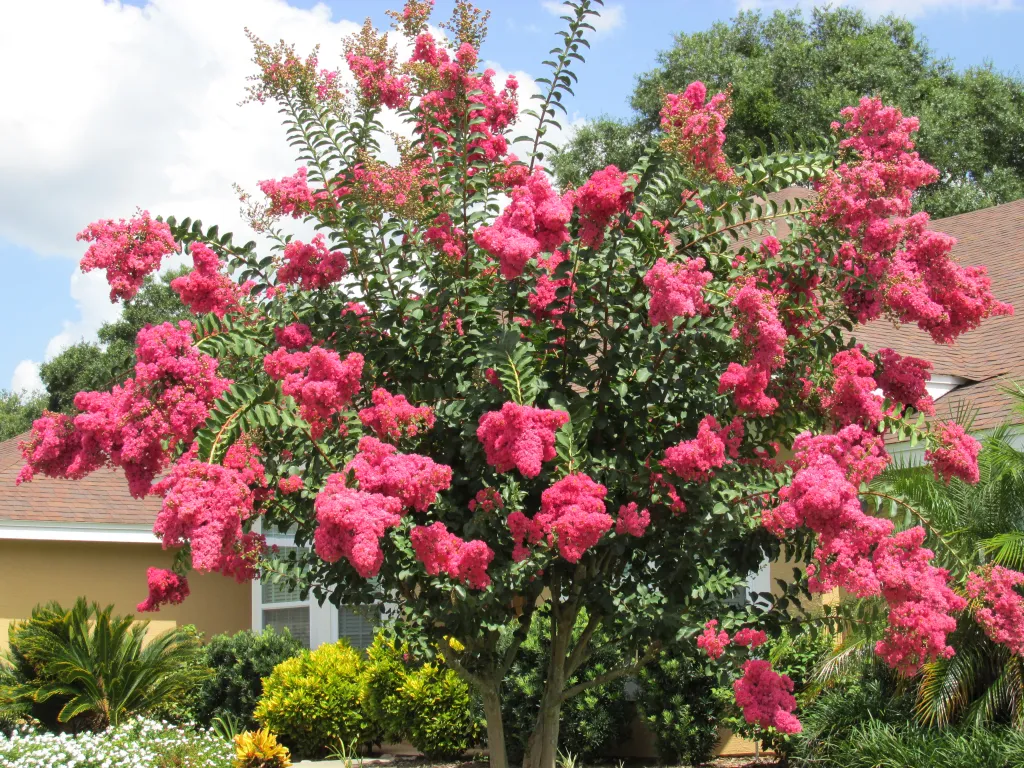
Q: I have a crape myrtle that has not bloomed and is losing its bark. Please suggest cures.
Read more Encore’s gorgeous ‘Frozen’ warms a critic’s heart | Review
A: Help solve this problem by making sure the crape myrtle is receiving about eight hours of full sun each day. Over years, shade from nearby trees slowly creeps up and over crape myrtles and finally causes them to have fewer blooms. If this is the problem, thinning the overhead shade may help. Crape myrtles do bloom at different times during late spring and summer, so there’s still time for your plants to produce their flowers. Peeling and shedding bark is a normal feature of crape myrtle shrubs and tree forms that occurs in late spring and summer. It is a very beneficial feature helping to remove insects and growths forming on bark. Many crape myrtles have very attractive layers of new bark to add landscape enjoyment as the plants shed the outer layers.
Q: I have a mulched area under my bird feeder where grass and other weeds sprout. Birds and squirrels eat the fallen seeds. Is there an herbicide safe to use with wildlife? How about vinegar?
A: A number of products are marketed for spot weed control that are labeled as safe for wildlife. The active ingredients usually include one or more of soap formulations, strong vinegar and plant oils. They may be safe but it’s hard for me to believe wildlife is going to find the seeds very tasty after being sprayed. Do an internet search for wildlife-safe herbicides if you want to give one a try following label instructions.
Plant Doctor: Colorful blooms from pentas, other flowers lure butterflies, hummingbirds
Q: I have been asked me to take the lead in developing a small butterfly garden. It will be an unirrigated space with varying light. Looking for suggestions on types of plantings, timing and space needed.
A: Areas without irrigation have a tough time growing weeds, but there may be a few flowers to plant and lure in the butterflies. Select from the more drought-tolerant wildflowers often seen along the roads. One that seems to grow along dry roadsides — and in fields — is annual phlox with blooms of many colors. It can be planted in the fall from seeds that sprout with seasonal rains and bloom in the spring. It reseeds and starts new growths the following late fall. Transplants are also available from garden centers in late winter. Other more persistent perennial or shrubby drought-tolerant plants include beach sunflower, sunshine mimosa, gaillardia and firebush. When in bloom all can invite butterflies to visit. They are usually started from transplants that need water until established and during very dry times.
Q: Some of our turf has a gray covering over the leaf blades. What type of pest is present and do we need to spray?
A: Almost overnight a slime mold funguslike organism oozes up the stems and leaf blades of turf. It’s most noticeable during the rainy season, when there is plenty of moisture available for the growth of the spore-producing structures that coat the turf. No matter how bad it looks, slime mold causes minimal harm to the turf. It can be sweep, raked or washed off. Running a mower over the affected area should loosen the moldlike coating too. No sprays are needed for this fungus. Slime molds can affect other landscape plants often covering foliage and stems of low-growing bedding plants or mulches with a colorful coating. Again, no control is needed.
Read more Blue Spring State Park now requires reservations, prompting mixed reactions from visitors
Q: Sections of our St. Augustine lawn have disappeared — almost overnight. The grass looks like it’s eaten to the ground. What should we do?
A: Close clipping of most lawns at this time of the year is normally caused by turf-feeding caterpillars. Sod webworms are usually to blame and can be spotted close to the soil during daytime and on the leaf blades at night. They are small, greenish larva stages of a brown dingy moth you may also see in the landscape. Luckily the feeding normally does not kill the lawn, but makes it look bad and unevenly mowed. If you cannot tolerate the close clipping appearance apply a lawn insecticide found at local garden centers following label instructions. Controls containing spinosad, a naturally derived insecticide, are available if you want to avoid using the more traditional products.
Are you a Central Florida gardener? Here’s your to-do list for July
Q: My queen palm has formed a flat, semi-rounded hard growth at its base. Can I just break this off?
A: I’m not kidding when I say you have butt rot — or at least your palm does. It takes its name from the fungal growth you noticed at the base or butt of the palm. Regretfully, when the growth is observed the fungus is well established in the trunk of the palm. Over time the palm starts to decline and eventually dies. Breaking off and removing the growths — known as conks — keeps fungal spores from spreading to other nearby palms. It’s recommended that palms affected with butt rot be removed as soon as possible, and any growths from the stump also be removed as they form. New palms should not be planted in this area as it’s infested with the fungus.
Q: I started sunflower seeds in large pots and eventually added them to a butterfly garden. The plants are watered in the early evening but they wilt during the day. I am now shielding them with beach umbrellas during the hot sun. What else is needed?
A: As the name implies, sunflowers need sun — even the hot summer sun. It’s only a guess, but most likely your young plants in containers were not conditioned to the sun before being added to the garden. Sunflowers need to be grown in the full sun as soon as the seeds sprout. If given some shade at all in the beginning, they may struggle during hot sunny days. Try to encourage more heat-tolerant plants by watering in the early morning. Dig into the soil to make sure the root balls are moistened. If needed, water again during the heat of the day, even misting the plants a little to prevent wilting. Remove the umbrellas as your plants need to learn to tolerate the heat. Also, it’s not abnormal for some plants to wilt a little during the heat of the day.
Tom MacCubbin is an urban horticulturist emeritus with the University of Florida Cooperative Extension Service. Write him: Orlando Sentinel, P.O. Box 2833, Orlando, FL. 32802. Email: [email protected].
Read more Letters: Supreme Court overreach | After 250th, what’s next? | Socialists off-base