
When former U.S. Rep. David Jolly last year launched his bid for the Democratic nomination for Florida governor, he bet that the race’s defining issue would be the rising costs of homeowners’ insurance.
Read more Antoine Griezmann scores in MLS debut as Orlando City beat Earthquakes 4-0
But with less than a month to go before the Aug. 18 primary, the statewide backlash against artificial intelligence data centers has eclipsed everything else on the campaign trail.
“It might be a single-issue campaign,” Jolly told the Tampa Bay Times. “If AI data centers do become the single issue of this race, I feel good that we’re on the right side of history and the voter.”
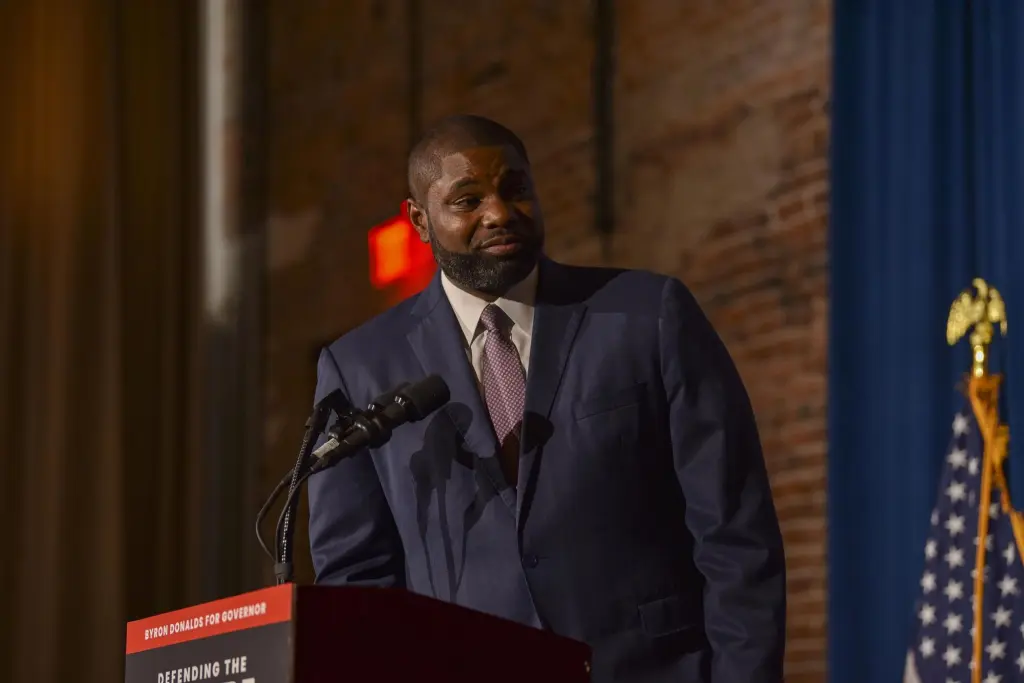
Jolly on Tuesday repeated that he wants a moratorium on data centers. He made the vow in a video posted on X that contrasted himself with his likely GOP rival in the Nov. 3 general election: U.S. Rep. Byron Donalds.
Donalds is considered the front-runner given his insurmountable edge in campaign contributions. But that advantage comes with a cost. Much of that money binds him to an industry that voters don’t trust right now.
His war chest includes at least $5 million from the AI industry-backed political committee Leading the Future. Another pro-industry political committee backed by OpenAI’s president and other tech moguls spent at least a half-million dollars running TV ads that promote Donalds for governor. That group aired about 1,700 TV ad spots targeting voters in the Tampa Bay and Tallahassee areas in March and April, according to Federal Communications Commission records.
Amid mounting criticism and scrutiny of his AI support, Donalds’ campaign says his views on AI haven’t changed. His message has been that while data centers are nearly inevitable, they can be managed so that Floridians are protected.
“I’m not anti-data center. I’m pro having a plan,” he said in February at Florida Gulf Coast University. “Data centers are going to be a function of American life going forward.”
Government officials can require data centers to provide their own power and be set back far enough that they don’t disturb neighboring properties, he said. He framed it as a national security issue: Where should these data centers be, here or in India or China?
“I don’t want my data there,” Donalds said. “When it comes to technology, AI and everything else, Florida should lead.”
In June, he said this view differed from that of his biggest political benefactor, President Donald Trump, because Donalds supports state-level regulation of AI and data centers. While that’s a clear departure from Trump’s desire to preempt states from regulating the industry, it’s more in line with the guardrails put in place by Gov. Ron DeSantis and the Florida Legislature. That legislation promised consumers would not bear the burden with higher electric bills or more scarce water resources.
On Monday, Donalds introduced legislation in Washington that reiterated those same protections by requiring data centers to obtain electricity and water from private sources.
It’s in the interest of Floridians to build data centers, Donalds said, and the best way to address their concerns is to make sure their utility bills don’t go up, Donalds told the Associated Press.
In one of the first videos he aired on TV last month, Donalds promised the same thing if he’s elected governor.
“I’ll fight for a ratepayer protection plan because in my Florida, if you don’t protect our pocketbooks and our people, you won’t build data centers,” Donalds said in the ad.
Rising utility costs aren’t the only reason the public opposes AI centers. Residents regularly cite potential noise, disruption of their neighborhoods, environmental damage and fundamental concerns with AI technology. More than 20 Florida counties and cities have voted to reject major data centers, while others have banned their construction for at least a year.
Read more First-ever Mount Dora Area Restaurant Week begins Saturday
In a University of North Florida poll conducted this month of nearly 900 likely midterm voters, more than two-thirds opposed building AI data centers in their community because of utility costs and environmental concerns.
“They run 24/7, a noise from hell,” an announcer says of data centers in an ad that dropped on X earlier this week. “They make our already sky-high electrical bills even worse and drive down your home value. But ‘Data Center’ Donalds owes Big Tech, and he’ll do everything they say.“
The ad was produced by Conservatives for Ethical Leadership, a political committee affiliated with The Lincoln Project, an anti-Trump group.
Rick Wilson, a former Republican strategist who has become a key player in the “Never Trump” movement, said AI is the rarest of issues that unifies right and left. It could spell trouble that Donalds accepted industry money so early.
“Big Tech threw money at Donalds and he said, ‘Yes sir, may I have another?’” Wilson said. “Even if he politically tries to walk it back on AI, they have to build now. They’re not going to let Byron Donalds slow the freight train. They’re going to want what they paid for.”
Donalds’ campaign dismissed criticism of his AI policy as pure politics.
“Byron answers to no one other than the people of Florida,” said Gates McGavick, the campaign’s communications director. “He is leading the fight to protect Floridians — no ratepayer and environmental protections, no data centers.”
Yet it’s not just Democrats and Never-Trumpers criticizing Donalds on AI. His GOP rivals are, too, and they’re making it the defining issue in their primary race against him.
Former Florida House Speaker Paul Renner said his opposition to AI hyper-scale data centers is “his biggest difference” with Donalds.
“My campaign is putting you, Florida, first,” Renner says in a campaign video published on social media. “Byron Donalds is putting AI first, and his AI donors. He’s received $5 million from his AI tech bros to build data centers all across the state.”
James Fishback, a 31-year-old investor, challenges Donalds’ notion that data centers can be regulated.
“James Fishback will not reform data centers,” his campaign website states. “He will not regulate them. He will ban them in all 67 counties by preventing county commissions from approving them in the first place.”
If, as expected, Donalds wins the GOP primary, then the political fallout on AI will only grow, Wilson said.
“When you see an issue like this in the public consciousness that shatters the political divisions, you need to pay attention,” he said. “It means something.”
________
©2026 Tampa Bay Times. Visit at tampabay.com. Distributed by Tribune Content Agency, LLC.
Read more House votes for Department of War renaming as part of an annual defense bill