
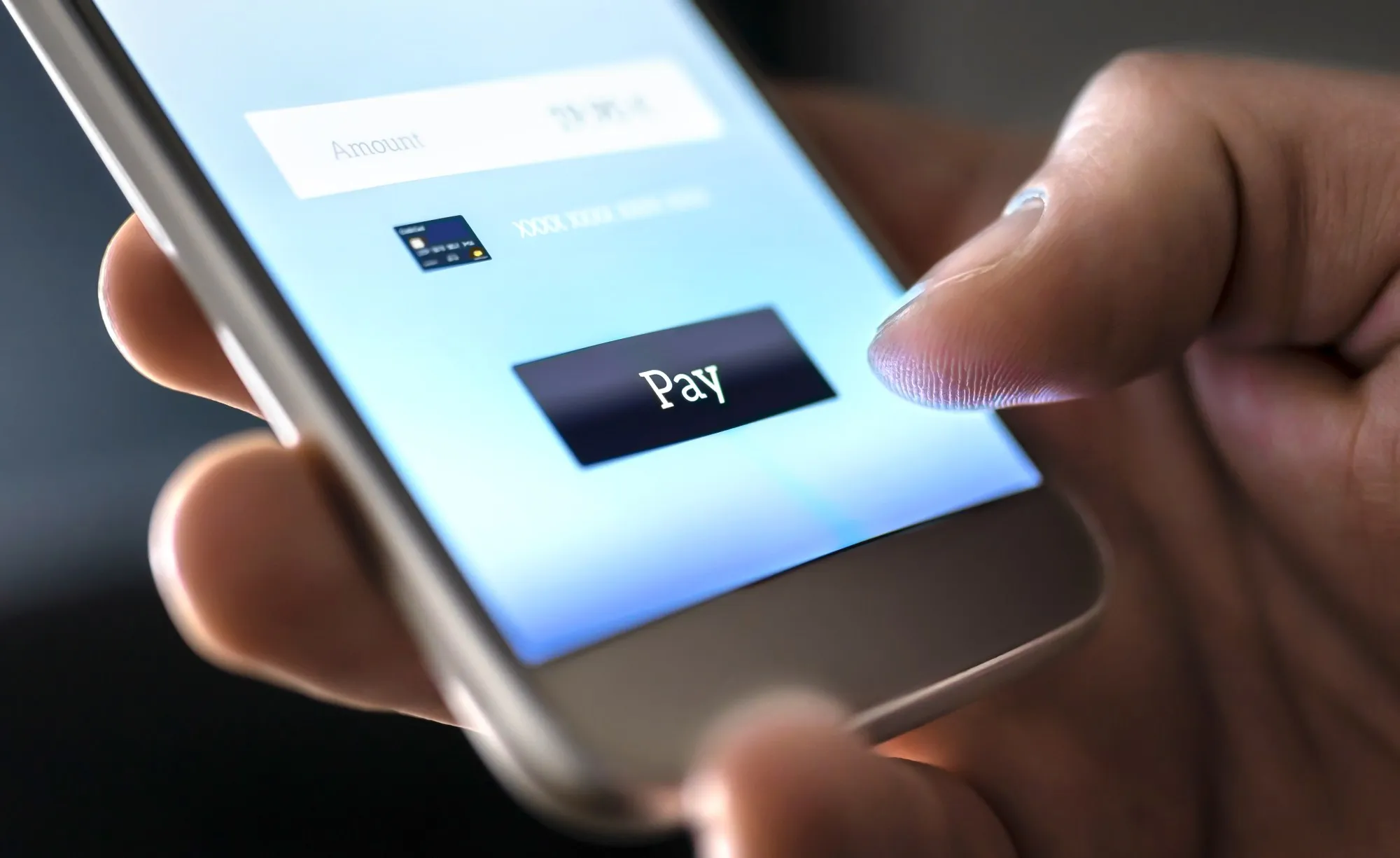
Try to buy a 10-dollar sandwich with a 10-dollar bill, and you will be surprised by how many times you will be turned away. Not because the money is counterfeit, and not because you owe more than you are offering, but because the register in front of you is not authorized to accept that cash. Walk into a trendy downtown café, and behind the voices, you will likely enjoy a particular silence only interrupted by the electronic chirp of a tablet confirming a tap. No drawer sliding open, no coins falling or settling against one another. Above the counter, a small sign informs you politely that cash is no longer accepted here.
Read more Commentary: Finding support in the slow adoption process
To many of us, this could feel like sophistication — clean, fast, effortless, frictionless — but there is an opportunity cost to that. The slow but steady disappearance of a physical currency is not a technological upgrade but rather a transfer of power. The individual becomes subordinated to the private financial institutions and technological platforms that now stand between us and every purchase we make.
To understand what is at stake, consider what we surrender each time we tap instead of handing over a bill. Physical cash remains a rare island of privacy in an otherwise fully documented life. When you buy a coffee, a book, or one hour of expertise in paper currency, a receipt will — hopefully — mark your transaction, but nothing will tie that piece of paper directly to you. Consequently, that piece of information will never be cross-referenced, aggregated or sold, because it was never linked to your identity in the first place. Digital payments erase that anonymity by default. Every transaction — your espresso, your prescriptions, your late-night sweet treat, your donation to a campaign you would rather not discuss at dinner — will not only be tied to your name but will also become a permanent entry on a ledger owned by a bank, a card network, or a data broker.
Talking about equality, while the loss of privacy is borne by everyone, the loss of cash itself is not. For the millions of Americans who are unbanked or underbanked, a cashless society would mean a closed door. Lacking a permanent address, the unhoused often cannot meet the identification requirements a bank demands; low-income families often cannot maintain the balances required to avoid monthly fees; and the elderly, meanwhile, are asked to navigate two-factor authentication or biometric logins with the same fluency as a teenager. When a business declines to accept paper currency it is undermining the most important pillar on which America was built: democracy.
The cost is not only economic. Behavioral economists Dan Ariely and George Loewenstein have spent years documenting what they call the pain of paying: that small, real discomfort we feel when spending physical money, as we watch our wallet visibly thin. That discomfort — a built-in brake on impulsive spending — is completely absent in any digital transaction. We are not just spending more because we want more, but also because the technology has quietly stopped reminding us how much things cost.
Read more Best deep freezer
Clearly, none of us is innocent of the convenience being described here, and I do not think the answer is pretending otherwise. The question is not whether digital payment is useful, but whether we are willing to let it become the only option.
The solution is not to retreat from progress but to have it coexist with accessibility. This coexistence must be enforced by a law that mandates the necessity of continuing to accept cash regardless of any other payment method offered. Jurisdictions of nations such as Italy, along with U.S. cities including New York City and Philadelphia, have already passed ordinances penalizing retailers who refuse physical currency, and their experience suggests the policy is enforceable.
Walk back into that downtown café, and the silence sounds different now. It is not the sound of progress but the sound of a choice being made for you, one tap at a time. In our mission to build a frictionless world, we should be careful not to eliminate the very freedoms that friction was protecting while remembering that cash is not nostalgia, and defending it is not a rejection of the future.
Pietro Cappellaro is a student-athlete at Rollins College, pursuing a double major in business management and philosophy with a double minor in data analytics and communication.