
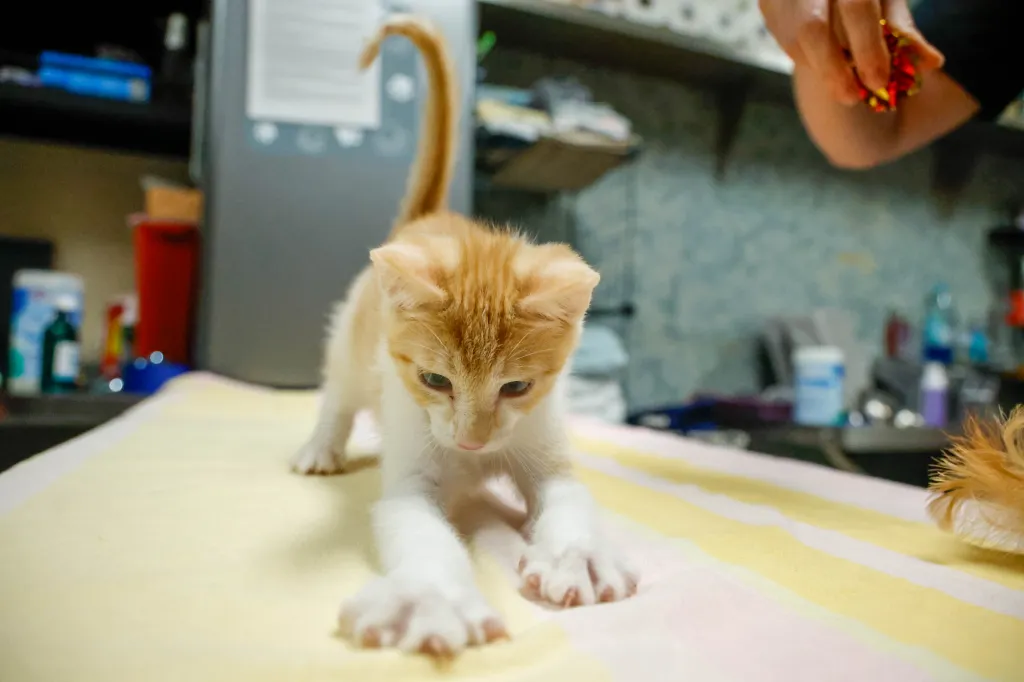
Declawing your cat for the sake of your furniture or to avoid being scratched is rapidly becoming taboo, as a growing number of countries and states are banning the once common procedure many call inhumane and cruel — similar to cropping a dog’s ears or using bullhooks on circus animals.
Read more Editorial: Election time, the Sentinel and you: An invitation
The American Veterinary Medical Association now discourages declawing. And earlier this year, reality star and social media influencer Khloé Kardashian said she felt “really, really terrible” about getting her two cats declawed.
The fierce debate over the procedure has now reached Central Florida, where Seminole County is moving toward becoming the second Florida county to ban the practice of surgically removing a cat’s nails.
“Imagine for a moment that to prevent you from scratching on a piece of furniture, a surgeon amputated your fingers and your last knuckle,” said Carla Wilson, a Winter Springs resident who is urging Seminole to enact the declawing prohibition.
“Every time you walked, grabbed a door handle or tried to balance, you felt the jagged edge of bone against your nerve endings long after being declawed,” Wilson, a member of the Humane World for Animals organization, said. “This is what happens to cats in our community every day under the guise of a simple nail trim. Declawing is not a manicure.”
Seminole’s animal control board recommended in June that county commissioners approve updating the animal ordinance to include the prohibition unless it is medically necessary. Commissioners are scheduled to discuss the ban at their July 28 public meeting before voting on it. County attorneys last week were still working on the details of the ordinance, including possible fines.
The proposed ordinance also would add rabbits to dogs and cats as animals that pet shops are prohibited from selling, unless they were obtained and adopted from animal shelters or rescue organizations. In 2018, Seminole banned pet stores from selling dogs and cats that come from high-volume breeding facilities.
The ban on rabbit sales is an effort to reduce the number of unwanted animals dropped off at shelters and Seminole’s animal services facility. Over the past 12 months, about 24 domestic rabbits have been turned over to the county, officials said.
But the declawing prohibition was the center of both meetings of the animal control board so far this year.
Declawing — medically known as onychectomy — has long been a controversial cosmetic surgical procedure that has largely fallen out of practice in recent decades as many vets and animal advocates consider it cruel.
Because a cat’s nails are connected to its bones, vets remove the end part of the animal’s toes, including a portion of the bone, Dr. Mitzi Vargas, a veterinarian for 32 years, said.
She added that many declawed cats experience lifelong pain. And because cats walk on their toes, declawed felines will shift their weight to their rear legs and that “causes arthritis, chronic pain and behavioral changes.”
“People that declaw think they are going to stop a cat from biting or scratching,” she said. “But they actually increase their propensity to bite, and their bite wounds are way worse than their scratch.”
Of the 22 licensed veterinarians in Seminole, only six perform declawing surgeries on cats, according a recent survey by her nonprofit organization.
Towne Center Animal Hospital in Sanford is one of those, according to its web site and an employee, who did not want to be named.
Read more Asking Eric: Our son said we were barred from his wedding but we got an invitation
“With our advanced laser equipment, declawing has become safer and more comfortable for our patients,” according to its web site. “The medical laser seals off nerves and blood vessels, reducing postoperative pain and blood loss, which leads to faster healing compared to traditional methods.”
Volusia County became the only Florida county to ban declawing in 2022 when commissioners overhauled its animal ordinances. Vets who violate the ban can be fined up to $500. Cats may be declawed if a vet decides it’s medically necessary, however.
In 2019, then state Sen. Lauren Book, a Democrat from Plantation, introduced a bill to make declawing illegal statewide. The bill did not move past committee hearings.
Book tried again in 2023 by adding an amendment to another bill, but that also died in committee.
Across the country, several states since 2018 have banned declawing, including New York, Rhode Island, Virginia, Maryland and Massachusetts.
California finally succeeded in enacting a ban last October after state lawmakers were consistently met with stiff opposition to several failed efforts dating back to 2018. The California Veterinary Medical Association had said the legislation was an effort to dictate what medical practices doctors could perform and that a statewide ban was unnecessary because most vets personally refused to do it.
The statewide move came after West Hollywood in 2003 passed the first legislation in the country banning declawing.
Today, more than 40 countries ban declawing, including New Zealand, Australia, England, Germany, Spain and Sweden.
The American Veterinary Medical Association, or AVMA, strongly discourages declawing as an elective procedure, but defers to veterinarians on each case. As an alternative, the organization encourages cat owners to try other methods in dealing with a scratchy kitty — including frequently clipping nails, applying soft nail caps and providing scratching surfaces scented with catnip, such as boards and posts.
A spokesman for the Florida Veterinary Medical Association said in an email to the Sentinel that its group follows the AVMA’S position on declawing and also “discourages” it as an elective procedure.
Declawing “should only be considered after alternatives have been explored and when deemed necessary by the veterinarian in consultation with the client,” said David Warren, a spokesman for the Florida organization in an email to the Sentinel.
Wilson was one of the leaders of a 2018 grassroots campaign to place Amendment 13 on the statewide ballot that permanently banned wagering on dog races, including greyhounds. The amendment was approved by 69% of Florida voters.
“We’re hoping the county will prioritize animal welfare over the safety of a sofa, and protect cats from needless and unnecessary pain,” Wilson said.
Read more Miss Manners: I got in a fight with the child’s mom over the birthday cake