
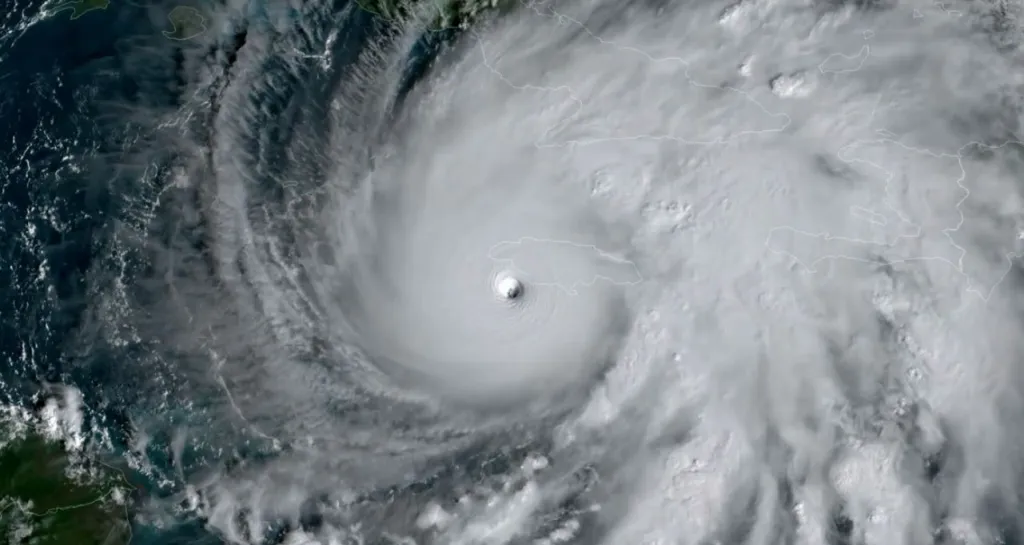
After months of predicting a “below normal” hurricane season, weather researchers at Colorado State University further on Tuesday and now expect even fewer tropical storms than average to form in the Atlantic this year.
Read more Maxwell: Uthmeier scurries from cameras, now that ‘Alligator Alcatraz’ bills are due
Forecasters now anticipate nine named storms, including four hurricanes and one major hurricane, during the season which runs through Nov. 30.
That’s a reduction from last month when CSU predicted the season would see 11 named storms, including five hurricanes and two major ones. An average hurricane season has 14 named storms, seven hurricanes and three major ones.
Researchers cited an emerging El Niño in the Pacific Ocean that is expected to intensify over the next few months and become unusually strong during the peak of hurricane season from mid-August through mid-October as the reason for the “well below-normal season.”
“We anticipate the powerful El Niño being the dominant factor…driving high levels of tropical Atlantic vertical wind shear” which tend to tear apart forming storms, according to the CSU report.
Also, sea surface temperatures across the Caribbean and tropical Atlantic are near average. Higher than average temperatures serve as high-octane fuel for tropical storms building strength.
Still, forecasters urge residents, especially those living along the Atlantic and Gulf coasts, to prepare for an average hurricane season.
“As with all hurricane seasons, coastal residents are reminded that it only takes one hurricane making landfall to make an active season,” according to the report. “Thorough preparations should be made every season, regardless of predicted activity.”
Tropical Storm Arthur — a mostly disorganized system that brought flooding to southern states in mid-June — has been the only Atlantic storm this hurricane season. That means eight remaining storms are predicted in the Atlantic this season, according to CSU researchers.
Read more Billy Napier admits to failures as Gators coach, reveals what went wrong
According to the CSU report, there is a 17% chance that a major hurricane will strike the U.S. coastline. That probability was reduced from last month’s 24%. During an average season, the probability is 43%.
There also is a 10% chance that a major hurricane will strike the Gulf Coast between Cedar Key and Brownsville, Texas. That’s four percentage points below last month’s and 27 points from an average season.
The CSU forecasts — released annually in April, June, July and August — are among several well-regarded reports closely studied by emergency management officials, weather forecasters and property insurance companies.
In April, CSU predicted 13 named storms and six hurricanes.
The National Oceanic and Atmospheric Administration and AccuWeather have also forecast a below-average season, thanks to El Niño.
During an El Niño year, the waters in the central and eastern Pacific near the equator become warmer, increasing the chances for more power storms in that region of the globe. But in our area, it leads to sinking air and higher pressure systems in the Atlantic, along with stronger upper level wind shear.
For example, Super Typhoon Bavi made landfall on Monday over U.S. territorial islands near Guam in the western Pacific with winds over 150 mph, according to the National Weather Service.
The Category 5 super storm also caused destruction as it plowed across the Northern Mariana Islands, also a U.S. territory.
Read more Florida man, 80, too old and ill to be executed for 1986 murders, lawyers say