
If Florida elections had a motto, it would be “expect the unexpected.” But even by those standards, many Floridians have been surprised about the weirdness that descended on the 2026 election just as the official action was getting started. And it’s already clear that state election laws are going to need some tweaks in coming sessions, if the aim is to give voters every opportunity to choose their own representation.
Read more Even in blue states, hospitals have continued to drop gender-affirming care for youths
Most of the problems centered around one law: Florida’s “resign to run” mandate, which requires political officeholders to step down from their current offices before seeking a different elected position. Certainly, Florida lawmakers should take a deeper look at this law, which has sparked tangles of litigation (which we will address in a future editorial).
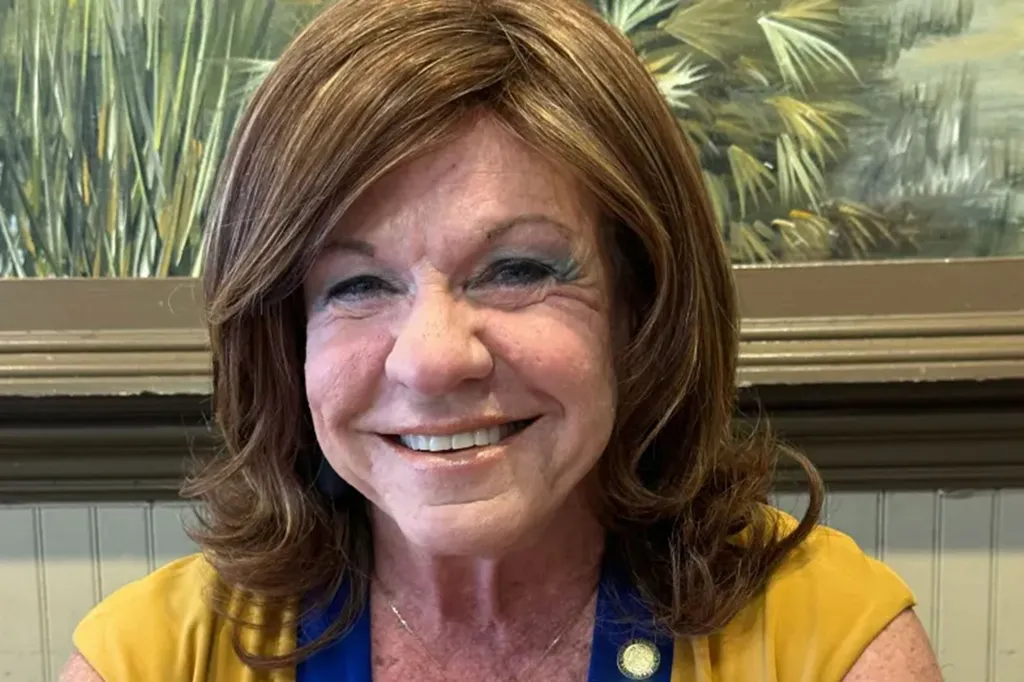
But one of the biggest surprises — the last-minute failure of state Rep. Paula Stark to qualify for the Orange-Osceola House seat she’d represented for four years — drew the most immediate attention. It involves questions that, prior to now, seemed pretty obvious to most people involved. But there are easy fixes, ones the Legislature should apply.
Stark’s troubles started just before noon on June 12, when the candidate-qualifying period ended for most of the races on the August and November ballots. A few hours after qualifying ended, Stark’s name picked up a red flag: “Did not qualify.”
An unexpected turn
That was a surprise to everyone, particularly Florida Democrats, who lost a hard-fought election battle to hold on to the seat in 2022 and almost managed to claw it back in 2024. Stark’s failure to qualify as a Republican left only two Democrats registered to run for the seat — Anthony Nieves, who was Stark’s general-election opponent in 2022 and was eliminated in the Democratic primary in 2024; and Jorge Figueroa, president of the Puerto Rican Chamber of Commerce of Central Florida.
That turns the August primary into a rare open primary, open to all voters in District 47 regardless of party affiliation. Had Stark qualified, she would have faced the winner of an August primary — open only to Democrats — in November.
A week after qualifying ended, Stark filed suit. And that’s when things got really weird. Because none of the stories made much sense. The question revolves around whether Stark’s campaign treasurer Joel Davis handed in all the paperwork required to qualify for office. That involved three documents — her oath of candidacy, a check for the filing fee and a financial disclosure document known as a “Form 6.” Davis says the clerk stamped the first two and then handed the third back to him — the Form 6. He took it and left, assuming all three had been clocked in, he says.
It seems likely that Davis had the Form 6 with him when he arrived at the Tallahassee offices of the Elections Division. That form was also supposed to be filed with the state Commission on Ethics, and records show it was turned in there on June 11,the day before qualifying. He was in Tallahassee to make sure Stark’s name was on the ballot.
But the Form 6 Davis produced as part of Stark’s lawsuit bore no stamp. And the clerks in the state Division of Elections told a different story. They say Davis never handed in a Form 6. Normally, they’d inform candidates that they were missing a key piece of paperwork, but because there was less than 30 minutes left before noon they had stopped letting candidates know that their paperwork might be deficient.
A hole in the law
State qualifying law addresses this, saying elections-office staff are supposed to make a “reasonable” effort to at least let candidates know that they are missing one of the three documents needed to qualify. But that law doesn’t cover the last day of qualifying. Nobody expects clerks to be reviewing every detail of the documents handed to them. But two stamps versus three? Even if Davis wasn’t correct about handing the document to the clerk, it should have been instantly noticeable that he was missing one of the three documents needed to qualify. Pointing that out to him and asking him to step out of line while he located a copy of the Form 6 would have taken seconds, and allowed clerks to keep processing other candidates’ paperwork.
Read more How to stay safe and still enjoy produce this summer with the outbreak of diarrhea-causing parasite
The situation was apparently exacerbated by the fact that the state Division of Elections apparently treats noon as a hard cutoff, regardless of whether candidates were in line and waiting to qualify beforehand. That’s not consistent with some county elections supervisors, who allow anyone who is present at 11:59 with all the relevant paperwork to qualify, even if clerks have to work past noon to get everyone checked in.
The latter approach ensures more even-handed treatment. A drop-dead cutoff of noon would — and probably has — excluded candidates who were in the office before that time but hadn’t made it to the front of the line before noon.The Legislature should tweak the qualifying law to ensure that candidates who are present and in line to qualify are allowed to be on the ballot. And if they don’t hand in the three required documents, they should at least be told they’ve failed to qualify.
A cutoff is a cutoff
Right about now, many of you are probably wondering why the state should “reward” candidates who wait until the last minute to qualify. They believe state law should be supplemented with a universal corollary: You snooze. You lose.
That’s not the way law is supposed to work. Consistency is important but this law, as written now, can’t be applied consistently. Potentially, someone could show up at 9 a.m. and if there were a lot of candidates already waiting, not make it to the front of the line before noon. Laws should be constructed so that the same effort produces the same results. Using “in line by” accomplishes that, and sends a clear message to state elections workers as well as the state’s 67 elections supervisors and hundreds of municipal clerks who must also handle candidate qualifying.
There’s one more thing to keep in mind: This isn’t just about Paula Stark, or any other candidate who intended to run this year but didn’t quite make it across the finish line.
It’s about the voters of House District 47, especially the Republicans — who watched a seat they’d worked hard to win slip out of their grasp before a single ballot could be cast. Many of them will be missing the chance to vote for a candidate who comes closest to their own values.
With all that said, it seems pretty apparent that Stark has missed her shot at the 2026 election. Circuit Judge Joshua Hawkes has given her one more chance to argue that she should be on the ballot, but in reality that ship has already sailed. Orange and Osceola ballots are printed. Mail ballots are in the process of going out. Realistically, all that can be done is to shut down the possibility of future he-said she-said situations or debates over what deadlines really mean. Lawmakers should remember this next session.
The Orlando Sentinel Editorial Board consists of Opinion Editor Krys Fluker, Executive Editor Roger Simmons and Viewpoints Editor Jay Reddick. Use [email protected] to contact us.