
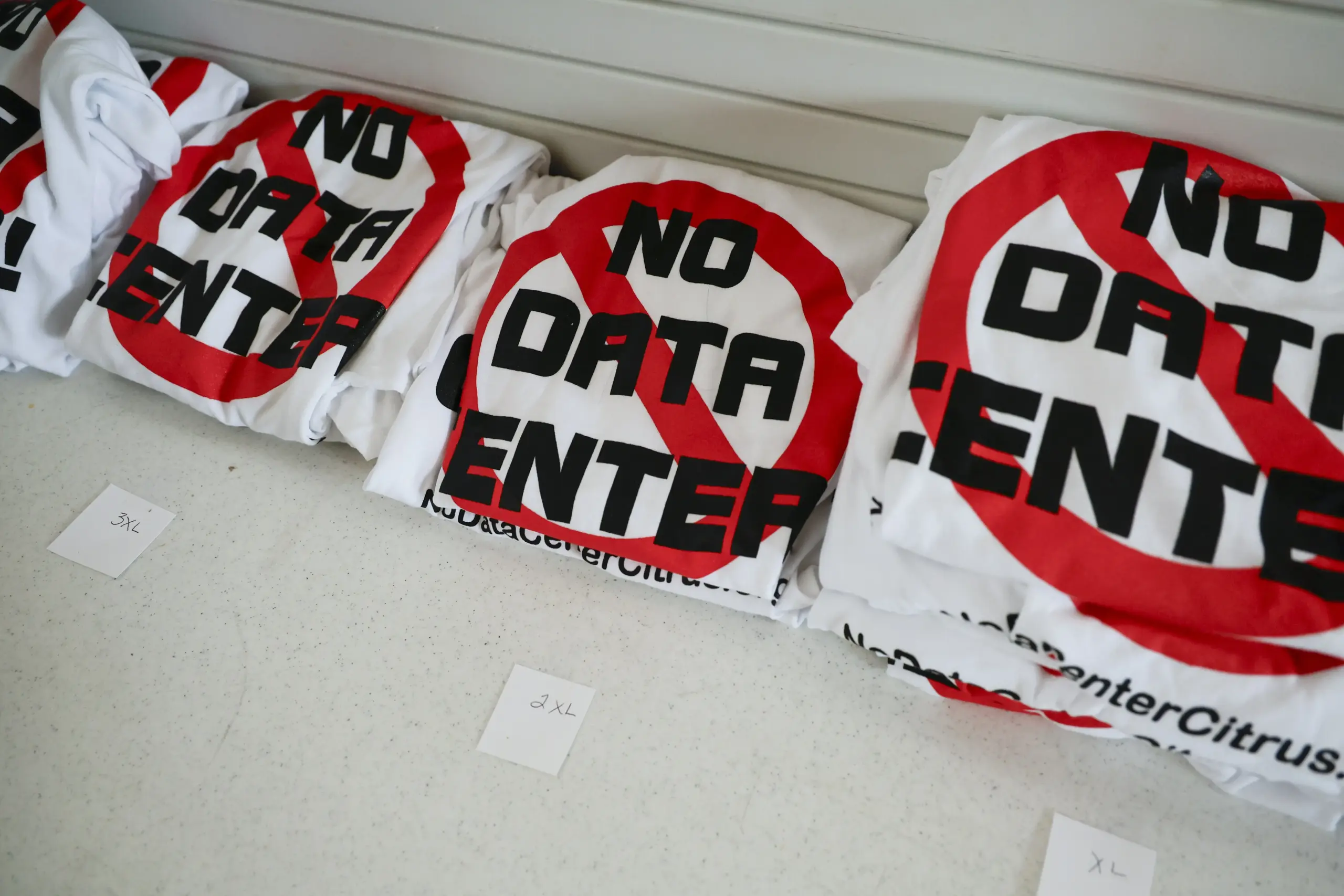
Duke Energy Florida is trying to exclude a consumer group from weighing in on how the company will distribute the costs of increased electricity demand from data centers.
Read more DeSantis ally supported death penalty for child abusers. He could now face it.
In filings to state utility regulators Thursday, Duke argued that Florida Rising, a group that fights for lower electric bills for residents, shouldn’t be allowed to participate in the data center hearings.
These hearings are the result of a law signed by Gov. Ron DeSantis earlier this year, which imposed the state’s first regulations on data centers. The law says that electric utilities can’t bleed the costs caused by data centers onto regular consumers. But it requires utilities to submit their plans to regulators on the Florida Public Service Commission for how they will make this a reality. Electric utilities generally stand to profit from data centers coming into their territory and consuming large amounts power.
Duke was the first company to submit its data center proposal, making it a test case for how strictly regulators will enforce the consumer protections.
But its plan wouldn’t implement any firm rates or fees specific to data centers, prompting consumer advocates to cry foul. Earlier this summer, both Florida Rising and the state’s legislatively appointed consumer representative, Walt Trierweiler, alleged that Duke’s plan doesn’t follow the law. At least one state regulator, Commissioner Gary Clark, has signaled that he may agree, previously telling Duke that they are “on real shaky ground.”
Now, Duke says Florida Rising lacks the legal authority to be involved in the case. Hearings about Duke’s data center plan are scheduled Tuesday and Wednesday in Tallahassee, and if the commission sides with Duke, Florida Rising may not be able to participate.
To back up its argument, Duke filed paperwork arguing that Florida Rising hasn’t proved that it represents Duke customers. Florida Rising has members statewide, and said it confirmed that at least 117 of its members in Pinellas, Osceola, Orange and Seminole counties live at addresses served by Duke.
Duke said that’s not enough. The company said Florida Rising didn’t confirm the accuracy of addresses provided by its members, nor did the group ensure that their members are the ones listed on their households’ Duke accounts.
“At most, the exercise indicates that certain addresses may fall within (Duke Energy Florida)’s service footprint,” the utility’s lawyer, Dianne Triplett, wrote. “It does not establish that the individual members associated with those addresses are (Duke) customers.”
Read more DeLand unanimous choice after Week 1 | Super 16 Football Coaches Poll
Florida Rising, which has intervened in multiple past cases before the utility commission, has balked at this argument, calling it a “red herring.”
Just because someone’s name isn’t on the Duke account, the group argues, doesn’t mean they’re not Duke customers who wouldn’t be impacted by higher bills.
“Obviously, everyone in the household loses electricity from a disconnection, not just the named customer,” wrote attorney Bradley Marshall.
Also at issue in this case is whether a secretive collection of large industrial companies, called the Florida Industrial Power Users Group, should be allowed to weigh in on the data center rules. The group does not disclose its members, but has also participated in past utility fights before regulators.
Duke Energy supports its inclusion in the data center case. Trierweiler, the consumer representative appointed by the Legislature, argues they should not be eligible.
The commission is expected to make a decision about all these eligibility questions before Tuesday’s 9:30 a.m. hearing begins.
©2026 Tampa Bay Times. Visit tampabay.com. Distributed by Tribune Content Agency, LLC.
Read more ‘Very bad shark bite’ off Key West sends victim to hospital, Coast Guard says