
It was a marathon government meeting that stretched more than nine hours.
There were complicated PowerPoints filled with maps and charts. Lawyers rattling off statute numbers. Droves of residents sitting shoulder-to-shoulder, waiting their turn to voice fears about how proposed Citrus County data centers could damage their home values, health and way of life.
Read more Florida seeks repeal of four required vaccines for schools
Amid the deluge of information was one quick mention, in about Hour 4, of a donkey.
It came as one resident told planning officials about the risks of noise pollution, detailing how low-frequency noise emitted by data centers can be particularly harmful.
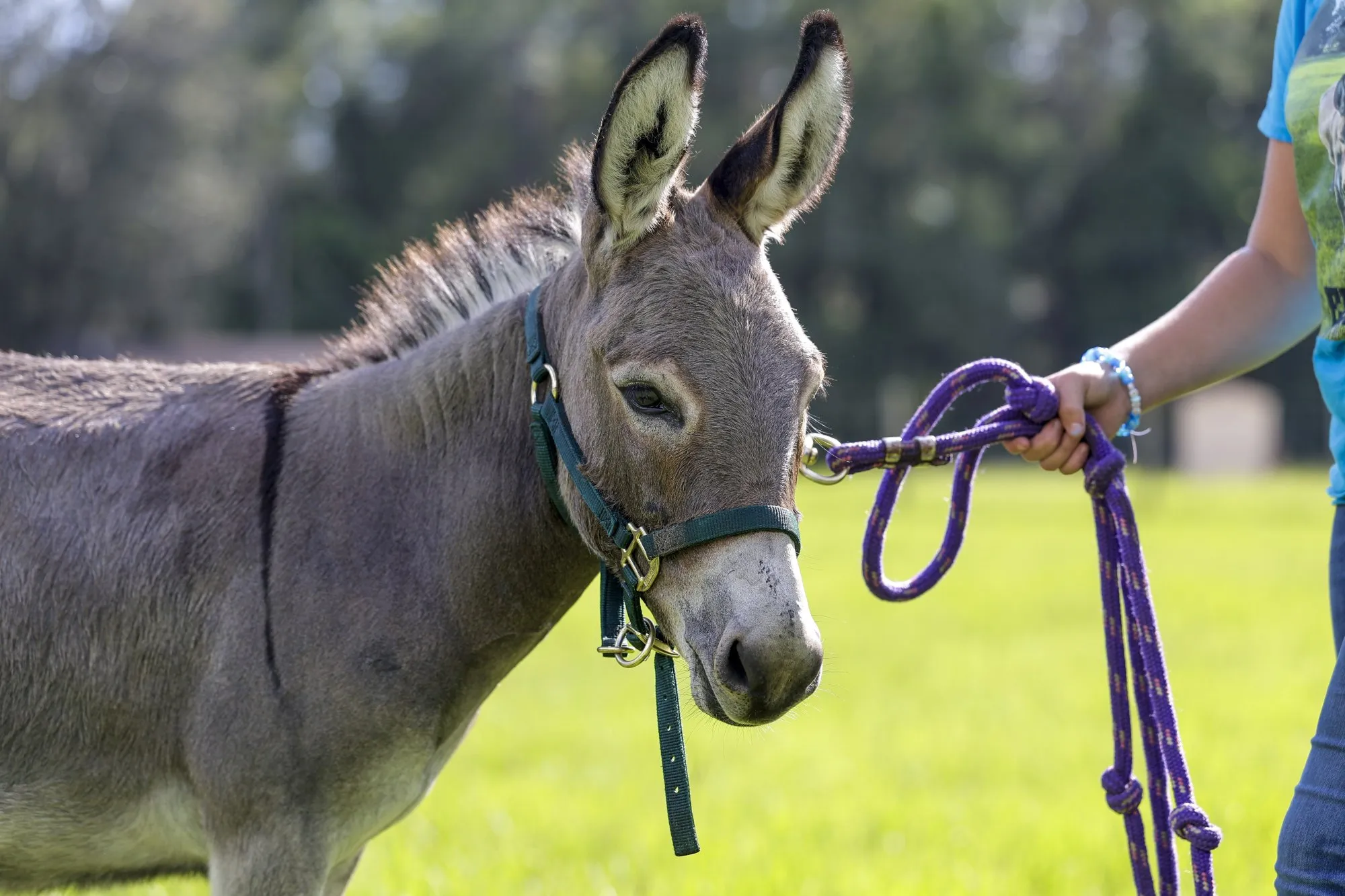
“There’s a little donkey right there on the street” adjacent to the proposal, said Joe Hicks, a retired data center industry employee who made a detailed presentation for the opposition.
“The donkey’s name is Eloise. And low-frequency noise is critical to Eloise.”
For a moment, the tense room lightened. Hicks returned to Eloise a few minutes later, half-joking that if the proposal passed, he’d commission a study to measure noise at her fence line. Five hours later, as the planning commission voted unanimously against the proposal, one member cited the donkey.
“I’m concerned for Eloise,” said Commissioner Michael Facemyer, “because she is kind of the face of this application.”
As Florida’s summer of data center backlash has worn on, residents fighting the warehouses have found reasons for hope. Fierce public pushback has halted not just the Citrus County proposal, but others in Okeechobee, Palm Beach and St. Lucie counties. Political pressure has grown for candidates running in Florida elections to lay out clear positions on data centers. And residents have banded together with the power of clipboard petitions, homemade T-shirts and Facebook groups.
Out of this environment, local symbols of resistance have been born. Symbols like Eloise.
Some residents made Eloise T-shirts, while a flyer with her photo garnered traction online. “THANK YOU ELOISE!” someone posted.
So the Tampa Bay Times went on a mission to track her down. Facemyer, the planning official, said he’d spotted “a donkey fitting her description” while driving near the proposal site.
A few more emails led us to her pasture.
A ‘bougie’ life
Eloise, a 1-year-old mini Jerusalem donkey, lives in the town of Hernando. She’s loved by her family of humans (the Osteens) and other farm animals (including Elsie the cow; goats Honey, Dolly, Roger, Polly and Dodger; and Tom, the king of the turkeys who stalks around his enclosure like a pharaoh).
Samantha Osteen, 38, said they keep their beloved menagerie in the 5 acres around their home not for agriculture but more as an “expensive hobby.”
“They’re very well-taken-care-of, bougie little animals,” Osteen said.
But Eloise is adored most of all by 11-year-old Rylee.
Most days, Rylee takes Eloise for a walk around the property and is in charge of giving her water, baths and treats like apples and oatmeal cookies.
“She’s like a dog, but kind of better,” Rylee said.
Eloise comes up to Rylee immediately when she sees her for pets on the nose. Then she follows her around. The donkey has a gentle demeanor, allowing 7-year-old Cole to hug her clumsily around her face. She gets spooked when Cole rides his bike too close, or when a Tampa Bay Times reporter turned the page of a notebook too fast.
“Eloise is like my best friend,” Rylee said. “I’m out here every day with her.”
The Osteens found out about the data centers proposed for the property 30 feet from their fence from a county notification in the mail.
Tommy Osteen, a 41-year-old electrician, was gobsmacked. He and Samantha are both from Pasco County but moved north 15 years ago to try to outrun the development they saw encroaching on Old Florida.
Read more Single vote determines St. Cloud primary as Osceola recounts 2 races
He couldn’t believe that Citrus County, which avoids permitting strip clubs, would allow a large-scale data center on what is now a velvety green field. The developer, Deltona Corp., released few details about how big the data centers could be, but its proposal would have expanded an existing industrial park to 1,356 acres. Eventually, it floated the idea of a warehouse capable of consuming 140,000 gallons of water in its first year.
“With this county, it’s almost like it’s growing too fast and they don’t know what to do,” Tommy Osteen said. “There’s no game plan.”
Rylee was most concerned about the noise a data center might bring — and she had a point.
The compounded hum of servers, diesel generators and cooling fans can create constant noise potentially harmful to people and animals.
Nashville zoo officials are fighting a data center in Tennessee, arguing the sound and lights will increase the animals’ stress. Cows exposed to continuous noise above 85 decibels eat less and produce less milk, according to the University of Wisconsin-Madison. In “Data Center Alley” in northern Virginia, with one of the world’s highest concentrations of data centers, residents say the incessant humming has driven away all the birds.
Residents around the country have sued data centers over noise, according to NBC News, which collected videos from people living on the fence lines. The clips include high-pitched, mechanical whirring and loud, constant whooshing like TV static.
A donkey becomes a hero
One day while Samantha was grocery shopping, she got a call from a neighbor. Would she like to come to a meeting at the local library with Hicks, the local activist presenting against the data center project?
Samantha joined, Rylee in tow. As the adults gathered around a table, discussing the proposal, Rylee passed her mom a note. She wanted to ask a question.
As Rylee explained her concerns about Eloise to the group, she started to cry.
“She doesn’t really understand what it all means, but she knows it’s going to have some kind of impact,” Samantha Osteen said in an interview. “As if people aren’t enough of a reason to not have a data center, the animals shouldn’t be subjected to it, either.”
The Osteens planned to attend the June meeting of the planning commission. Rylee wrote a short speech, in which she planned to tell officials how constant noise and light pollution would make it hard for the animals to “rest and feel safe.” How could a donkey sleep if bright lights always made it seem like daytime?
But a scheduling conflict came up, and they weren’t able to go.
Hicks brought up Eloise on his own.
Samantha was working at the time, reviewing health charts at home as part of her nursing job. In the background, she was listening to the government hearing on YouTube, when she heard Eloise’s name.
“I was like, ‘Oh my god, he just mentioned my donkey,’” she said.
Then came the vote that kept the project at bay. Shortly after, Deltona withdrew its application.
Rylee is proud that Eloise helped bring about change. She wants people to remember animals as discussions about data centers continue.
“I feel like (people) shouldn’t just talk about them, they should talk about how it affects the nature and all of the animals,” Rylee said. “It would affect them, too. … It would affect all of us.”
©2026 Tampa Bay Times. Visit tampabay.com. Distributed by Tribune Content Agency, LLC.
Read more Oh, Canada! Florida tourism numbers dip, driven by Canadian backlash over trade policies