
Florida voters can be unpredictable.
Sixty years ago, they elected the outlandish Claude Kirk governor. Forty years ago, they made Bob Butterworth attorney general, when even his friends said it couldn’t be done. Eight years ago, a socialist-leaning Democrat, Andrew Gillum, came within an eyelash of being governor.
Read more Central Florida in store for a hot and stormy weekend, NWS says
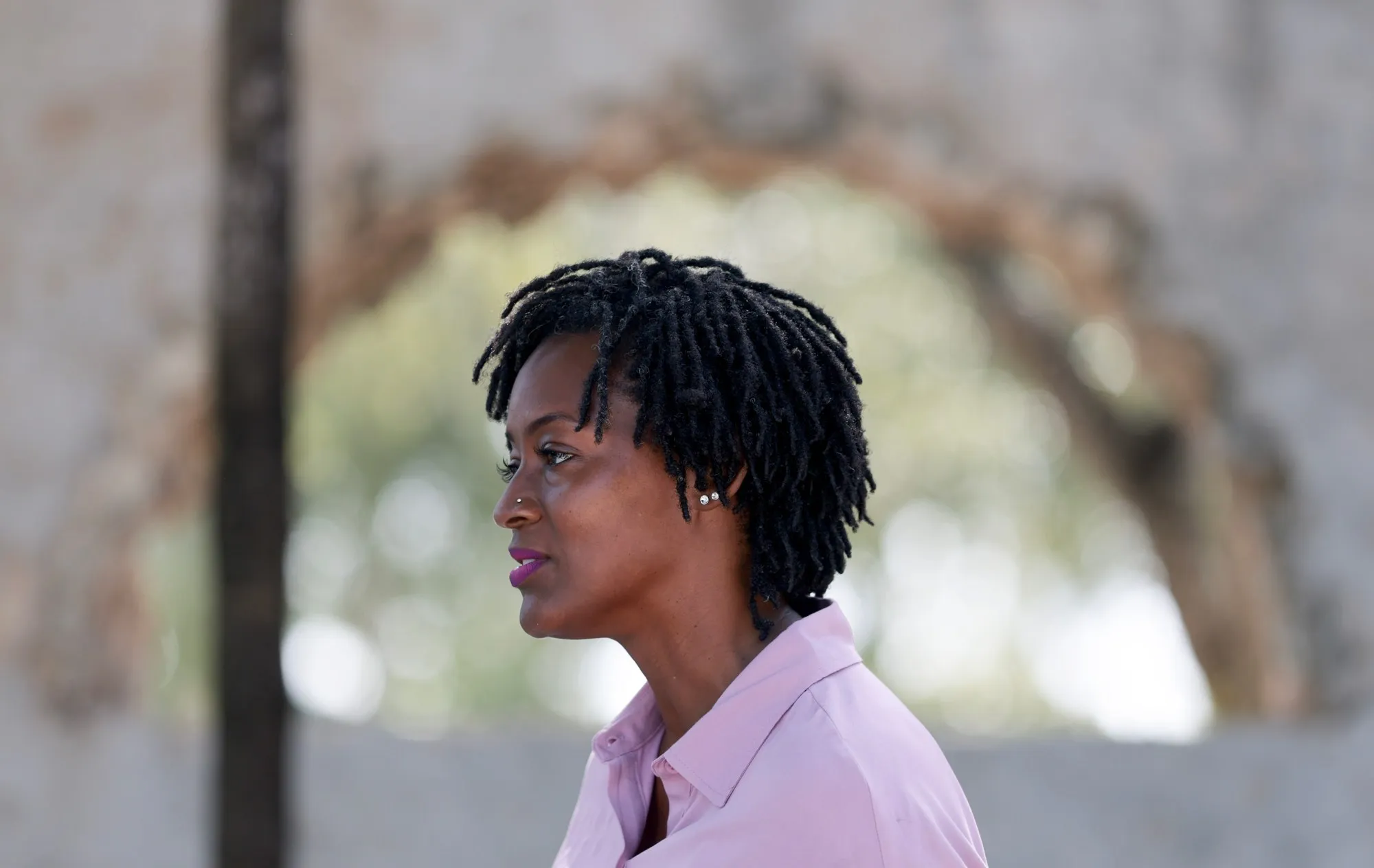
Despite pollsters’ best efforts to forecast outcomes, voters have their own ideas. Take Angie Nixon.
Her stunning 12-point victory in the Democratic primary for U.S. Senate seemingly caught the entire state by surprise.
But it shouldn’t have.
A statewide poll of likely voters in mid-July by the University of North Florida found Nixon slightly more popular with the Democratic base than Alex Vindman, the well-funded but uninspiring front-runner described everywhere as the presumptive nominee.
The poll at UNF showed Nixon polling slightly better than Vindman. It looked like a statistical oddity. In hindsight, it deserved more attention.
In the poll, Nixon was preferred by 90% of Democratic voters against Republican Ashley Moody, while Vindman was preferred by 86% of Democrats.
In a hypothetical matchup against Moody, the poll showed Nixon would perform a bit better than Vindman, but would still lose by 50% to 42%. It looked like a blip on the political radar and few paid attention to it at the time.
As Democrats began to fill out their mail ballots, on July 20, A.G. Gancarski of Florida Politics wrote: “Nixon seems to be the preference of actual Democrats, with 90% backing her against Moody, while Vindman only takes 86% of those in his party. Black voters, a key demographic for the Democratic Party in Florida, are more committed to Nixon than to Vindman in this survey.”
The poll’s crosstab included much smaller sub-samples of voters, broken down by age, gender and location, and the statewide sample was just 250 Democrats. But as tiny as the sample was, it saw Nixon surging — and it could mean trouble for Moody.
The crosstab showed Nixon slightly more popular with unaffiliated NPA voters than Moody, and it had Nixon tied with Moody among women, 46% to 46%. Very small numbers, but they could be a harbinger.
Read more A Reunion rental with basement bowling alley is yours for $12.5 million
What should never be overlooked is that the universe of Florida voters is ever-changing. This isn’t New Hampshire or North Dakota. Voters come and go constantly. A lot of voters on the rolls who will be voting in November were not living here four, six or eight years ago.
Millions of them have never voted for Moody, and have no idea who she is. They don’t know very much about Nixon, either. So in the minds of many voters, the candidates start out on equal footing.
Moody, who was appointed to the Senate by Gov. Ron DeSantis, has no brand of her own. That is partly her own fault, as she diligently avoids media attention. On top of that are Moody’s troubling links to the Hope Florida grand jury scandal that has enraged many voters.
By contrast, Nixon is a clear loud voice against the establishment, big corporations and billionaires and for working people, the poor and minorities. Nixon also has a proven knack for drawing media attention. She’s much more of a voice for the moment than Moody.
Pundits anticipate a larger-than-normal turnout in November, driven by public revulsion of President Trump and his highly unpopular policies. Moody enthusiastically supports Trump.
Moody has one enormous political advantage, simply because she’s a Republican in a solidly red state. There are about 1.5 million more registered Republicans than Democrats in Florida.
But the Republican brand is in serious trouble, and Nixon has already demonstrated an ability to inspire voters — especially Blacks, women and young people.
Florida voters can be very unpredictable. We’ve seen it before.
Steve Bousquet is Opinion Editor of the Sun Sentinel and a columnist in Tallahassee and Fort Lauderdale.
Read more Public payments, private profits: A half-century of methadone in America