
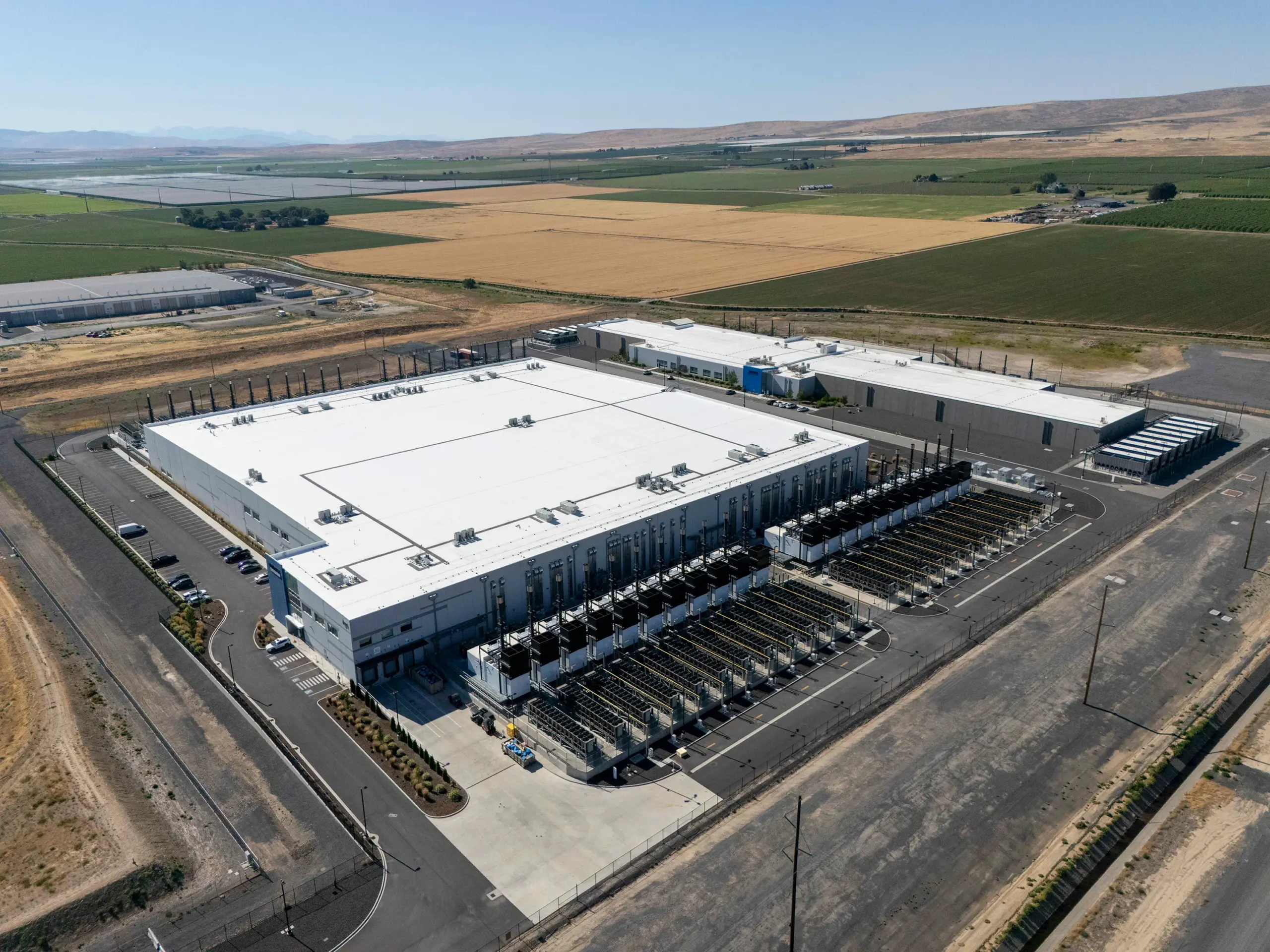
Facing public concern and heeding their own worries, Orange County commissioners agreed Tuesday they likely will impose at least a temporary ban on resource-guzzling data centers.
Read more Maxwell: David Jolly, Winter Park join chorus calling for hotel-tax reform
Though the board did not vote, commissioners seemed unanimous in support for a moratorium, an action taken by more than a dozen other local governments in Florida to block large data centers or freeze development applications while they write rules.
More than 60 people appeared before commissioners Tuesday, and most supported such a move.
“It’s clear from the public comment we heard this morning that residents are asking us to do something,” said commissioner Kelly Martinez Semrad. “They want a moratorium to give us time to study, assess and then protect them. We all have concerns.”
Semrad proposed the board consider a moratorium, troubled by the proliferation of massive computing sites that consume huge amounts of water and electricity to power a boom in artificial intelligence. Orange County has not yet received an application for a giant data center, but she and worried residents are concerned and want the county to put rules in place before one is filed.
“Our land use code and comprehensive plan, including Vision 2050, are devoid of any regulatory strength to control the impact of these facilities on our communities,” Semrad said. “It’s simply because they came onto the market so fast, and we see other counties and municipalities trying to catch up now.”
State Rep. Anna Eskamani, a leading candidate for Orlando mayor in 2027, noted state legislators did not preempt local governments from adopting rules to protect communities from the impact of data centers on their resources. “We have to protect our planet, protect our county, and so putting this into place is going to be good bipartisan policy,” said the Orlando Democrat.
Large data centers — called hyperscale data centers — emit constant noise of 100 decibels or more from facility cooling fans, the equivalent of a roaring crowd at an Orlando City soccer game “only it’s not cheering,” Semrad said.
And they operate 24/7.
She played a minute-long recording of a loud, annoying hum captured outside a data center in Michigan.
“I want you to understand what it would be like to live next to an AI data center,” Semrad said, peering over stacks of petitions and constituent emails demanding a ban. Before she played the recording, a warning appeared on viewing screens inside the commission chambers: “IF YOU HAVE A SENSITIVITY TO NOISE, PLEASE EAVE THE CHAMBER OR COVER YOUR EARS.”
“I think you got all of our attention with that noise,” Orange County Mayor Jerry Demings said. “Certainly, I don’t want to live next to it.”
Eric Gray, who heads a not-for-profit group and serves on the county’s planning and zoning board, offered what he described as “a real-world example” of a proposed data center near Yeehaw Junction in Osceola County that would be 7 million square feet.
“That’s roughly the size of the Orange County Convention Center,” he said. “That kind of size makes it too hard to ignore and one industry estimate puts energy demands for a data center that size at around 700 megawatts a day.”
Read more UCF’s Tackett Curtis reunites with DC Alex Grinch to solidify Knights’ defense
Gray said such a center might quaff 5 million gallons of water a day to continuously cool banks of processing computers, about the same amount consumed daily by residents and businesses in St. Cloud, a city of 75,000 residents.
“Hyperscale data centers are being proposed throughout the country at an alarming speed, giving most communities and residents no time to fully understand the impact these projects pose to our neighborhoods,” said Susannah Randolph, director of the Florida chapter of the Sierra Club, an environmental group. “We are counting on our leaders, you, to slow down this process so that we may better assess the risks to our quality of life.”
She said impacts on water and energy are huge yet companies proposing the big centers “are working hard to evade public scrutiny and discussion by operating in the shadows” through campaign contributions and non-disclosure agreements.
Both candidates for Orange County Mayor said last week they support a moratorium on data centers.
More than a dozen states have enacted or considered pausing data center development, and at least 100 localities nationwide have adopted rules to stop or slow down development of behemoth computing facilities in their communities.
Mayoral candidate Tiffany Moore Russell, a Democrat, said she supports a pause to study the issue before deciding on whether or not to move forward, while Chris Messina, the Republican in the race, said he opposes them because of their tremendous water usage and potential of releasing pollutants back into the environment.
Many small data centers already operate in Florida. Most people are worried about the massive ones.
“The small ones do not have the environmental and health impacts that we’re concerned about here like the large ones do,” said Justin Harvey, an Orlando resident who urged commissioners to adopt a moratorium. “No one wants these environmentally destructive facilities in their backyard that will lower property values, and you won’t be able to sell your house.”
Harvey dispelled geopolitical concerns, raised by President Trump who has criticized communities protesting data centers. “They say we want to beat China, but in what way? Becoming a total surveillance state? We’ve got 5,000 data centers. They have 400.”
Orange County staff will have to estimate how long they need to study the issues.
“A moratorium typically is a pause in order to allow something to be studied. I’ve heard short, medium and long-term issues…” deputy county attorney Georgiana Holmes said, reciting a long list of concerns. “The moratorium should cover the time period staff needs.”
Semrad said she expects county staff to propose a moratorium length in early December. At a minimum, a moratorium would cover the estimated time to study issues, assess impacts and implement protections, she added.
Read more FSU’s linebackers have stepped up, but now injuries taking toll on Seminoles