
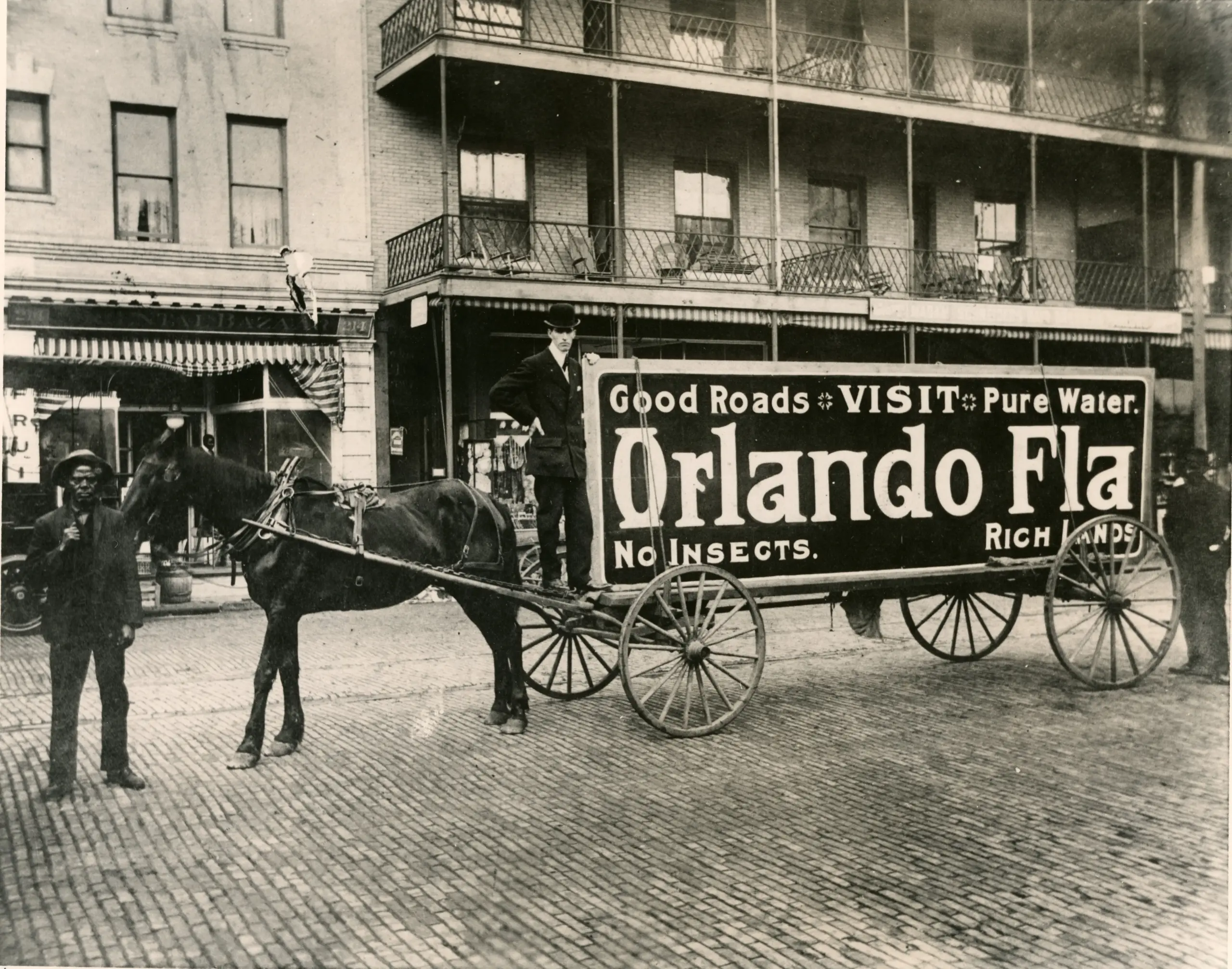
At the turn of the 20th century, a wagon rolled through downtown Orlando carrying a message. Painted in bold letters along its side were the promises meant to define the city: good roads, pure water, rich lands, and most strikingly, no insects.
Read more Letters: Protesting gas prices | Trump blames wrong side | Amendment 3 isn’t about affordability
It was an ambitious claim. Long before it became Orange County, the region had been known as Mosquito County, a name that reflected life in Central Florida. Heat, standing water and dense vegetation made insects unavoidable. For early residents, mosquitoes shaped daily life. They also shaped how outsiders imagined the region. By the early 1900s, Orlando was reshaping that image. City boosters promoted modern roads, agricultural opportunity and a healthier environment. The promise of “no insects” fit the campaign.
During World War II, the idea that mosquitoes could be reduced or even eliminated took shape in Orlando. A team of U.S. Department of Agriculture researchers, led by entomologist Edward Knipling, established a laboratory near the T.G. Lee dairy to study insects affecting people and animals. The team tested new insecticides and helped refine how a new discovery, DDT, could be applied in the field, including in powder form, a step that made its widespread military use possible. Even before later cattle trials, wartime research in Orlando had been underway in improvised spaces near downtown, where scientists studied lice and mosquitoes. Some experiments relied on human subjects, including Orlando’s Black grove workers, who were both used to feed laboratory maintained lice colonies and later exposed to various insecticides while covered in the potentially typhus carrying pests as part of testing programs documented at the time. The U.S. military soon used DDT overseas to control lice and mosquito-borne disease, helping protect troops in difficult environments and leading Allied forces to victory.
By the summer of 1945, Orlando became the center of a large-scale domestic test of the chemical. Federal officials selected Orange County for field trials, using a research station on Livingston Street as a base. Researchers already had ties to the area through earlier mosquito studies and agricultural networks, making it an ideal testing ground. Over nine and a half days, crews treated more than 14,000 head of cattle across a 360-square-mile area, working in dozens of barns throughout eastern Orange County. It was described as one of the most successful insect-control demonstrations ever conducted.
The results were immediate. Cattle grazed calmly where they had once been driven to distraction. In one barn, observers found what was described as a “bushel of dead roaches,” a detail that captured the imagination of local officials. If DDT could do this, many believed it could do the same for all pests, expanding testing to include commercial properties and restaurants.
Read more Endorsement: Rodrίguez has integrity to be next attorney general
The language surrounding DDT reflected immense optimism. It was described as a “miracle,” and communities across the state embraced spraying programs that brought the promise of insect control directly into neighborhoods. Little attention was paid to exposure. The chemical was handled freely, often without protective equipment. In the years that followed, the promise of mosquito control helped reshape the state’s image for tourists, who could now be invited to stay year-round.
However, confidence in DDT did not last. By the late 1940s, researchers began to notice that some insects were developing resistance. Over time, scientists came to understand that DDT lingered in the environment, disrupting reproduction and accumulating as a neurotoxin in wildlife and humans. Exposure was eventually understood to cause long-term health effects, and by the early 1970s, its use was banned in the United States.
More than 50 years later, on a warm summer evening in Orlando, the hum of a mosquito is still a familiar sound. Repellent, screened porches and modern control programs have changed the experience, but they have not erased it. More than a century ago, a wagon moved through downtown promising a city without insects. Decades later, scientists believed they might finally achieve it. Today, the goal looks different. It is less about elimination and more about managing a landscape that has never been fully under control. The mosquito remains, not as the defining force it once was, but as a reminder that Orlando’s history has always been shaped by the environment it set out to overcome.
Sarah M. Boye is part of the collections team at the Orange County Regional History Center.