
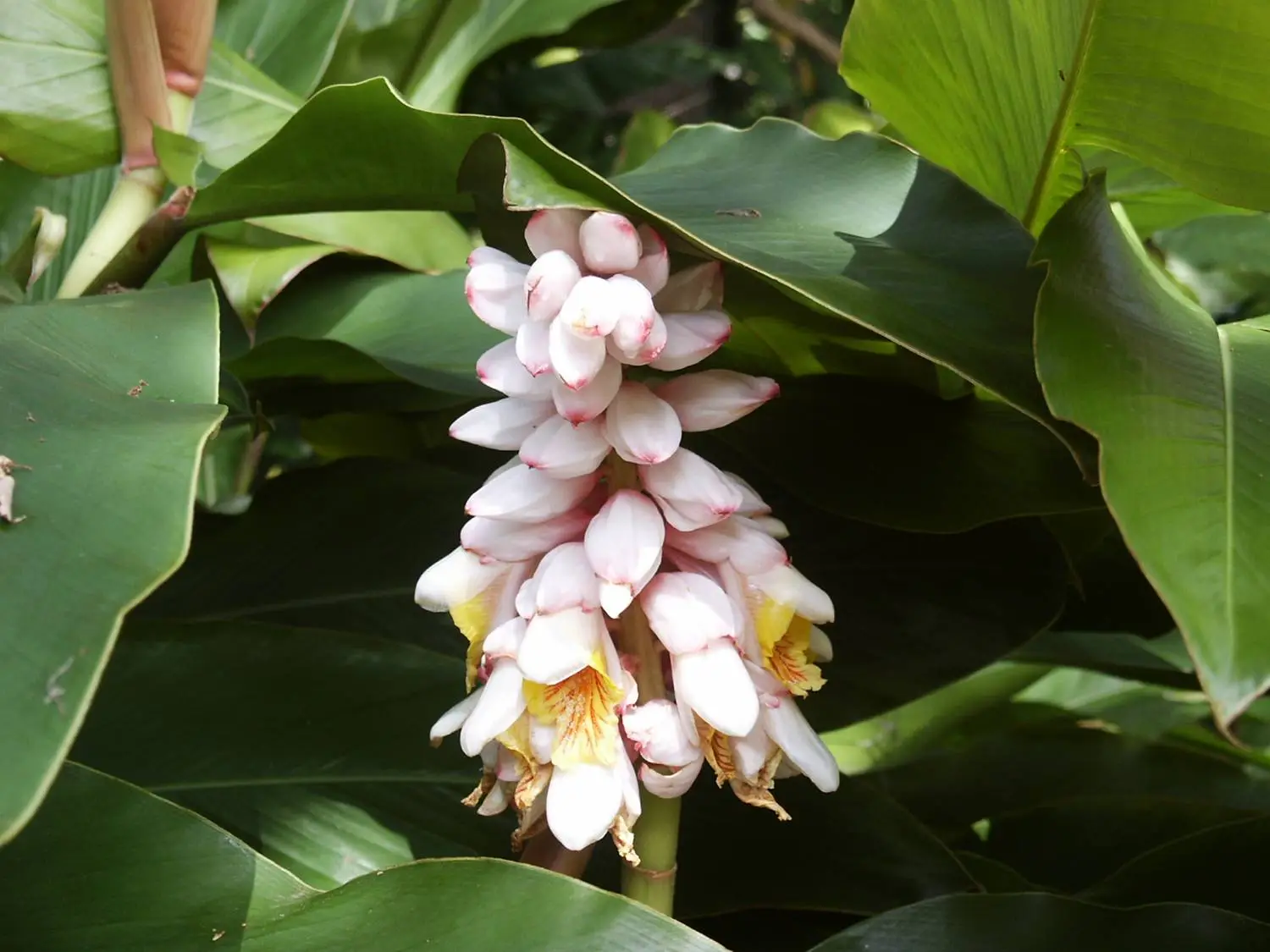
Q: A shell ginger planting in our landscape has become too tall and wide. When is the best time to reduce the size of the planting?
Read more FSU jumps out to 14-0 lead before wheels fall off in 44-20 loss at Louisville
A: Feel free to prune shell gingers as needed. Most continue growth during warmer winters, but they are cold sensitive. This means during severe winters they could be damaged and would need rejuvenation pruning often to the ground. You might remove the objectionable shoots at this time and enjoy sporadic fall flower clusters on those that remain. During late winter the planting can have dead or declining shoots removed and be reduced to the desired size. Even when damaged by cold, new plants grow back from rhizomes at or below ground.
Q: Several of our very old viburnum bushes are not doing well. One has died and several more have thinned quite extensively, with declining smaller and brown leaves. Any advice?
A: Older viburnum shrubs can develop lots of problems. An email photo showed this decline in a planting with good-looking viburnums nearby. The general overall decline of the affected plants suggests a root problem.
Regretfully this is likely mushroom root rot. This disease produces layers of white mycelium, which is fungal tissue, under the bark of viburnums at ground level. If present there is no control. Affected plants are normally removed with considerable amounts of soil. New soil and plants are then added. This is an opportunistic fungus that affects stressed plants, so keep them healthy with adequate water and fertilizer.
Plant Doctor: Growing yellow summer squash in fall not without challenges
Q: Last year I had a lawn installed and hired a service so the new grass would get a proper start and not suffer from fungus. It did well until spring, when brown spots started to appear. I was told to add more water and now I am told it’s root rot. What should I do?
A: Lawns that lack water can develop brown spots and decline. The need for water is easy to determine by digging into the surface soil. If moist the turf does not need water. Accompanying email photos do suggest your lawn declined from a fungus. The fungal disease is likely root rot. This is a tough one encouraged by too much water, improper soil pH and similar conditions. Your affected area is so large it’s likely to need resodding. Remove the old sod and till the soil a few inches deep. After new sod is added apply a lawn fungicide to help control fungal problems.
Q: A tall bush at the corner of our house has sections that are dying. Is there any way to save this shrub?
A: Your shrub in an email photo appears to be a Eugenia or maybe a yaupon holly. Both have small linear leaves and are susceptible to stem diseases. A large portion of the shrub is still alive. Try pruning out the dead sections, cutting them back to healthy portions or to the trunk. Then apply a copper fungicide following label instructions. The shrub is going to look a bit odd for a while, but might fill back in with new growth. The only other option is to replace it with a new one.
Read more TFA had its hands full; Evans romps; Seminole vs. Lake Mary was tight | Week 8 Football Live Updates
Are you a Central Florida gardener? Here’s your to-do list heading into October
Q: One of my orchids has lost its green glossy look and large yellow leaves are appearing while kept indoors during flowering. Will the plant revive when I move it outdoors under an oak?
A: Moving your orchids outdoors may save the plant from further decline, but also take a look at the roots. Many orchids are grown in a fibrous medium that can keep the roots too moist with indoor watering. Also, some come in containers without bottom drainage. The symptoms noted suggest a root problem. Repot your plant in a coarse well-drained orchid mix, then move it to a shady spot under the oak tree to help restart growth.
Q: We planted two crape myrtles in late spring after the freeze. One is doing great, the other one has tips of leaves that are browning and brittle. Any help would be appreciated.
A: Crape myrtles tend to look bad this time of the year as shrub and tree forms head into fall. Plants are preparing to drop their leaves, and yellow-to-brown portions are normal. The extent of decline is influenced by plant location, nutrition and how well plants are established in the ground. A fungus that affects foliage is also common this time of the year but is usually ignored. If your crape myrtle appeared normal during spring and summer, this decline is likely due to fall growing conditions. Do make sure the soil remains moist and keep a light mulch over the root system to maintain a healthy plant. Next time to fertilize is March.
Q: Two small sable palms need to be relocated in my landscape. Can they be moved at this time and do I put something in the hole at planting?
A: We dig and replant palms year-round, but October is the last of the really warm months, and palms need to grow roots before the cooler fall and winter months return. Spring through summer are the best times to move palms. Sabal or cabbage palms are dug with a small root ball about 6 inches beyond the base of the trunk. Also, most of the fronds are removed at transplant time. No additions are made to the planting hole, nor do we normally enrich the fill soil. Warm weather and adequate water to keep soil moist are usually all that’s needed to encourage new growth from the transplanted palms.
Tom MacCubbin is an urban horticulturist emeritus with the University of Florida Cooperative Extension Service. Write him: Orlando Sentinel, P.O. Box 2833, Orlando, FL. 32802. Email: [email protected]
Read more Magic pleased with first preseason performance under new coach Sean Sweeney