
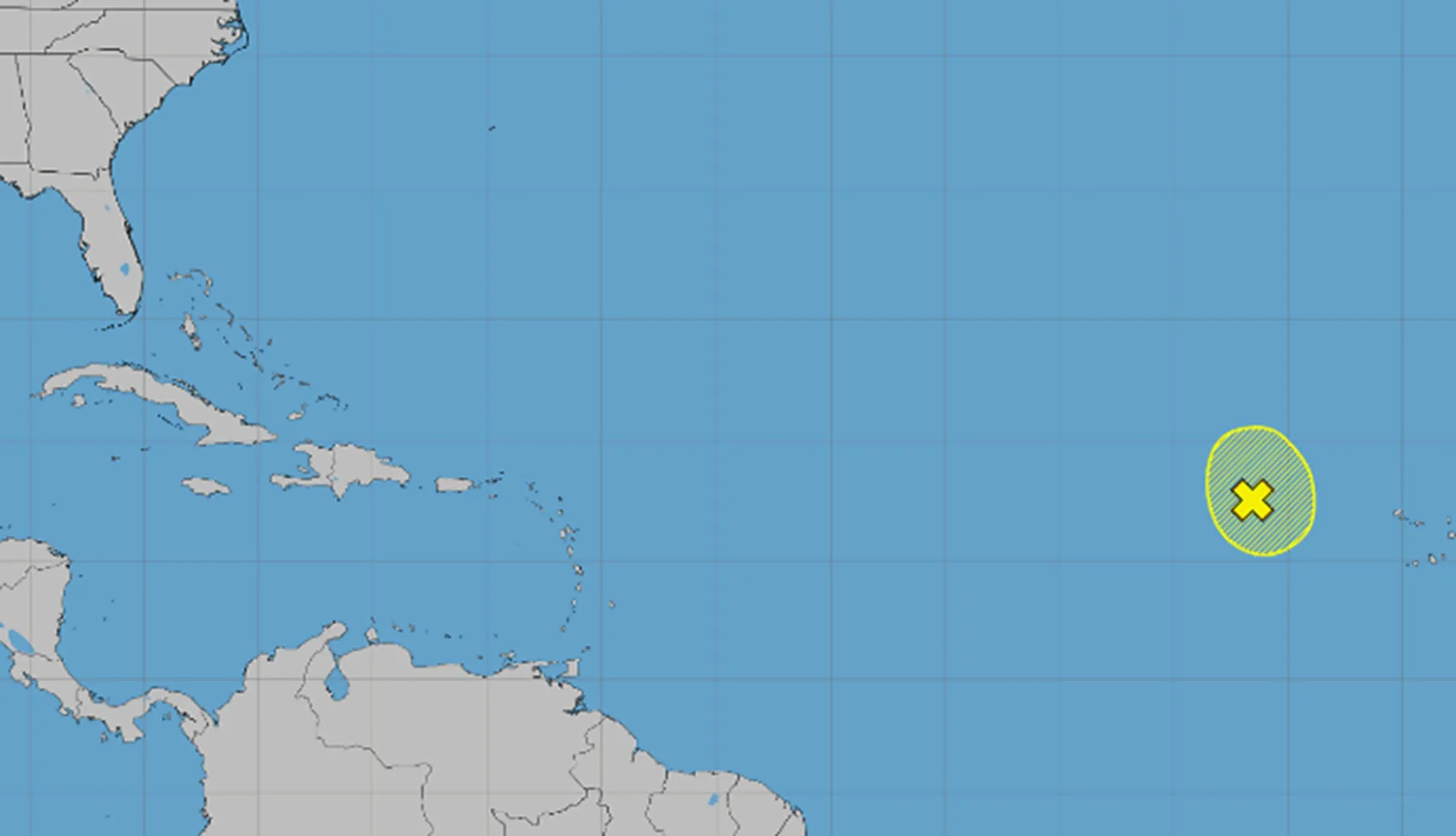
The National Hurricane Center continued Monday to track a distant Atlantic system with a chance to develop into the season’s next tropical depression or storm.
Read more Magic extend partnership, jersey branding deal with Walt Disney World
As of the NHC’s 8 p.m. tropical outlook, the elongated area of low pressure was located several hundred miles west of the Cape Verde Islands and continued to produce a large but disorganized area of showers and thunderstorms, mostly on the east side of the low and extending toward the westernmost of the islands.
“Environmental conditions appear, at best, only marginally conducive for development of this system during the next day or so before upper-level winds become too strong for any further development on Tuesday,” forecasters said. “Regardless, heavy rainfall is expected to continue for the next day or two across western portions of the Cape Verde Islands, and some flooding is possible there as the system moves slowly northward to north-northwestward.”
The NHC gave it a 20% chance to develop in the next two to seven days.
#Isaias has strengthened into a major Category 3 hurricane. Infrared imagery from @NOAA’s #GOESEast (#GOES19) 🛰️ is tracking Isaias as it approaches the northern Gulf Coast, where dangerous conditions are expected—including hurricane-force winds, life-threatening storm surge,… pic.twitter.com/wngWPqeQCk
— NOAA Satellites (@NOAASatellites) October 9, 2026
The 2026 Atlantic hurricane season so far has produced nine named storms including last week’s Hurricane Isaias, which made landfall on Friday night in the Florida Panhandle.
At least four deaths have been blamed on the system that struck near Destin at 9:30 p.m. Sunday with 105 mph sustained winds as a Category 2 hurricane.
The storm formed just shy of tying a 121-year-old record as the latest arriving initial hurricane of the Atlantic season. According to the National Weather Service, the record dates to 1905, when the year’s first Atlantic hurricane formed on Oct. 8.
Read more Two new cases of dengue fever found in Orange County near Apopka
The hurricane season had previously seen the formation of tropical storms Arthur, Bertha, Cristobal, Dolly, Edouard, Fay, Gonzalo and Hanna.
The next name on the list is Josephine.
Hurricane season began June 1 and runs through Nov. 30, but the height of hurricane season runs from mid-August through mid-October.
The reason for the lack of hurricanes has been an extremely strong El Niño weather pattern, which is warming surface temperatures in the Pacific Ocean. This generates wind shear preventing storms from strengthening in the Atlantic.
The National Oceanic and Atmospheric Administration in August had updated its seasonal forecast to expect between seven and 13 named storms this year. Of those, two to six would become hurricanes. It also predicted that there might not be any major hurricanes this year, or at most two.
Already, 2026 was forecast to have lower-than-average storm generation, and that has been reduced even further with the latest forecasts from the NOAA and other weather groups.
An average year would see 14 named storms and seven hurricanes, with three of those growing to Category 3 strength or higher.
Read more Predawn sonic booms possible as SpaceX ready for launch early Tuesday