
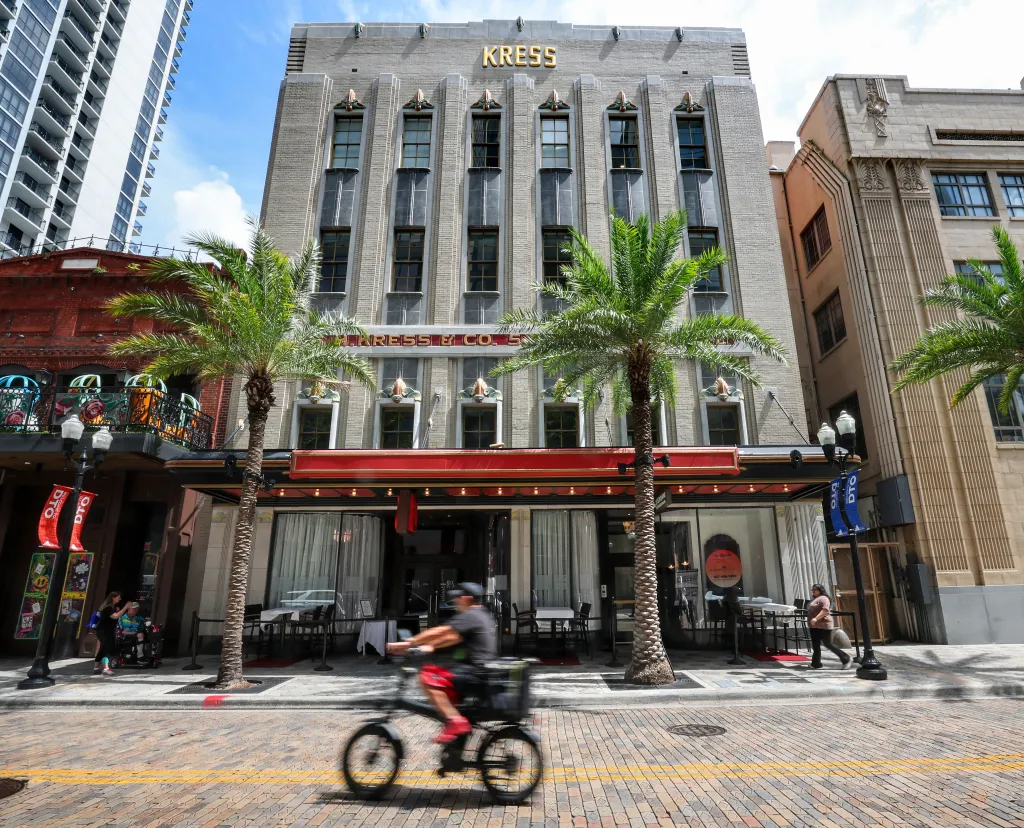
Arguing the historic preservation efforts are impeding rather than enhancing downtown, Orlando is proposing to ease restrictions on building in its Downtown Historic District, which officials contend have left valuable properties vacant and underutilized.
Read more 70+ of the best gifts for Dad
But preservationists are wary about the proposed changes, which could make it easier to tear down the city’s collection of classic pre-war buildings.
The plan, which will come before the city council next week, would allow redevelopment proposals in the district to bypass the city’s citizen Historic Preservation Board over a three-year period. The board is typically required to sign off on all changes to the exterior of a building within the district for compatibility with its historic era.
At the end of that timeframe, the city could revert back to the current rules, make further tweaks, or disband the district altogether.
“We think the historic preservation process has created these unintentional barriers to any kind of redevelopment,” said Lillian Payne, Orlando’s Economic Development Director. “We want to see more residential units, we want to see more commercial square footage, we want to see more diversity of uses downtown, and right now it’s difficult to do that under the district.”
The proposal is the latest effort by City Hall to breathe new life into downtown Orlando, a nightlife mecca where city leadership wants to add more apartments, businesses, restaurants and other uses to support a 24-hour community.
Roughly $200 million worth of taxpayer-funded infrastructure and parks projects are underway this year, ranging from reverting one-way streets to two-way traffic, to building a new signature entrance to Lake Eola Park, to creating a long-discussed urban park underneath I-4’s overpasses.
But city officials contend the heart of downtown along Orange Avenue at Church Street, Pine Street and other areas has failed to attract developers, in part because of the restrictions on building. They created a map of developments valued at $5 million or more in the downtown area over the past 15 years and found roughly 20 projects, but none in the historic district.
“We have properties within our downtown …. which have been vacant for many years,” Payne said. “Not just vacant but deteriorating – there’s been no investment in them whatsoever.”
But Raymond Cox, president of the Orange Preservation Trust, said the city’s development woes shouldn’t be pinned on historical preservation efforts. He cited developments like the 55 West high rise that have been approved and built in the district, along with the 2023 demolition of The Ballroom at Church Street.
Read more Maxwell: FPL looks to go national, and the nation should be nervous
“I wouldn’t call that an impediment on development – they seemed to get their way,” he said. “I don’t think it’s the Historic Preservation Board that’s impeding the development. It’s just been the wrong development.”
The Downtown Historic District was created in 1980 and spans roughly eight blocks, according to the city’s website. It includes the Kress Building on Church Street, the Angebilt Hotel on Orange Avenue, and the old Orange County Courthouse, which today is the home of the Orange County Regional History Center. Overall, it takes in buildings constructed from the 1880s to the 1940s.
“Surrounded by modern skyscrapers, approximately 60 historic buildings in this district offer a glimpse into the City’s dynamic past,” “The historic district designation has helped preserve buildings that might otherwise have been demolished due to the rapid rate of growth and demand for commercial space in Downtown.”
Craig Ustler, a developer who built Creative Village and other Downtown ventures, said he has no projects within the historic district, but he believes the proposal will create a more streamlined process – rather than one where both the Historic Preservation Board and the Municipal Planning Board, with conflicting missions, have to offer approvals.
“I think this is the right approach by the city and it should free up some investments in new projects,” he said in an email. “To me, it is not about saying historical context doesn’t matter, but it is about a better balance and a singular approval process with more certainty that is more conducive to facilitating new investments from owners and developers.”
City planners say they hope the plan spurs plans big and small, and even that historic landmarks are preserved as part of larger plans. Later this summer, an incentive package is expected to be considered offering property tax rebates for developers who preserve historic facades.
“When we redo the streetscapes on Church Street, and you have the ability to put in a brand new sidewalk café with a big awning that may be more modern or different than what the original historic fabric was supposed to be – technically you wouldn’t be able to do that” under the current restrictions, city planner Jason Burton said.
“It could also be a major project like a potential small one- or two-story building,” he said. “The majority of the project could be demolished and keep the facades, and incorporate that into a larger development.”
Read more High-tech gifts for this Father’s Day