
At 3:25 a.m. on June 12, with Orlando Health’s emergency department filled with Pulse’s wounded, the hospital activated a “Code Silver.”
Read more Pulse anniversary: A survivor moves on but ‘can’t forget everything’
The alert, warning of a possible imminent safety threat to patients, staff and visitors, heightened an already tense and perilously chaotic scene inside Central Florida’s busiest trauma center, where victims had arrived by fire/rescue squads, police cruisers and pickup trucks.
Forty-four people from the gay nightclub, all shot, most multiple times, had been brought in, dead or in danger of dying. Now this.
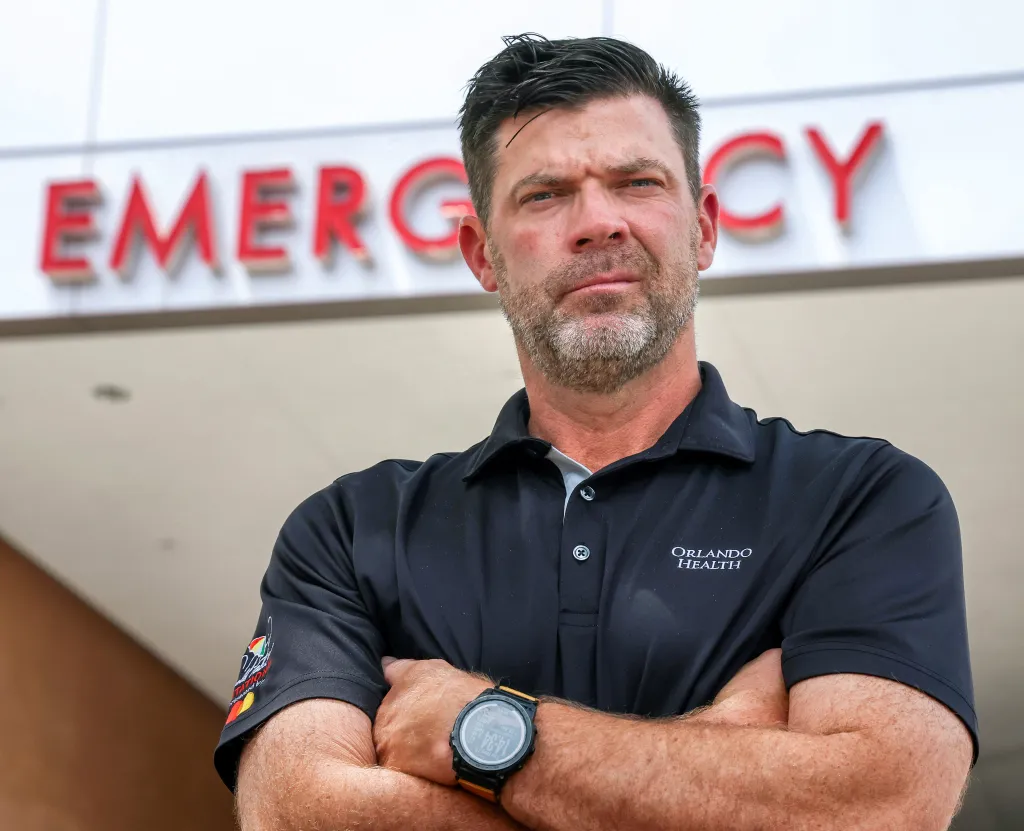
“We thought there was an active shooter on the premises of the hospital,” Dr. Chadwick Smith, the on-call surgeon in the ER when Pulse happened, said, detailing a vivid memory of the ordeal, little-mentioned at the time, during a recent interview marking the 10th anniversary of the tragedy.
The notion was not far-fetched. Pulse was no more than two blocks south of the hospital.
Smith called colleagues at home for help. “This is not a drill. This is not a joke. Twenty-plus gunshot wounds are coming in,” Smith said to trauma surgeons he had awakened. “I need you here as fast as you can. And every time, the answer I got was ‘I’ll be right there.’ ”
Dr. Joseph Ibrahim and Dr. Michael Cheatham, among those who answered the call, had heard about the Code Silver. Cheatham said they thought perhaps the gunman fled from Pulse and was impersonating a victim.
“All of the people working in the trauma bays barricaded the doors but kept caring for patients,” Smith said of the staff response to the alert. “That’s pretty traumatic. You’re caring for people who have been shot and you’re now worried about being shot yourself.”
Read more Asking Eric: Our car died, our neighbor helped, and now he won’t talk to us
Smith said worried coworkers texted their own loved ones but never lost focus on saving lives.
Though a skilled surgeon, Smith didn’t perform a single surgery that night.
“My role that night was to direct the flow of patients into operating rooms in order of urgency,” he said. “If somebody’s been shot, a surgeon really needs to make the determination of what’s needed — who needs to go into an operating room and in what order.”
As night turned to morning, Smith remembered, he walked the Emergency Department, visiting every patient who had been wounded or operated on, keeping tabs on each, making notes on small stickers that he, at first, stuck on the pant legs of his light blue scrubs.
Incredibly, every patient who made it alive to the operating room — 35 in all — survived. The staff performed a total of 76 operations on the Pulse victims.
“Code Silver,” a false alarm, was called off at 4:14 a.m.
For their heroic work, the trauma team was honored in 2017 as the Orlando Sentinel’s “Central Floridians of the Year.”
Now 50, Smith has grown accustomed to questions about the hospital’s response that night.
“I kind of expect it about this time of the year, every year, and I figured this year there would be even more [attention] because it’s been 10 years now,” said Smith, who sat for interviews in May not only with the Orlando Sentinel but also TV news stations and online publications.
Read more Miss Manners: They didn’t comment on my body, and I’m offended