
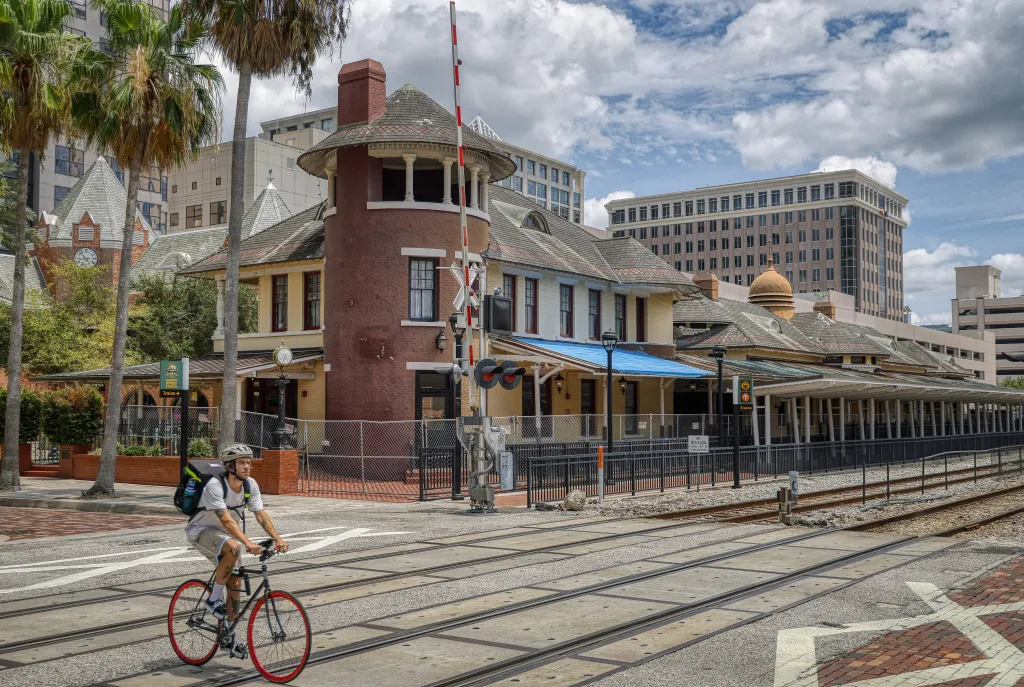
The state contends Orlando’s proposal to loosen Downtown Historic District rules runs afoul of state laws and threatens the loss of millions in funding if it is approved.
Read more Lamine Yamal scores 10 minutes into his first World Cup start and gives Spain liftoff
In an email to city commissioners on Friday, obtained by the Orlando Sentinel on Saturday, the state Division of Historic Resources said that if the city passes this ordinance without giving the state 30 days notice, it could lose a certification that enables the city to receive money from the state’s historic grant-funding source.
“A failure to submit the proposed ordinance change and allow for 30 days of review could result in the City of Orlando being placed into “Bad Standing,” The letter says. “This would make Orlando ineligible for grant funding match waivers from our office.”
Commissioners are set to make a final vote at Monday’s city council meeting after its first reading on June 8 was approved in a 6-1 vote despite many who spoke out against it.
The plan would allow redevelopment proposals in the district to bypass the city’s citizen Historic Preservation Board over a three-year period. The board is typically required to sign off on all changes to the exterior of a building within the district for compatibility with its historic era.
Orlando has been a Certified Local Government (CLG) since February of 1989. The program, administered by the National Park Service and the Florida Department of State’s Division of Historical Resources, requires cities with the designation to protect historic properties, abide by historic preservation laws and maintain a historic preservation board.
Throughout the years Orlando has received millions in grant funding via their accreditation for properties including: Kerouac House, St. Luke’s Cathedral Church, Black Bottom House of Prayer, Maxey-Crooms House, Plaza Live, The William Wells house and Leu House.
Mayor Buddy Dyer said in a text message to the Orlando Sentinel, that the city is aware of the need to notify the state but it is not changing the ordinance. Instead, he said the city will be amending the ordinance to take effect in 30 days, rather than taking effect immediately, to give the state time for review.
Read more Kansas town embraces Algeria at the World Cup as the nation itself grapples with human rights record
“A moratorium allows us to evaluate if a change to the ordinance is needed,” Dyer said in the text.
But Commissioner Patty Sheehan, who cast the sole dissenting vote for the proposal during the June 8 meeting, said the city stands to lose over $2.5 million in grants if it’s approved and argues the loss in funds from the state is a compelling reason to defer the decision.
She argues that the ordinance paints all redevelopment with too broad of a brush and said the city needs more control of what buildings are demolished.
“I want to see redevelopment in Downtown Orlando as much as everyone but I do not think throwing our historic preservation, putting our historic reservation funding and our relationship with the state in a bad space is the way to accomplish that,” Sheehan said. “We have torn down buildings before…and each of those projects came forward on an individual basis.”
The proposed ordinance is so “distressing” she is preparing to give a lengthy presentation to her fellow commissioners at Monday’s meeting, she said.
“It’s unprecedented for a city commissioner to give a presentation like this but I feel like the other side has to be told,” Sheehan said. “It’s a tremendous weight on me personally. I feel like the entire history of our town, of 100-year-old buildings, are on my shoulders.”
Read more Spain star Lamine Yamal scores 10 minutes into his first World Cup start and gives Spain lift off