
The family of a tourist brutally gunned down in January in a triple homicide outside a Kissimmee Airbnb has filed a wrongful death lawsuit against the homeowner’s association for the community where the short-term rental is located.
Read more ‘I lost everything’: Orlando resident returns home after months in ICE custody in Pa.
Marlisa Kraft, widow of Douglas Kraft, 68, of Ohio, filed the lawsuit on Monday against the Indian Point Homeowner’s Association in Kissimmee, alleging it had negligently failed to provide proper security for her husband and protect him from his accused killer, 29-year-old Ahmad Bojeh, who has a violent criminal history.
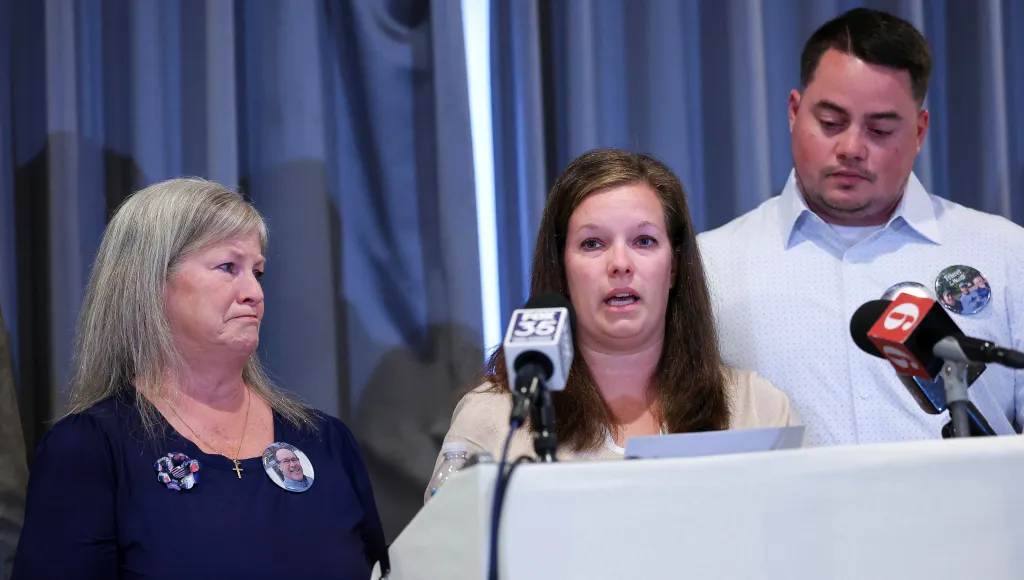
Kraft’s daughter, Rachel Brooks, speaking Tuesday at a downtown Orlando news conference, said her father was the heart of their family, their protector and the ultimate “girl dad.” She said the family wants to prevent his fate from befalling other unsuspecting families trying to enjoy their vacations.
“The many years to come have been taken away from us…this isn’t how his story should have ended,” Brooks said. “Our mom and dad met 52 years ago, and they were married for 40 years. They were looking forward to spending their golden years together, and they never got the chance.”
Douglas Kraft, his brother Robert Kraft, 70, and their life-long best friend, James Puchan, 69, all of Ohio, did everything together, from family events to homecoming football games. After their retirement, the three automobile enthusiasts would go to car shows together, which brought them to Kissimmee in January for a classic car show.
The three men had rented an Airbnb on Indian Point Circle for the trip. But while waiting for roadside assistance outside the rental, they were shot and killed by Bojeh, investigators say. Bojeh lived next door to the rental and had past run-ins with the law, they say.
The day after the shootings, the Osceola County sheriff described Bojeh as a “threat to the neighborhood all the time” and said there was no obvious motive.
Bojeh has since been indicted on three counts of first-degree murder.
Court records show Bojeh had been arrested in the past for violent offenses, including a 2021 case of attempted murder and aggravated battery after he was captured on video shooting into cars outside a Wawa gas station. That case resulted in his acquittal by reason of insanity following a bench trial, with the judge ordering he undergo treatment at an outpatient facility rather than be involuntarily committed.
Read more Florida’s Citizens Property Insurance sees policy count drop to all-time low
Michael Haggard, the Kraft family’s attorney, said the Indian Point Homeowner’s Association knew about Bojeh’s criminal past, his return to the community and even received complaints about him from residents, yet did nothing to warn the Kraft brothers and Puchan that a potentially dangerous person lived next door to them, nor provide security for them.
The lawsuit says the HOA should have provided “security personnel, monitored cameras, or
access control.”
A representative of the HOA, reached by phone, declined to comment on the lawsuit.
Haggard said the killings are part of a larger problem — the lack of regulations in the short-term rental industry. He said if Bojeh had been a hotel resident, the hotel would have done something about him, since it operates under more regulations. He called short-term rentals one of the “absolute biggest new dangers” in Florida.
“There have been time and time again where the Legislature has bills to regulate short-term rentals and bring them in line with apartments, bring them in line with hotels,” Haggard said, “and those have failed because of the extreme giant lobbies of Airbnb, VRBO, and others.”
The lawsuit, which is seeking over $50,000 in damages, was also filed against the owner of the home the men rented. Haggard said it’s possible Airbnb could be added to the lawsuit, if it is discovered the company received complaints about Bojeh.
The Kraft family planned to visit the rental unit where the killings occurred Tuesday afternoon for the first time before flying back to Ohio.
Read more Maxwell: Here we go again. Orange County looks to ensure hotel taxes can’t pay for local needs.