
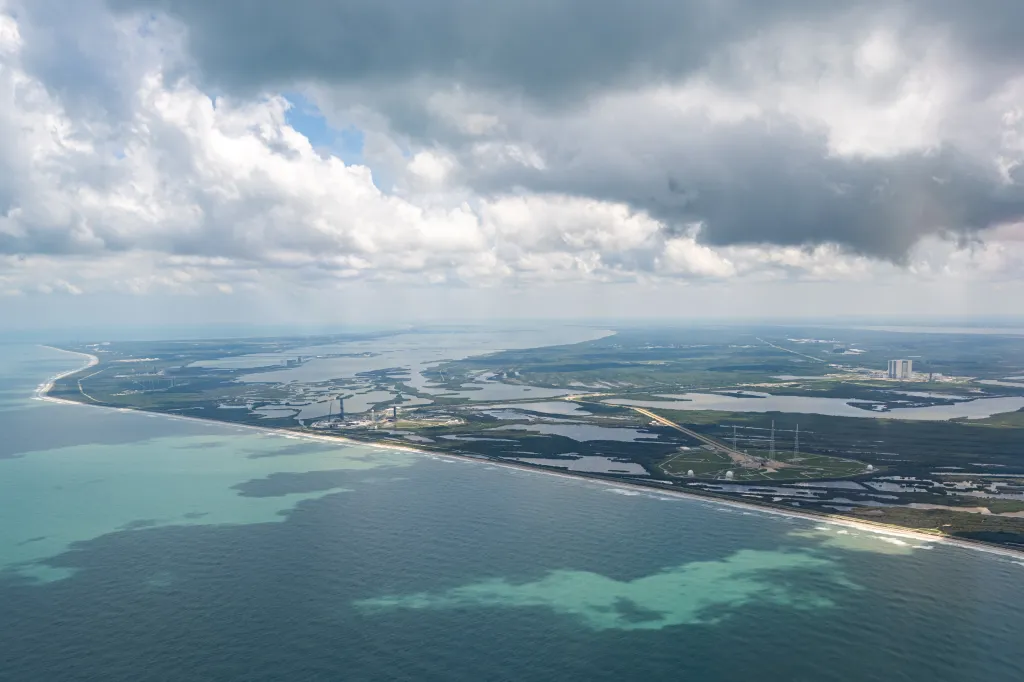
NASA officials have been shouting for years more money is needed to support infrastructure of a souped-up launch rate on the Space Coast, and now it has an audit confirming things are bad, and could get worse.
Read more Lake Commissioners to vote on proposed data center moratorium
NASA’s Office of the Inspector General released its report Monday on NASA launch infrastructure both at Kennedy Space Center in Florida and the Wallops Flight Facility on Virginia’s Eastern Shore.
While both are in need of help, the situation at KSC is already crumbling and the OIG warns a potential deal breaker for the agency’s plans, including its moon aspirations, if not addressed.
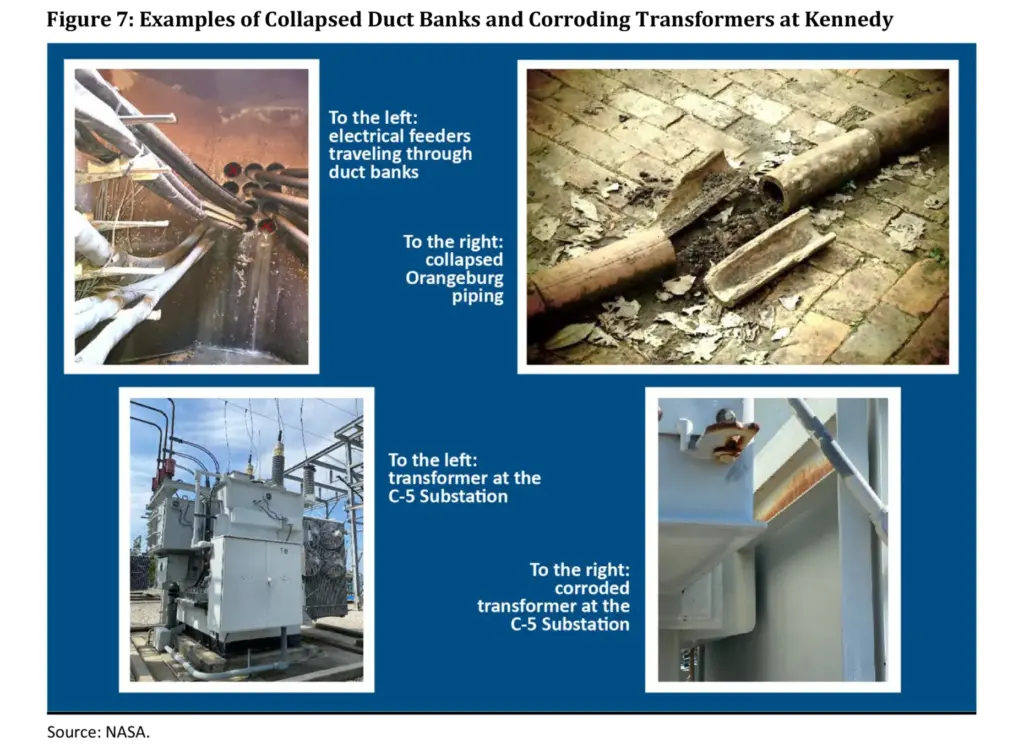 Examples of collapsed duct banks and corroding transformers at Kennedy Space Center. (Courtesy/NASA OIG)
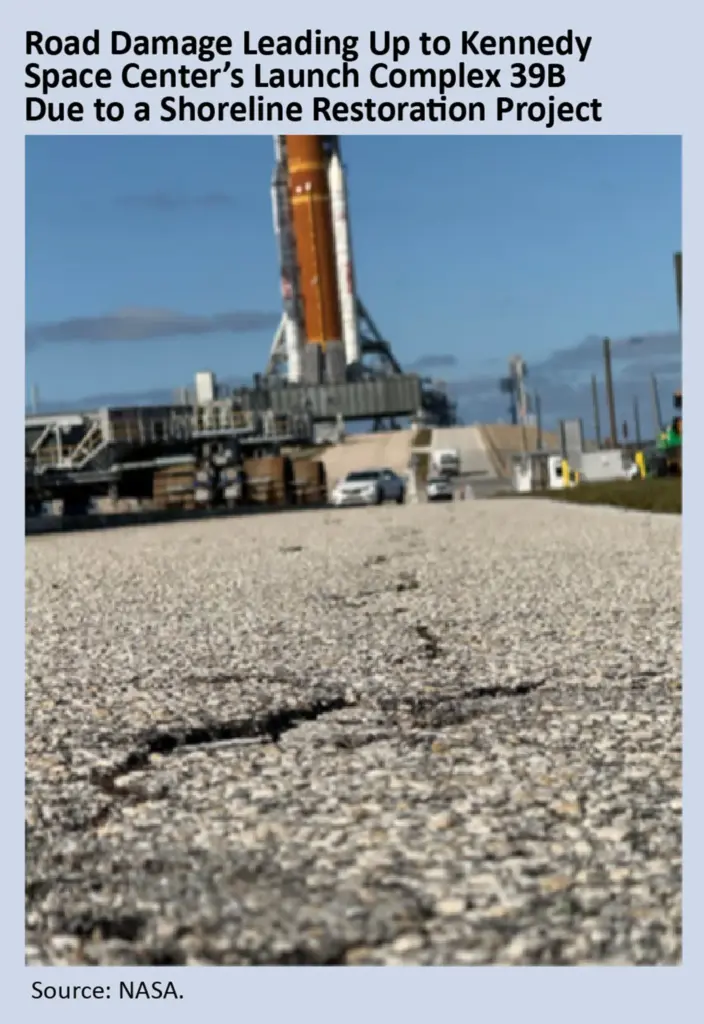 Road damage leading up to Kennedy Space Center Launch Complex 39-B from an erosion restoration project. (Courtesy/NASA OIG)
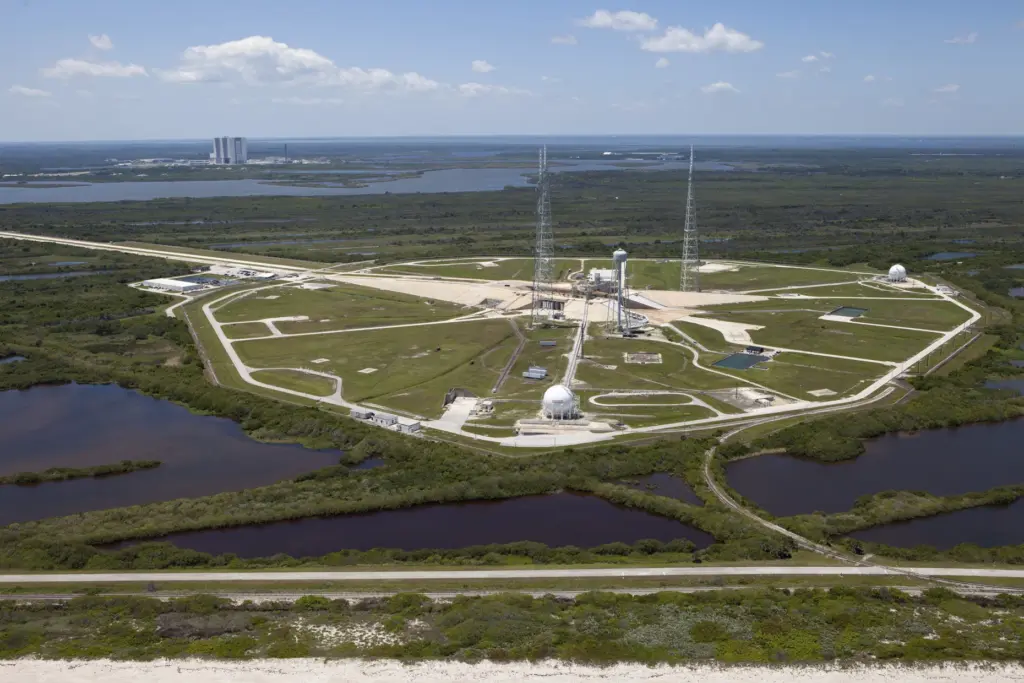 An aerial view, from the east looking toward the west, shows the entire Launch Pad 39-B area at NASA’s Kennedy Space Center in Florida in this 2016 file photo. (Kim Shiflett/NASA)
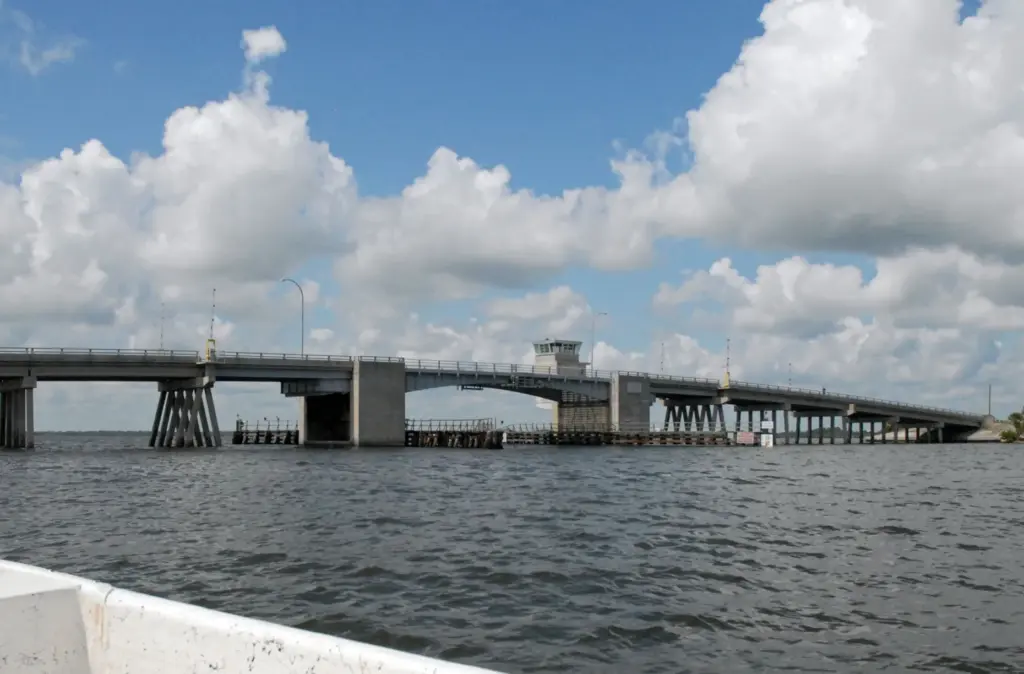 The Roy D. Bridges Jr. Bridge seen in this September 2012 file photo connects NASA Kennedy Space Center to Cape Canaveral Space Force Station. (Courtesy/NASA)
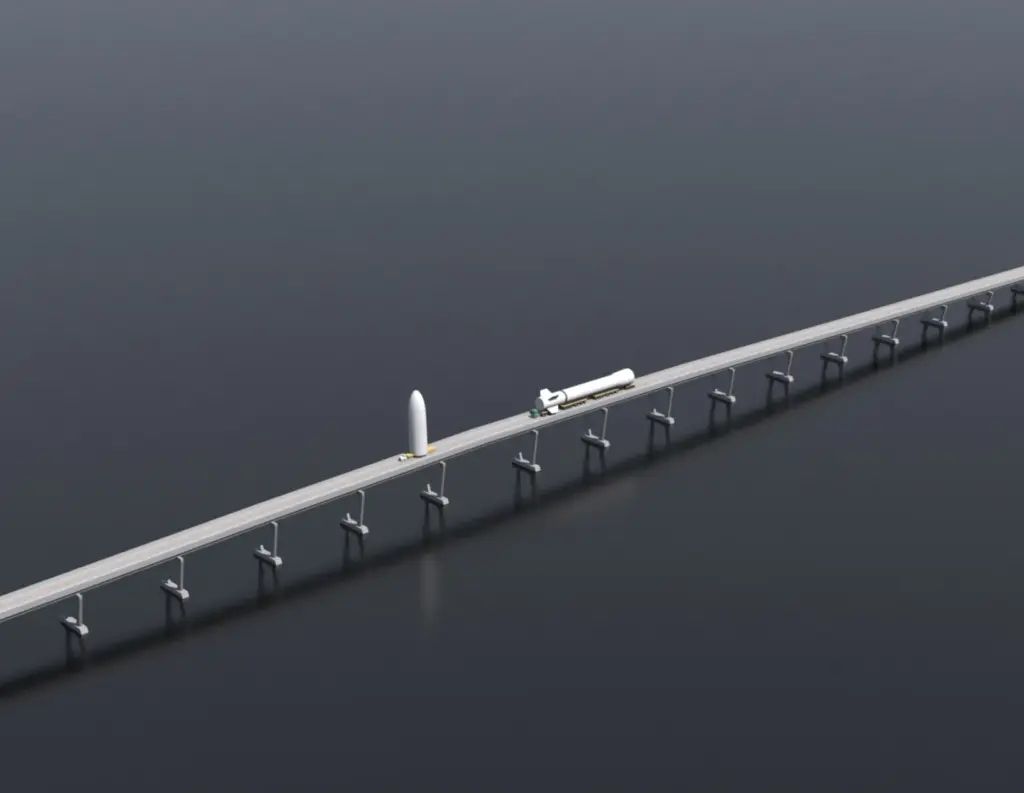 A rendering of a proposed replacement bridge for the existing Roy D. Bridges Bridge, formerly NASA Causeway, that connects Kennedy Space Center to Cape Canaveral Space Force Station. (Courtesy/Space Florida)
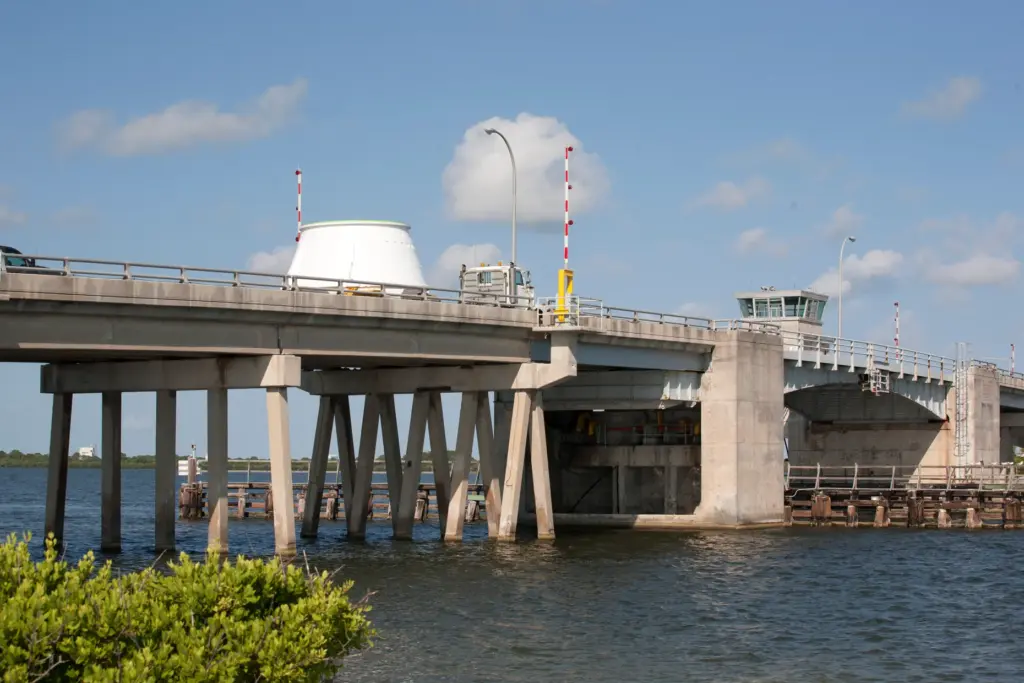 The left hand aft skirt for NASA’s Space Launch System (SLS) rocket is transported across the Roy D. Bridges Bridge from the Hangar AF facility at Cape Canaveral Air Force Station (Now Cape Canaveral Space Force Station) on its way to the Booster Fabrication Facility at NASA’s Kennedy Space Center. The space shuttle-era aft skirt, was inspected, resurfaced, primed and painted for use on the left hand booster of the SLS rocket for Exploration Mission 1 (EM-1). (Kim Shiflett/NASA)
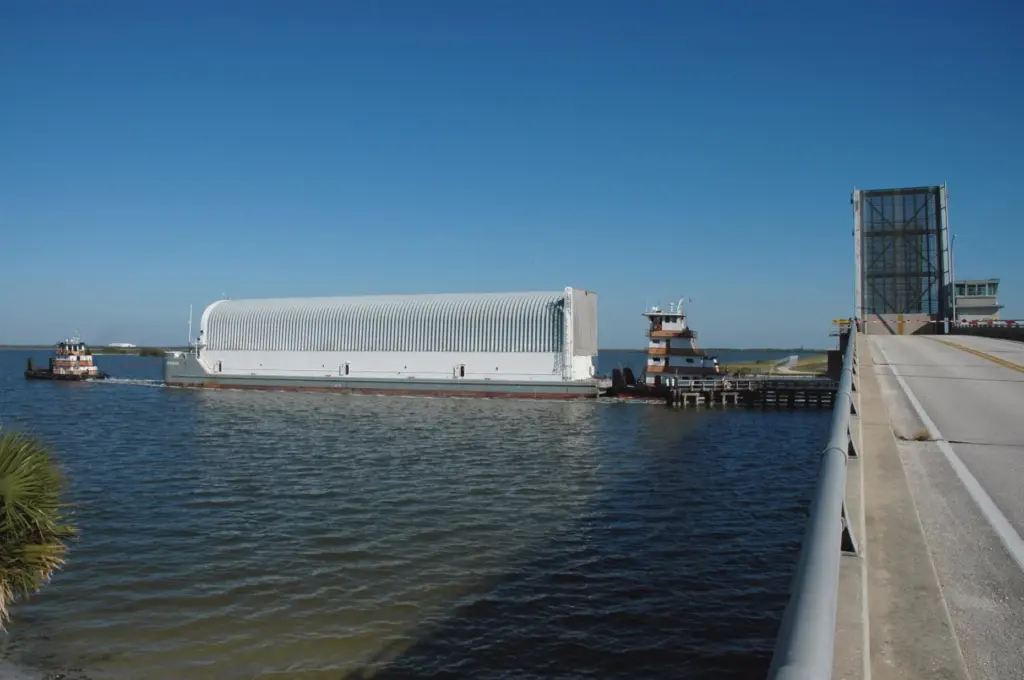 NASA’s Pegasus barge passes under the Roy D. Bridges Bridge in the Banana River on March 3, 2006, as it nears the end of its journey from the Michoud Assembly Facility in New Orleans to Kennedy Space Center. The barge carried the redesigned external fuel tank for Space Shuttle Discovery’s STS-121 mission. (Courtesy/NASA)
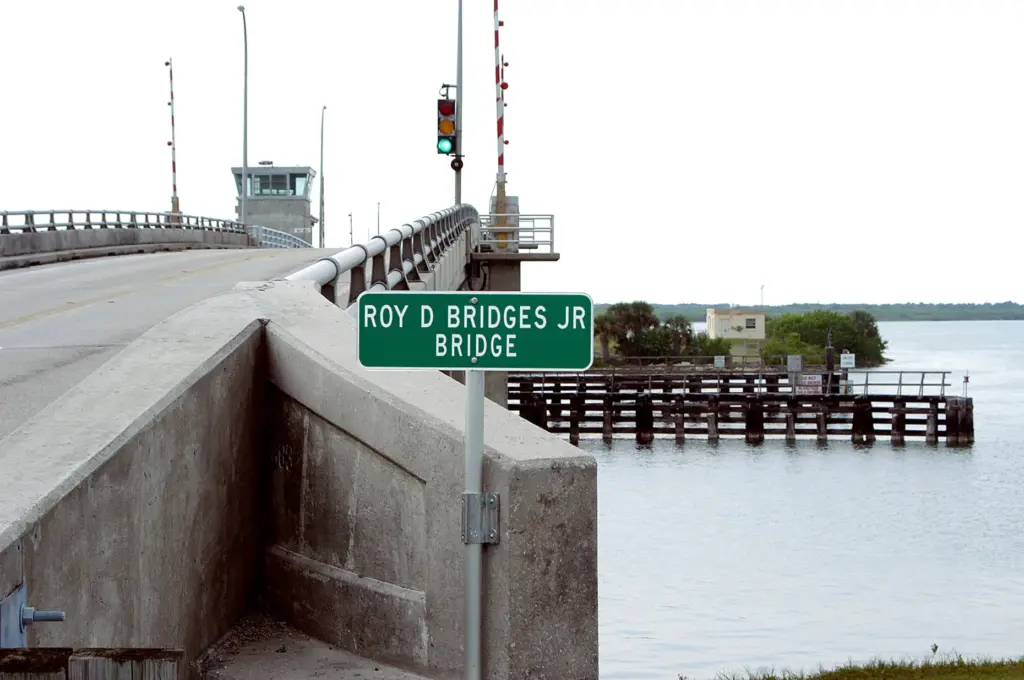 The NASA Causeway connecting Kennedy Space Center to what was then Cape Canaveral Air Force Station was renamed the Roy D. Bridges Jr. Bridge in August 2003 in honor of Bridges, who was departing KSC as its director. The bridge spans the Banana River. (Courtesy/NASA)
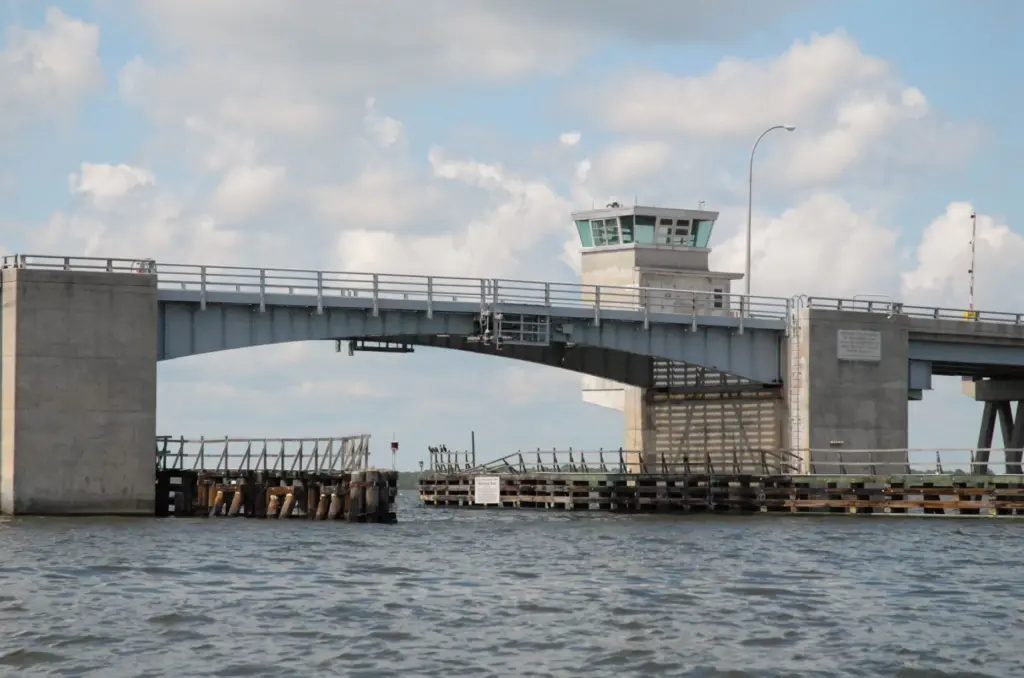 The Roy D. Bridges Jr. Bridge seen in this September 2012 file photo connects NASA Kennedy Space Center to Cape Canaveral Space Force Station. (Courtesy/NASA)
KSC alone needs $1 billion to address its shortcomings and so far has only about $250 million set aside to help allay the needs, and that only came after maneuvers last year to shoehorn in funds into Trump’s One, Big Beautiful Bill.
“We do have legitimate needs at Kennedy Space Center,” said U.S. Rep. Mike Haridopolos, R-Indoan Harbour Beach, who represents the Space Coast and chairs the U.S. House Space and Aeronautics Subcommittee. “We made significant strides … maybe cut that by a quarter of its needs, but if we’re going to continue to win this space race, we need to make strategic investments.”
Those funds will go to many of the things detailed in the new audit, including beginning work on an electrical grid upgrade and dealing with the increase in wastewater from increased activity.
“It’s not as sexy as launch pads, but all these things we talk about are what make a viable, long-term, usable rocket launch location,” he said. “When you build a house, you want a great foundation. We want to make sure we have all the instruments in place, so that it’s not just a short-term run up. We think space is going to become an increasingly important role … the sewer lines are as valuable as as the launch pad.”
What needs fixing?
At issue is the rate of launches and the increasing size of the rockets lifting off from the Space Coast, according to the audit. While NASA’s Kennedy Space Center houses just two active launch sites, all of the launch activity at neighboring Cape Canaveral Space Force Station also relies on the infrastructure taxing KSC.
The site was designed to support single launches months apart, and just in 2025, the Space Coast saw 109 launches averaging one launch every few days. Those numbers are expected to grow with the introduction of SpaceX’s Starship and other new commercial rockets coming online. The audit forecasts the Space Coast will be near capacity by 2028 or 2029, and projects as many as 268 launches by 2030.
“At Kennedy, common use launch infrastructure that the Center and government and commercial partners use to provide electrical power, gas supply and distribution, and transportation to launch pads is in poor condition and lacks the capacity to support growing needs,” the audit reads.
The electrical grid problems are among the most critical. Some of its issues result from hardware installed in the 1960s, with collapsed duct banks that prevent easy electrical line replacement, as well as corrosion on transformers.
“Critical electrical power distribution infrastructure is being used beyond its design life and needs to be upgraded,” the audit reads. “A failure of any portion of the electrical power distribution system could severely impact launches and lead to delays that could last for extended periods of time.”
The projected cost to fix the electrical issues is $136 million. It’s at the top of the list, but work is not expected to begin until later this year and will take years to complete.
“In the interim, the current infrastructure will remain in use to support launches such as Artemis, the Human Landing System, and the growing commercial space industry, leaving launch operations and schedules vulnerable for delays,” the audit reads.
The power demands across KSC will also soon exceed its capacity, especially with the introduction of Starship. SpaceX is already planned to augment power supply by bringing large-scale rechargeable lithium-ion battery storage on site as a single launch of its heavy-lift rocket will require more power than will be available.
As SpaceX aims for up to 44 Starship launches a year from KSC, those demands will “increase substantially,” the audit reads.
“SpaceX’s future concept of operations expects the long-term electrical power need for LC 39A to increase substantially due to enhancements at the launch pad, including on-site propellant generation that will require significant power demand,” the audit reads.
The audit also details limitations in the propellant supply in place for both KSC and Cape Canaveral.
“Existing infrastructure for the provision of nitrogen and helium gases to the launch pads is insufficient to simultaneously support multiple users leading to major scheduling challenges and potential delays,” the audit reads.
It notes that at current capacity with the systems pumps, vaporizers and storage tanks, there is no way to support both a launch of NASA’s Space Launch System rocket for Artemis and a Blue Origin New Glenn at the same time.
Another big headache is the wear and tear on the roads, including the Roy D. Bridges Bride that crosses the Banana River and is the direct connection between Kennedy Space Center and Cape Canaveral Space Force Station.
Much of the road infrastructure was built in the 1960s and not prepared for the massive influx of traffic to support so many launches. In 2019, when the Space Coast had only 17 launches, there were less 2,000 over-the-road transports through KSC. With 2025’s 109 launches, that number grew to 8,752 trips.
With SpaceX’s Starship plans, that number is forecast to grow to 19,000 a year.
The bridge, specifically, has been a long-term sticking point, including just who and how its replacement would be funded. Its owned by NASA, but used by both commercial and Department of Defense entities.
“The bridge was constructed in the 1960s and has exceeded its design life,” the audit reports. “NASA plans to repair the bridge over the next several years to restore its load bearing capacity; however, the project has not been approved or fully funded.”
For now, the agency has had to perform several $1 million minor repair jobs.
“While these repairs are intended to address structural concerns in the near term, they will not resolve the bridge’s underlying design limitations.” the audit reads.
Kennedy officials project the bridge and roadway repair needs will cost upward of $200 million over the next 10 years, the audit stated.
NASA has been trying to work with Space Florida, the state’s aerospace finance and development authority, and the state Department of Transportation for years to lay out its replacement, but for now, it remains unfunded.
Read more Japan and Sweden play to 1-1 draw as both advance to knockout round at the World Cup
A shortage of funds
The extra funds that came through last year’s one-time reconciliation bill do help, but they were inserted because of five straight years of diminishing construction and maintenance funds in NASA’s annual budget.
Those funds have dropped between 11% and 47% year over year when adjusted for inflation, and are spread out among all of NASA’s facilities. This had led to delays. The electrical issues, for instance, were first reported in the early 2000s, the audit states, but will only get its first funding allocation at the end of fiscal 2026.
The audit for now recommends NASA conduct a study to understand heavy vehicle traffic and come up with a mitigation plan to address the impacts. It also suggests prioritizing the funding from the reconciliation bill to tackle the most emergent needs.
“It’s like any other issue, you’re going to triage it,” Haridopolos said. “What is the most important thing we should be funding? And sometimes when you look at this type of infrastructure issue, they’re going to go, but what do you need wastewater for? We need more launch pads.”
NASA’s response to the audit said it expects its transportation impact study to be complete in conjunction with the Space Force by the end of October. It has also already prioritized where the $254 million from the reconciliation bill will be allocated, although transportation infrastructure improvements did not make the cut.
“KSC conducted a comprehensive prioritization, which identified 38 projects addressing the most pressing common-use infrastructure needs,” NASA officials wrote in response to the audit. “Available funding supports execution of the highest-priority subset of these requirements, enabling investment in 11 critical projects focused primarily on electrical power distribution and gas supply systems.”
The audit also suggests trying to charge companies through launch service agreements to offset operations and maintenance costs, but a bigger solution will need the help of lawmakers.
For now, NASA cannot accept money from commercial companies like SpaceX and Blue Origin to fund some of these repairs. Current law prohibits NASA from receiving money directly from commercial partners for infrastructure needs despite commercial launches amounting to 70% of the missions flown from the Space Coast.
Haridopolos, though, has plans to introduce in the House a version of the Space Ready Act, which was filed already in the U.S. Senate last year by Florida’s Sen. Ashley Moody.
That would allow NASA to conduct a pilot program at KSC and establish an Infrastructure Investment Fund that could accept such contributions.
“If someone says to me, ‘Hey, I’ll pick up the cost, so we can win the space race. Are you OK with that?’ I’d be like, ‘Hell yeah, I’m okay with that. Just do it in a transparent way, and don’t be both selfish about it, where it’s just for you. And I think we can make this happen,” Haridopolos said.
It’s already a hurdle the Department of Defense has worked around, and with their increased use of the launch site for national security launches, Haridopolos said Congress has been working with them to see just what they can bring to the funding table as well.
“I think what we need to do is work hand in hand with armed services and our defense appropriators to recognize the realities of it,” he said. “Everyone recognizes how important space is to our national defense effort, and so we expect some of those Department of War dollars to make its way to places like Kennedy Space Center, because this is where we launch a lot of our military satellites.”
What about state help?
The former Florida legislator, who was President of the Florida Senate when Rick Scott was in office as governor, also said he expects Florida’s contribution to the Space Coast will only increase in the future.
For now, Space Florida gets about $17 million a year for operational budget but limited funds for infrastructure investment. The 2026 budget gives it just $3 million to go toward statewide aerospace infrastructure investments. In comparison, states like Texas have much larger pools of money that it has been throwing to attraction businesses to the state.
“Texas has a great model, they have more significant resources going to their space funding program than Florida, and I think that as we grow here and see companies like SpaceX and Blue Origin specifically continue to invest billions of dollars, I think the state will recognize that the (return on investment) is well worth it,” Haridopolos said.
Florida’s approach has been instead to attract business through tax breaks and capital investment fund management, for now.
Space Florida CEO Rob Long said the state has not ignored KSC’s needs, and pointed out the work done by the DOT to replace the NASA Causeway over the Indian River Bridge among other projects.
“If you just look at the bigger picture, you know the state’s invested over a half a billion dollars in spaceport infrastructure,” he said. “I think over 70% of that was on Kennedy Space Center property. So we’ve got a longstanding partnership, and it’s been very successful over the years, and I’m looking forward to continuing that.”
Kennedy Space Center’s new director Brian Hughes recently met with the Space Florida Board of Directors to encourage more investment.
“We need to stay competitive, and quite frankly, if you’re a Star Wars fan or student of national security and defense, the high ground matters, and space is the ultimate high ground, and if we simply turn our backs on what some of those adversaries in the world are doing, the next generations will suffer for it,” he said.
Calling KSC a jewel of Florida history and the nation’s history, he said they had a responsibility to keep it moving forward.
“That requires investment and in challenging financial times that we see at the federal government sometimes at state level and even local levels,” he said. “Here in Florida, we can have a lot of economic growth built around it. You all recognize that your agenda reflects that, so we think it’s good for Florida and the nation to do everything we can to work together to foster industry and keep, keep that moving.”
From Haridopolos’ standpoint, he said he will help Congress push where it can while encouraging more state investment and opening up commercial companies the contribute a share.
“A billion dollars is – I know some people think it’s not a lot of money, I think it’s a lot of money – and I know how competitive these dollars are,” he said. “So we can get our partners to pony up some of these, recognizing where we’re going. It’s going to help us win the space race, which in turn grows our economy.”
Read more Tense Winter Park meeting fails to give Blue Bamboo rent relief