
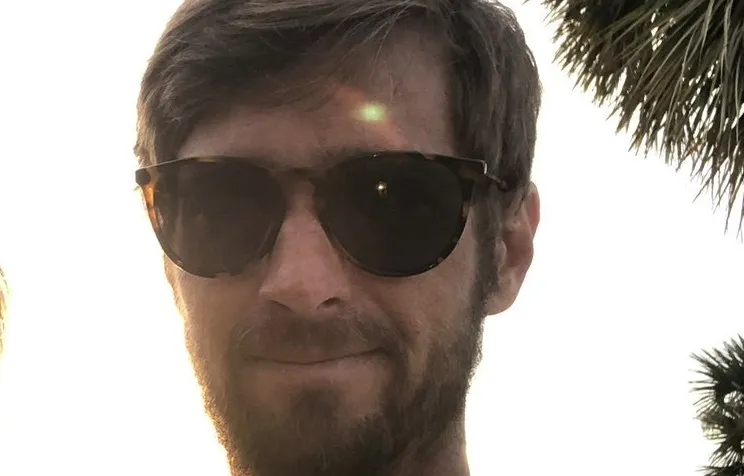
Six years ago, I got my life back.
After a decade of heroin addiction, failed treatment attempts and watching my life unravel, I finally found something that helped me break the cycle. Today, I’m a husband, a father and a productive member of my community. I have a career, a family, and a future.
Read more Letters: Mail-in voting fraud | Donalds’ checkered past | Joining Israel
I am willing to share my story because I want policymakers to understand what is at stake when they debate kratom and 7-hydroxymitragynine, commonly known as 7-OH.
Today, I want to ask a different question.
If Florida and our nation are finally making real progress against opioid addiction and overdose deaths, why are some policymakers still focused on taking options away from people?
According to recent Centers for Disease Control reporting, opioid overdose deaths in Florida have fallen from more than 5,700 at their peak in 2023 to roughly 2,300 in the 12 months ending in October 2025. That is nearly a 60% decline. Nationwide, there was a 13.9% decrease in overdose deaths in 2025 compared to the previous year.
Every life saved matters. Every family spared the grief of addiction matters. Every person who finds a path away from fentanyl, heroin and other deadly drugs matters.
The reality is that recovery does not look the same for everyone.
Some people find success through treatment programs. Others rely on medication-assisted treatment. Some lean on support groups, faith communities or counseling. Many use a combination of approaches.
The lesson from the past several years is not that there is one solution. It is that more pathways to recovery save more lives.
That is why I was encouraged to hear President Donald Trump recently speak about preserving access to natural 7-OH while discussions continue around its future regulation. The president recognized something that many people in recovery already know: there is a difference between responsible regulation and outright prohibition.
Unfortunately, that distinction is often missing from the debate.
I am not arguing that products containing kratom or 7-OH should exist without oversight. Quite the opposite. There are bad actors in every industry and consumers deserve protection.
Products should be tested. Labels should be accurate. Age restrictions should be enforced. Packaging should be child-resistant. Dangerous additives and adulterants should be prohibited. Companies should be held accountable when they fail to meet safety standards.
Read more Bastian Schweinsteiger says his remarks on Ivory Coast’s style at World Cup were not about people
Those are all reasons to regulate, not reasons to ban.
The problem with prohibition is that it rarely eliminates demand. Instead, it pushes products into less regulated markets where consumers have fewer protections and policymakers have less oversight.
We’ve seen this dynamic before throughout the opioid crisis. Restricting access to one substance does not automatically eliminate the underlying need. People often look for alternatives, and those alternatives are not always safer.
As someone who spent years trapped by addiction, I worry that policymakers are focusing on the wrong question.
The question should not be whether a product makes some people uncomfortable. Instead, the question should be whether a policy will leave people better off than they are today.
For me, the answer is clear.
The goal should be to protect consumers, keep products away from minors, eliminate bad actors and preserve options for responsible adults. Comprehensive regulation can accomplish those goals. Prohibition cannot.
Florida’s remarkable decline in opioid overdose deaths shows that progress is possible. We should build on that progress by expanding pathways to recovery, supporting harm reduction, and embracing smart regulation.
After all, the objective is not to win an argument. The objective is to save lives. I know because one of those lives was mine.
Chris Carroll is a resident of Titusville and an advocate for responsible kratom regulation.
Read more France forward Ousmane Dembélé scores a first-half World Cup hat trick in 4-1 win over Norway