
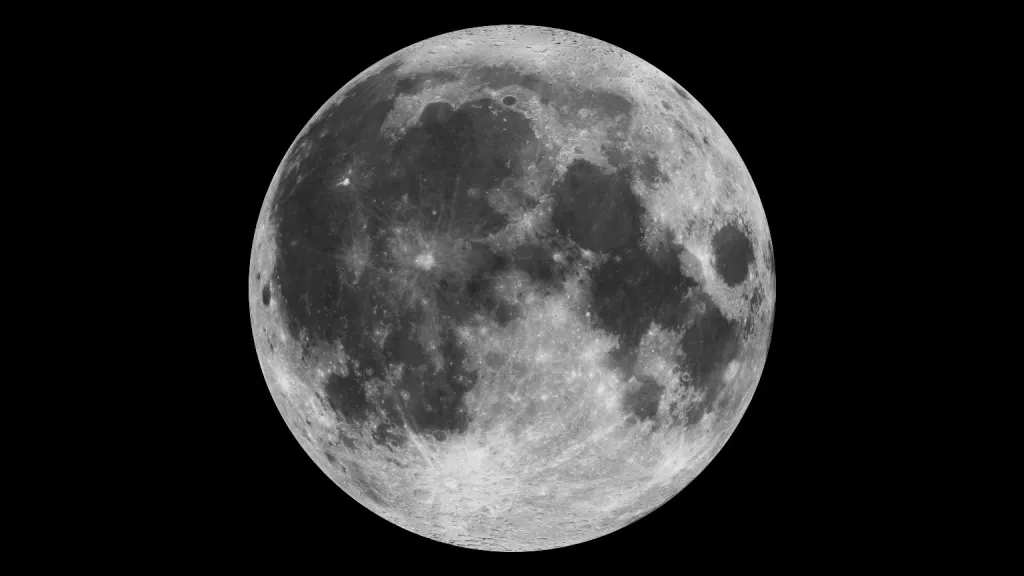
A full Strawberry Moon rises Monday night, but it will be one of the smallest of the year, at least from the perspective of those watching on Earth.
Read more Alex Murdaugh’s true crime saga continues as he heads to court for hearing on murder retrial
That’s because the moon, which rises at 7:56 p.m., according to timeanddate.com, will also be a micromoon, when it’s at its apogee, or farthest point from Earth.
The apogee technically already happened, with the moon hitting 252,442 miles away at 3:12 a.m. Sunday, according to data maintained on a site run by Fourmilab Switzerland. The moon can range in distance to Earth from about 221,000 miles to as far as about 255,000 miles.
It will still be more than 251,000 miles away when the moon rises Monday night, though, making it the second of two micro full moons on tap for 2026.
Of note, the four crew of Artemis II this spring flew farther from Earth than that, venturing out 252,756 miles from the planet, setting a new record for distance from Earth flown by humans. They broke the record that had previously been held by the Apollo 13 crew, who in 1970 had traveled 248,655 miles away during their off-nominal journey.
While this full moon is a micromoon, the opposite side of the moon spectrum is the supermoon, which happens when a full moon is at its perigee, or closest point. The next supermoon won’t be until December when it will be 221,611 miles away.
In comparison, a micromoon appears 12.5% to 14.1% smaller than a supermoon, according to timeanddate.com, and 5.9% to 6.9% smaller than an average full moon.
Read more Dr. Phillips Center wins NEA grant for patriotic celebration
As far as the name “Strawberry Moon” goes, it comes from the “Algonquin name marking the wild strawberry harvest in June,” according to the Farmer’s Almanac, and it’s the name given to the first full moon of June.
“The Algonquin, Ojibwe, Dakota, Lakota, Chippewa, Oneida and Sioux all called the June full Moon by some form of ‘Strawberry Moon’,” according to the Almanac. “Settlers met the name on arrival and kept it, and it is one of the few Indigenous Moon names that crossed wholesale into mainstream American almanacs and never went out of use.”
It stated the Creek from the southeastern U.S. called it the “Blackberry Moon,” the Shawnee in the Midwest called it the “Raspberry Moon” and the Haida of Alaska simply called it the “Berries Ripen Moon.”
Other names given this full moon, according to the Almanac, include the “Rose Moon” in Europe, “Hot Moon,” “Honey Moon” or “Mead Moon” in Anglo-Saxon tradition and “Lotus Moon” in China, noting most are tied to what mattered most for harvesting in midsummer.
Some native tribes in Alaska called it the “Moon of Birthing,” the Almanac stated, while the Arapaho in the Great Plains called it “Moon When the Buffalo Bellows” and the Omaha in Nebraska called it “Moon When the Buffalo Bulls Hunt the Cows.”
Related to weather, the Choctaw of the southern Great Plains called it the “Windy Moon.”
Read more Today in History: June 29, space shuttle Atlantis docks with Russian space station