
Are your hearing aids helping China spy on you? How about your heart monitor?
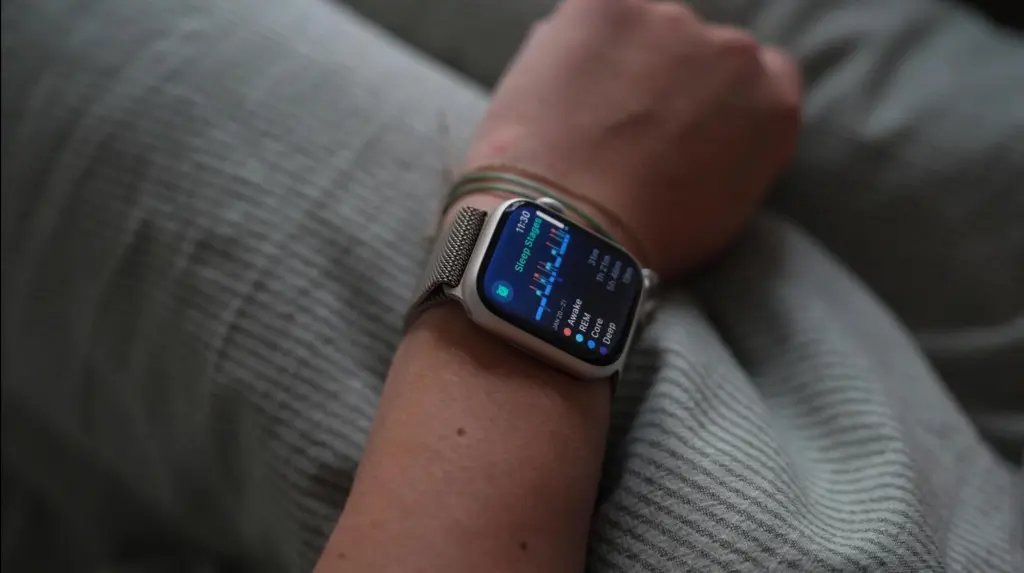
As more Florida seniors use wearables like continuous glucose monitors, remote blood pressure monitors, smartwatches and fitness trackers, concern grows about who has access to the data these devices collect.
Read more Editorial: The math behind DeSantis’s budget vetoes doesn’t always add up
Sen. Rick Scott, chair of the Senate Aging Committee, wants the Federal Communications Commission to investigate whether China-made wearable health devices pose security risks to Americans — even when they don’t realize it.
“While consumers, including seniors, believe that their health wearables may be completely secure, the unfortunate reality indicates that in all likelihood, the most intimate details of their health may be accessible by a foreign adversarial government,” Scott wrote to the chair of the Federal Communications Commission, Brendan Carr.
Scott’s concern is that the data the products collect expose an individual’s physical vulnerabilities and provide overall population-level health profiles that could be used to train artificial intelligence models for military applications.
Under Chinese data laws, companies based in the country must share user data with the authorities upon request. Estimates show that roughly 70% to 80% of all global smart wearables are manufactured in China. And even those not manufactured fully in China may have a modular transmitter or embedded processor that originates from a company based there.
Scott told the South Florida Sun Sentinel: “We’ve handed the CCP (Chinese Communist Party) unfiltered access to the private health information of countless Americans via wearable technology — that’s extremely alarming. I look forward to working with the administration to see what we can do to address this.”
Health devices under scrutiny
Scott and one of the Aging Committee members, David McCormick of Pennsylvania, want the FCC to review six categories of health products: Personal Emergency Response Systems and fall detection wearables, smartwatches and fitness trackers, remote blood pressure and cardiac monitors, continuous glucose monitors, home-based remote patient monitoring devices, and smart hearing aids.
Scott said seniors rely on health-monitoring devices for more than fitness tracking. “They are, in many cases, the very devices that determine whether a senior receives emergency medical care, whether their medication is working, and whether they are safe to remain in their own home,” Scott told the FCC in his letter.
While seniors may not realize it, hearing aids pose a significant threat because China is a leading global manufacturer and exporter of them. Former U.S. Director of National Intelligence James Clapper, 75 years old and speaking at a symposium, said that he granted himself a formal security waiver just to wear his hearing aids that used Bluetooth technology in classified facilities because of surveillance risks.
Read more Clean bills of health: Which Central Florida restaurants had perfect inspections in June?
Florida cracks down, too
In Florida, Attorney General James Uthmeier launched a state probe in February into Chinese-manufactured medical devices. He created a special task force to review companies’ data-collection practices, particularly in the health space. Uthmeier wants the companies to show how they’re complying with Florida’s data privacy and consumer protection laws.
“Florida will not allow its residents to be monitored or manipulated by hostile actors under the guise of routine business operations,” Uthmeier said when announcing the special task force.
Florida has already initiated investigations into medical companies, including Contec, a Chinese medical instruments maker, amid concerns that patient-monitoring data could be routed through Chinese servers.
Privacy is a growing concern
As more people use fitness trackers, the biometric data collected has become a growing concern, even in the United States. A newly published report, “Privacy in consumer wearable technologies,” found data collection is happening at an unprecedented scale. And while tracking data has a purpose, such as detecting early signs of viral illnesses, it also raises privacy concerns as data brokers sell people’s personal health information.
An AARP survey shows that wearable technology and health apps — such as smartwatches, continuous glucose monitors, and emergency alert devices — are increasingly popular among older adults, particularly those who want to age in place safely. However, seniors also reported to AARP that data privacy and security remain the primary barriers to their use of wearables.
Consumer Reports recommends that all consumers read privacy policies, familiarize themselves with privacy settings, and choose their health devices wisely.
Sun Sentinel health reporter Cindy Goodman can be reached at [email protected].
Read more Florida Supreme Court wants Orange judge who made political donations to pay fine