
This article originally appeared on Inside Climate News, a nonprofit, nonpartisan news organization that covers climate, energy and the environment. Sign up for their newsletter here.
Read more USA at 250: What the Founding Fathers should know about 2026
Among the sponsors of Freedom 250, the organization created by President Donald Trump to plan the celebration of the nation’s semiquincentennial, is a Florida mining company with a regulatory issue pending before the Trump administration, according to a new report.
The Mosaic Co. mines phosphate and potash, which are used in the production of agricultural fertilizers. The Tampa-based company, with operations in North and South America, is seeking a permit from the U.S. Army Corps of Engineers to expand a waste pile in Florida, raising environmental concerns in a state that is vulnerable to intensifying hurricanes, according to the report by the Revolving Door Project and Public Citizen, two watchdog groups.
“They are currently waiting for a major regulatory decision that could impact their company. So they have every incentive to appear as close to Trump as they can,” said Alan Zibel, a researcher at Public Citizen and co-author of the report.
“We should know which companies are trying to influence the government and why and what they want. We know a little bit about that through campaign finance disclosures, but vehicles like this that are completely opaque, in the dark, make it hard to understand who is trying to influence our government.”
The Trump administration has awarded nearly $103 million in contracts and grants in the planning for the 250th anniversary celebration to a “network of politicized entities under the control of Trump administration officials and political allies,” the report said.
Private funding also has permeated the planning process, often from corporations with regulatory issues before the Trump administration, including Chevron, ExxonMobil, UFC and Mosaic. The companies are contributing undisclosed sums with no oversight, according to the report. Trump created Freedom 250 soon after taking office, and the organization has emerged as a rival to the bipartisan America250, which has been planning for the anniversary for a decade.
Mosaic and the White House did not immediately respond to requests for comment.
Mosaic is seeking a permit under the Clean Water Act from the U.S. Army Corps of Engineers for a $260 million expansion at its Riverview manufacturing site outside of Tampa.
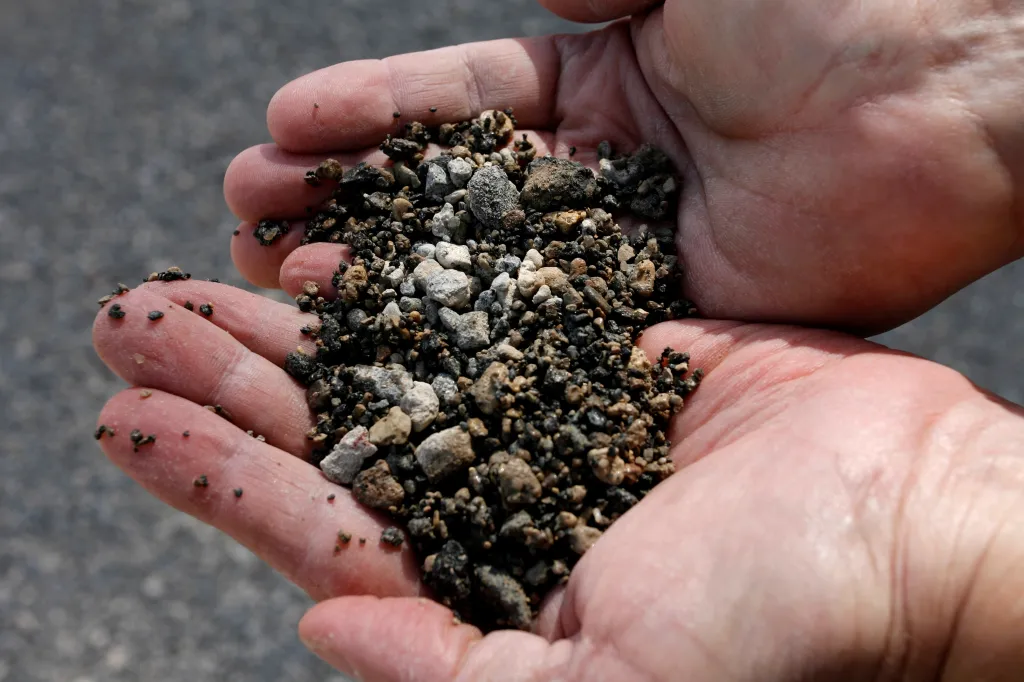
The site consists of a manufacturing plant and two waste piles called stacks. One stack is closed, and Mosaic said the other has a remaining storage capacity for about six more years of operation. The stacks at the Mosaic site contain phosphogypsum, a radioactive, carcinogenic and toxic waste generated in the production of fertilizer.
The company wants to expand the open stack so it can continue production at the site until the manufacturing plant ceases operating, though when that would be was not immediately clear. Construction would begin in January 2028 and take about two and half years to complete.
Read more New Jersey is set to charge companies with workers on Medicaid. Other states may follow
The project area is less than a mile east of Hillsborough Bay, although Mosaic said the plans are designed to minimize environmental impacts. The facility also is near a historically Black community called Progress Village, said Ragan Whitlock, staff attorney at the Center for Biological Diversity, an advocacy group.
“It is a glaring example of how these facilities impose massive issues to communities and to Florida’s environment,” he said. “Mosaic is attempting every single pathway to pay less money to safeguard this waste from leaks into the environment instead of recognizing the harms.”
The project has been expedited through the federal approval process, in response to a Trump executive order to streamline the permitting of infrastructure and energy projects to enhance national security and economic prosperity.
Phosphogypsum is usually disposed of in such stacks to limit public exposure, but the stacks have had problems. Most notably, a pond at Florida’s Piney Point site, which is not owned by Mosaic, leaked and threatened to collapse in 2021, forcing the release of 215 million gallons of contaminated water into Tampa Bay.
More than 1 billion tons of the waste is stored in stacks in Florida, with the fertilizer industry adding some 40 million tons every year, according to the Center for Biological Diversity.
Conservation groups including the Center for Biological Diversity have sued to compel the Trump administration to classify phosphogypsum as hazardous waste. Another lawsuit challenges the Environmental Protection Agency’s approval of a controversial Mosaic plan to include phosphogypsum in a road project proposed at the company’s nearby New Wales facility.
“There are some companies that are cozying up to Trump not because they want to be especially political but because they have major financial interests at hand,” Zibel said.
“It’s both an issue of getting something that you want from the administration and avoiding being punished. Because this administration aggressively punishes … people who don’t pay tribute to them and don’t say nice things about them; they are very sort of infamous for being vindictive.”
Read more What COVID is teaching doctors about the relationship between viruses and cancer
https://ping.insideclimatenews.org/js/ping.js?v=0.0.1