
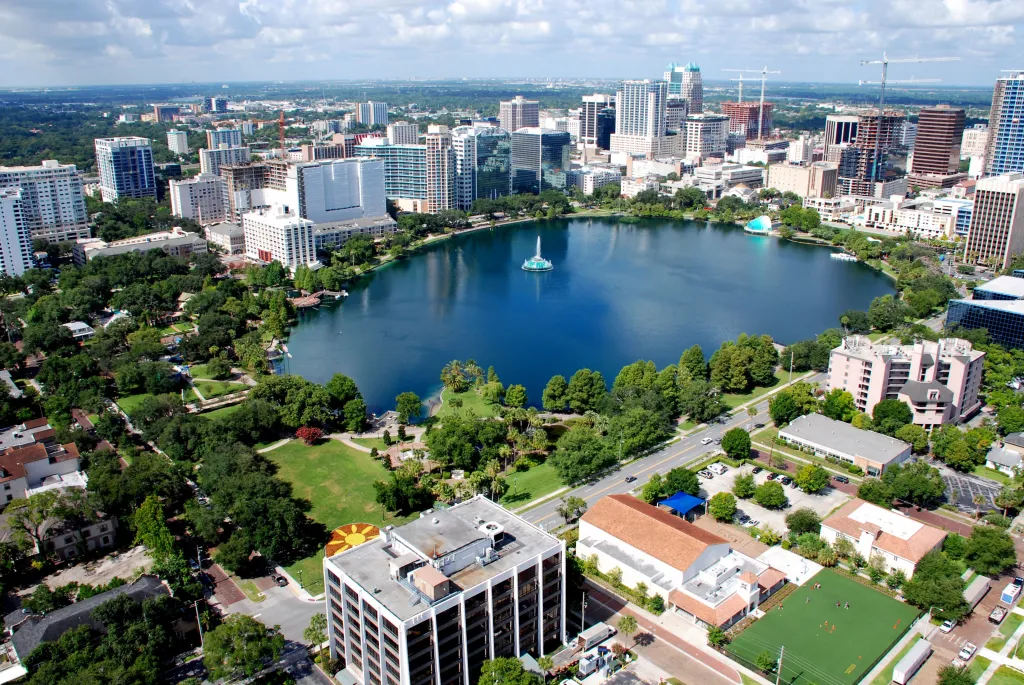
When Buddy Dyer first ran for mayor more than two decades ago, downtown Orlando was supposed to become the vibrant urban center Central Florida deserved.
Read more Florida enters new era of AI policing, politically connected firm gets contracts
Instead, many longtime locals are asking a simple question: What happened?
For years, Orlando leaders sold a vision of a thriving downtown filled with residents, businesses, restaurants and visitors. Taxpayers funded projects. Developers received huge incentives. Master plans came and went.
Yet today, downtown often feels less like the heart of a booming metropolitan area and more like a city struggling to find its footing.
Take a stroll down Orange Avenue or around Lake Eola.
Speak with business owners, workers and regular visitors who have seen homelessness become one of the defining features of the downtown experience. Watch groups of teenagers on scooters and electric bikes weave through pedestrians. Observe the loitering, disruptive behavior and gradual erosion of public order. For many parents wishing to take their children to the downtown library, the branch is often unusable due to anti-social and sometimes violent behavior from their regular patrons.
Over the years, I have witnessed lewd behavior in public, mentally ill individuals screaming at passers-by and people being chased down sidewalks in broad daylight. These incidents rarely appear in the statistics politicians and bureaucrats cite when assuring the public that downtown is moving in the right direction.
But for the people who experience them, they are every bit as real as the numbers presented at press conferences and public meetings.
Open drug use is not a crime statistic. Aggressive panhandling is not a crime statistic. The countless small- to medium-size incidents that make people uncomfortable and unsafe often go unreported and unrecorded.
Yet these daily experiences shape how people feel about downtown far more than a spreadsheet ever could.
This is why people feel they are watching a slow decline unfold in real time.
For years, City Hall promoted Creative Village and the UCF Downtown campus as transformative projects that would reshape downtown Orlando. We were told thousands of students, employees and technology workers would bring new life, businesses and a renewed sense of activity to the urban core.
Their PR campaigns were good. Civic leaders spoke of startups, high-paying jobs and entrepreneurs choosing the City Beautiful over competing towns. Some boosters even suggested Orlando could become an “Austin Lite.”
It was an appealing vision.
Years later, many are still waiting.
Where are the private-sector jobs that were promised? Where is the healthy street-level energy that was supposed to spill into downtown restaurants, bars and retailers?
Read more Folarin Balogun urges US to focus on beating Belgium despite red card he calls unjust
At some point, the public deserves more than renderings, ribbon cuttings and press conferences. They deserve results.
And the questions also extend beyond City Hall.
Organizations like Visit Orlando and the Orlando Economic Partnership operate with significant budgets and massive influence over the region’s economic narrative. We are constantly told about growth, tourism records and economic development wins. Yet many wonder who benefits most from that growth.
Disney, Universal and SeaWorld continue to expand. Tourism records are celebrated. New partnerships are announced. Fat cats in corporate win.
Meanwhile for locals, housing costs continue to rise. Insurance premiums climb. Downtown struggles. Many workers who power Orlando’s tourism economy still find it difficult to afford the community they serve.
Part of the problem is a growing perception that City Hall has become more responsive to developers, lobbyists and politically connected insiders than to the people who actually live downtown.
For more than 20 years, Orlando has largely been governed by the same political establishment. The same names, insiders and good ole boy network of consultants, developers and power brokers continue to shape the city’s future. Meanwhile, concerns about public safety, homelessness and quality-of-life issues abound.
Ultimately, the adults in charge need to recognize that law and order matters. People will not invest, shop, dine or spend time downtown if they do not feel comfortable doing so. Official statistics only tell part of the story. What really matters is how people experience the city’s core in their daily lives.
Orlando did not lack vision. It lacked accountability when that vision failed to materialize.
For decades, residents were promised a downtown renaissance.
We’re still waiting.
Jonathan Beaton is president of Inside Advantage PR, a nationwide media relations firm based in Orlando.
Read more Disney, Bloomberg open wallets as Orange County mayoral hopefuls rake in cash