

Lindsey Graham leaves immense shoes to fill
Many of us woke up this weekend to the sad and shocking news of Sen. Lindsey Graham’s untimely death. Not only did our nation lose a great patriot who put America first, Israel and other U.S. allies lost an unwavering supportive friend. Graham was a lion in the Senate, a seat which he held since 2003. He loved America and was a fierce advocate for his state of South Carolina. And there is no doubt that Graham leaves immense shoes to fill.
Read more Best hyaluronic acid supplement
— JoAnn Lee Frank, Clearwater
Cartoon went too far
OK. I get it. You always try to be fair and balanced offering opinions from all sides. But Saturday’s cartoon by Lisa Benson of Tribune Content Agency was a bit much.
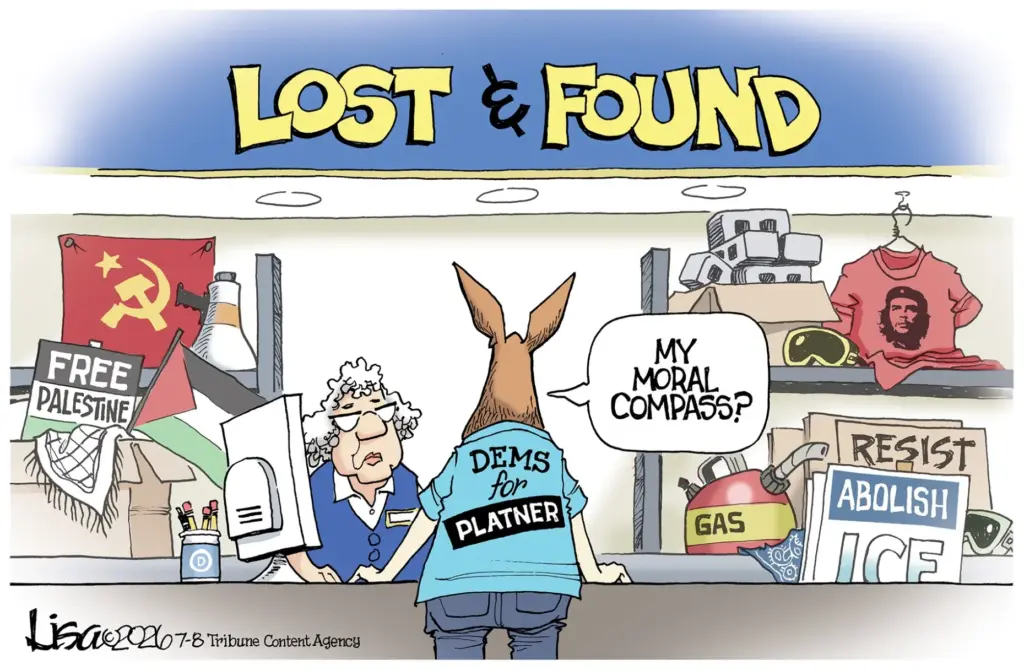
I’m a Democrat and I criticize them constantly for being inept and cowardly. But lacking a moral compass? No. You got that wrong. (Except maybe for their support of Palestinian genocide.)
Let’s compare the moral compass of Democrats with respect to Graham Platner and others with the Republican “compass.” The Democrats eventually rejected Platner as they rejected Eric Swalwell, Al Franken, Andrew Cuomo and some others.
At the same time the Republicans endorse, support and defend the likes of (yikes!) Donald Trump, Pete Hegseth, Ken Paxton, Elon Musk and a boatload of others.
You see: the Democrats do have standards. The Republicans will elevate their moral transgressors to the highest levels of our government.
— Bob Sanders, Orlando
Why not file early?
You have to wonder sometimes about the judgment of someone who wants to run for office. If the time frame to file was just four hours one morning, I could understand the possibility of the difficulties that Paula Stark had in filing. But why not file the day qualifying opens, not the last day? (Editorial: “React to Stark case by making law consistent,” July 12) It has to be done no matter what so why not do it sooner and know that it is complete and in the system? The fact that other wannabes were there the same morning suggests to me that there was more than one wannabe candidate there that day at the last minute whose judgment can be questioned.
Maybe we should put on the ballots how close to the deadline for filing the candidate had actually done it.
Read more Nevada Movers: Reliable, Efficient, and Client-Focused Relocation Services
— Chris Murphy, Clermont
Someone will pay the bill for tax cuts
In a recent guest commentary, Florida Republican Party chairman Evan Power made a tired Republican argument that, as I saw it, mixed a few basic truths with a conclusion that simply did not follow (“Property-tax bill helps Floridians, not government,” July 2). Yes, taxes come from private economic activity, and governments should be accountable stewards of public money. But claiming that tax cuts “don’t cost anything” ignores reality.
A tax cut reduces revenue available for services that taxpayers have chosen to fund collectively. Property taxes pay for policing, fire protection, road maintenance, emergency response, libraries, and schools. If revenue falls, services must be reduced or financed another way.
Governments also cannot “tighten their belt” exactly as households do. Families can postpone purchases, but counties cannot eliminate 911 dispatchers, delay road repairs indefinitely, or reduce school staffing without affecting public safety, service quality, or legal obligations.
Rising property values are not simply a government windfall. Higher assessments usually coincide with higher labor costs, construction costs, insurance premiums, infrastructure demands, and population growth. Operating expenses rise alongside revenues.
Moreover, local budgets are not automatically tied to inflation. Contract obligations, wages, utilities, pensions and insurance often increase faster than headline inflation. Property tax collections are also constrained by millage limits and other legal restrictions, so higher assessments do not automatically create unlimited spending power.
The real debate is not “government money versus taxpayer money.” It is whether taxpayers want to fund shared public services collectively or pay for reduced services privately through higher fees, insurance costs, or special assessments. Tax cuts are a policy choice, but every choice carries consequences, and someone ultimately pays the bill.
— Joel McPherson, Merritt Island
You can submit a letter to the editor by sending it by email to [email protected] or by filling out the form below. Letters are limited to less than 250 words and must be signed (no pseudonyms nor initials).You must include your email address, address with city and daytime phone number for verification. Letters are subject to editing for clarity and length.
Read more The best back-to-school tech for grade schoolers
← Back