
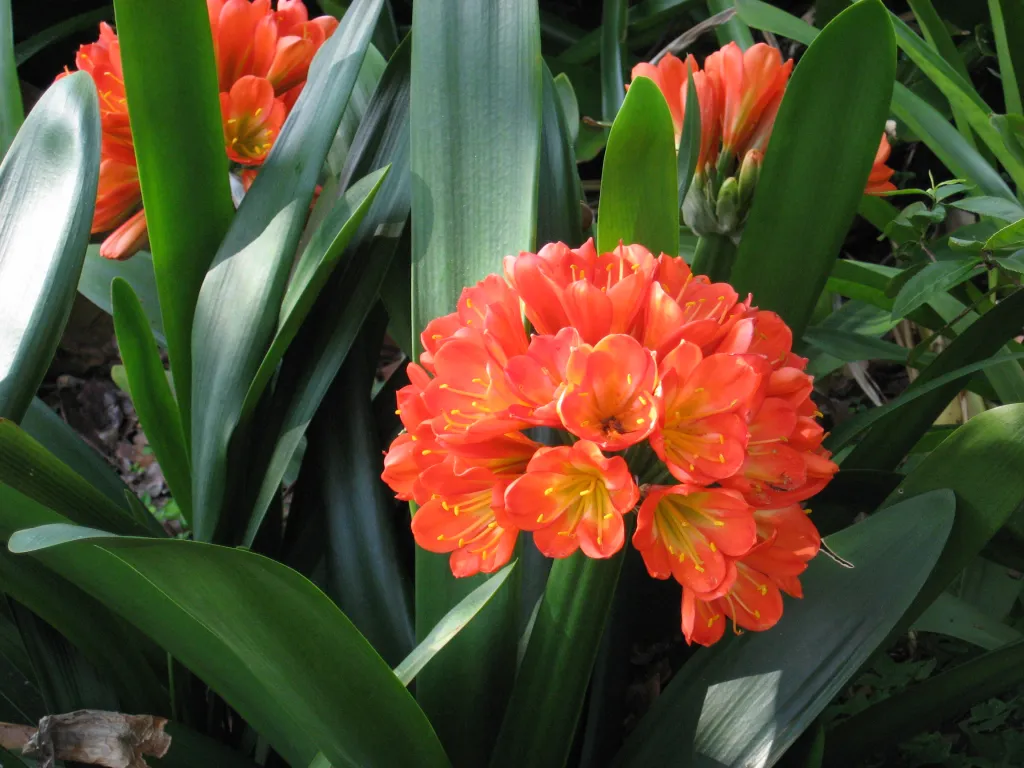
Q: My clivia growing in a pot were severely damage by the freeze. They were crowded in the pot, and are dead, except for two of the bulbs. How do I repot the survivors?
Read more Commentary: Don’t boo AI like UCF students did. Adapt to it as creative partner
A: Having flowering clivia, also called kaffir lilies, are a real treat as they open their colorful orange or yellow blooms during spring or early summer. As you experienced, the plants are very tender, being injured by freezes. Now would be the time to separate the dead from surviving plants. Clivia are amaryllis relatives but don’t produce large bulbs. Instead, clivia have thick, fibrous roots attached to a swollen base known as a rhizome. Save the damaged, but growing, plants after removing dead portions. Repot each in a small container or add the two survivors to one slightly-larger container. The plants like to be potbound. Use a good organic potting soil and grow the new plants in a filtered sun to shady area. Keep moist and apply a slow-release fertilizer.
Plant Doctor: Help! What are we doing wrong with our southern magnolia tree?
Q: Almost all our shrubs are recovering from the cold. Many died back to the ground, but are now sending up new shoots. What can I do to help them regrow new plants? Is it time to fertilize?
A: Providing water and fertilizer is the best way to speed recovery of cold-damaged plants. Since many counties have fertilizer restrictions starting in June, now is the time to make the final feeding before summer. In restricted areas, in-ground plantings cannot be fertilized June through September. Normally there is no restriction for edibles or container plants. Apply a slow-release fertilizer that can feed landscape plants for several months by the end of May and again in early October. Use a similar product, following label instructions, for container plantings.
Q: Lots of weeds have started to grow in the bare spots of our lawn. Can I use a weed control to remove them and allow new growth from nearby grass to fill in?
With May nearly upon us, here’s the to-do list for Central Florida gardeners
A: Weeds are filling areas affected by winter damage, diseases and insect infestations. Now is a good time to get these weedy areas under control. If the bare spots are large, use of sod to fill the voids is the best way to restore the lawn. Large areas are going to refill with weeds after the effects of a weed control product is gone. Some weed control products also prevent good runner growth. When spots of weedy growths are relatively small, use of a herbicide made for the lawn type could be a good control. Make sure the product is made to control the weed making the most growth. Then, if the areas of weeds are infrequent, use spot weed control sprays to only affect areas of concern. If the spots of weeds are numerous, a weed-and-feed product could be applied following label instruction. Do note that in most areas the last time to apply fertilizer until fall, such as weed-and-feeds, is the end of May.
Q: Cucumber leaves in my home planting are developing large yellow spots and the leaves gradually decline. What is the cause and cure?
Read more Orlando Fringe Festival reviews: Tea, wars, escaping and measuring up
A: Such symptoms suggest downy mildew, a fungal disease, is affecting your planting. The fungus affects pumpkins, squash and melons. Some varieties of cucumbers offer resistance to the disease and should be your first line of defense. Look in seed catalogs and on seed packets for downy mildew resistance. After the planting is growing, keep the foliage as dry as possible. Water in the morning so the foliage dries by midday. Also use a mulch to keep the fungal spores from splashing between plants. Natural pesticides offering some downy mildew control include need oils and copper fungicides. The traditional fungicide, Daconil, also provides some control. Any one of these has to be applied at the first sign of the disease or when it’s expected following label instructions.
Q: I have been enjoying my daylilies but notice brown and orange spots on many leaves. What is this and do I need a control?
A: Marring the good green of your plant foliage is a common disease called daylily rust. It’s a fungus that has become quite prevalent among plantings. Affected plants are weakened and look unsightly, but normally do not suffer major decline. No matter what you do, the plants are probably going to have some rust, but you can keep it under control. Start to control daylily rust by removing as many of the affected leaves as possible. Also remove older leaves that have fallen to the ground. Then apply a fungicide that lists it controls rust such as BioAdvanced Disease Control, Daconil, Fertilome Systemic Fungicide II or Spectracide Immunox. Apply the spray as needed following label instructions. Also try to keep the daylily foliage dry, especially during the evening hours. Some daylily varieties have partial resistance to the disease but may still need a control.
Q: Our ligustrum hedge has grown about six feet tall but lacks foliage at the base. How far can I cut the plants back to have them fill in closer to the ground?
A: Only significant pruning can force out the stem and leaf buds from lower in the hedge. As a general rule, prune the plants down to a foot above where you want the new growth to begin. In this case it means pruning the hedge back to about three feet above the ground. Healthy ligustrum should regrow quickly with adequate water and a slow-release landscape fertilizer application, as permitted. Do make sure future pruning keeps the hedge wider at the base than the top. This ensures all areas of the hedge receive as much sunlight as possible to maintain foliage on lower portions of the planting.
Tom MacCubbin is an urban horticulturist emeritus with the University of Florida Cooperative Extension Service. Write him: Orlando Sentinel, P.O. Box 2833, Orlando, FL. 32802. Email: [email protected].
Read more Letters: Trump doesn’t care | Leaders focused on wrong things | Political rebellion