
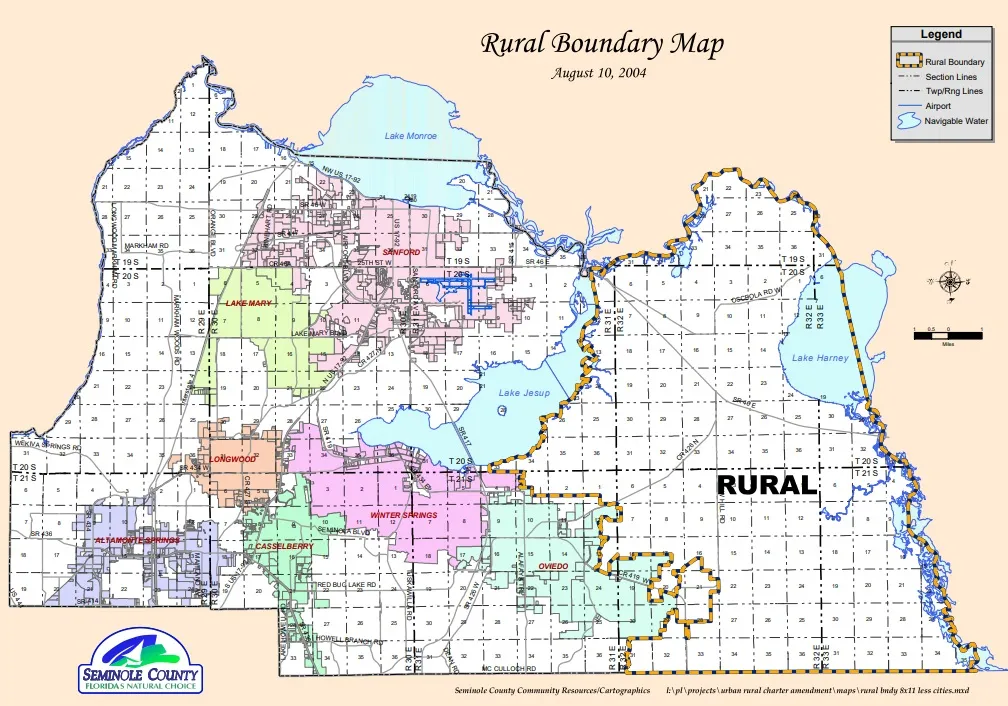
Oviedo voters will decide in November whether to significantly raise the hurdle for expanding the city’s borders, a move that could effectively dampen new municipal development on the city’s perimeter.
Read more Your civic ice cream duty: Help Charlie’s choose the new ‘Sentinel scoop’ flavor
The Oviedo City Council voted 3-2 on July 20 to place Ordinance No. 1774 on the Nov. 3 general election ballot, according to a report in GrowthSpotter. If approved by voters, the charter amendment will require a four-fifths supermajority vote of the City Council to annex any land lying within Seminole County’s designated Rural Area.
Because Oviedo’s existing municipal footprint is largely built out, annexing unincorporated land is the primary mechanism for developers to construct new large-scale housing subdivisions and master-planned communities under city jurisdiction.
Requiring four of the five council members to approve an annexation creates a steep barrier for land assemblages along the city’s eastern boundary.
But Council Member Keith Britton, who opposed the ordinance, warned that the supermajority rule also strips the city of its negotiating leverage when developers or the county move forward.
“I want to be able to negotiate, and a hard negotiation, if and when the county decides that we need to annex some of this stuff in, and I don’t want to have to go through the hoops of a supermajority to have to do it,” he said.
Meanwhile, a strict annexation rule would not necessarily stop regional construction along the Oviedo border. Instead, it could shift development out of Oviedo’s hands. Florida’s “Agricultural Enclave” statute, which was expanded during the 2026 legislative session, took effect July 1, allowing developers owning qualifying agricultural land near existing residential communities to bypass municipal annexation and seek increased residential density entitlements directly from Seminole County.
Charter Review Committee member Dr. Lou Klinker testified that restricting annexation leaves Oviedo vulnerable to sprawl, noting “the City could ultimately experience the impacts of growth without having the same ability to respond strategically to changing circumstances.”
The City Council vote highlighted a sharp divide over how the city should manage its growth boundary. Mayor Megan Sladek, Deputy Mayor Natalie Teuchert and Council Member Alan Ott supported placing the measure on the ballot, while Council Members Jeff Boddiford joined Britton in voting against it.
Read more On path to stardom, Amy Victoria Reid heads ‘Into the Woods’
Teuchert took aim at the tax rationale.
“I think we’ve proved time and time again that single-family homes don’t even pay for the infrastructure in front of their own houses. … It would be more of a tax burden annexing that in,” she said.
However, when a city annexes a parcel, it isn’t automatically locked into single-family zoning. The City Council can negotiate a Planned Development (PD) or assign commercial, mixed-use or multifamily Future Land Use designations that generate far higher tax revenue per acre.
Proponents framed the amendment as an essential procedural safeguard, aligning city policy with countywide voter sentiment. David Bear, president of Save Rural Seminole, noted during the public hearing that Seminole County voters overwhelmingly backed rural boundary protections in 2004 and again in 2024, the latter passing with roughly 84% support.
“This is not a proposal that stops growth,” Bear told the council. “It’s not a proposal that stops any annexation from the rural boundary. It makes it so that if the circumstance comes up, you’re really certain about it.”
Charter Review Committee member Rebecca O’Brien echoed the sentiment, asserting that major land-use decisions should reflect broad consensus rather than a narrow 3-2 decision.
“It doesn’t ban growth,” she said. “It just ensures that any decision to bring rural land into our city limits reflects real, broad agreement among our council.”
The measure will appear as a charter amendment referendum on the Nov. 3 ballot alongside four other charter revisions previously recommended by the Charter Review Committee.
Have a tip about Central Florida development? Contact me at [email protected] or (407) 420-5246. Follow GrowthSpotter on Facebook and LinkedIn.
Read more Prosecutors move to drop charge against California labor leader arrested during immigration protest