
TALLAHASSEE — Facing public outrage and potential lawsuits over their secret surveillance of environmental activists, Florida wildlife officials recently released a sampling of social media threats they have received, saying those online comments justified their investigation.
Read more Orange County Convention Center seeks $523 million for another expansion
But several of the environmentalists whose driving records were pulled as part of the investigation said they didn’t write those comments — and that the Florida Wildlife Conservation Commission now is smearing them with its one-page list of 17 anonymous remarks. FWC would not address the issue in response to questions from the Orlando Sentinel.
Though the FWC initially claimed it was probing the environmentalists, many of whom opposed Florida’s latest bear hunt, as part of a “criminal investigation” — which would justify pulling otherwise private driving records — an agency official later admitted there was no criminal investigation, only a concern for “public safety.”
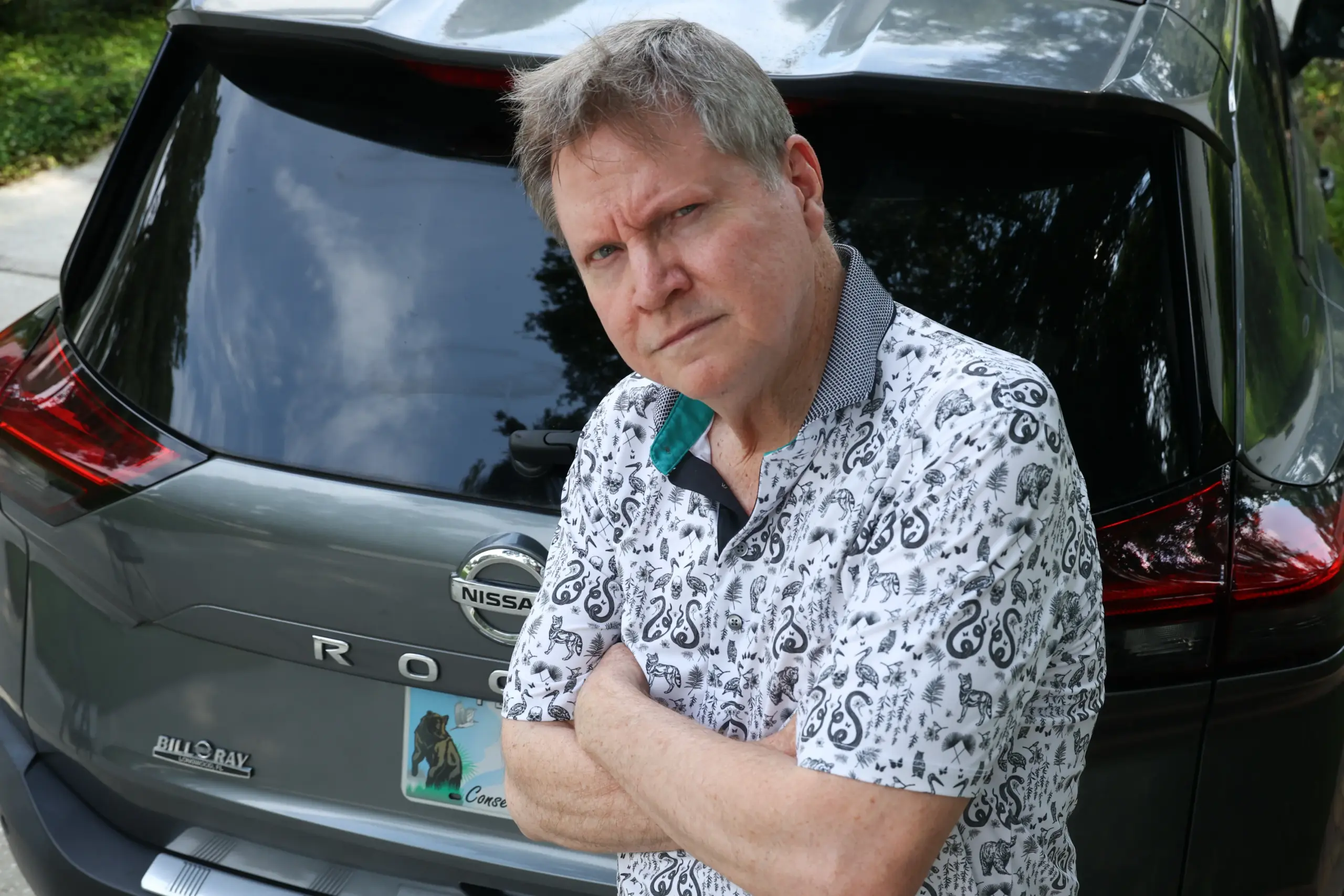
Chuck O’Neal, an Apopka resident and founder of the nonprofit environmental group Speak Up Wekiva, was among those whose driving records were reviewed, and is considering a lawsuit against the agency after discovering it pulled his records 28 times in three years.
He previously unsuccessfully sued the state to end bear hunting, fought a ballot measure to enshrine hunting and fishing in the state constitution and frequently spoke out a FWC meetings.
He called FWC’s list of threatening remarks an “incendiary collage” that implies he and others who were investigated made the angry comments. He did not, he said.
The list, released late Friday, appears to be a collection of comments copied from social media, and cut and pasted onto a single sheet of paper with names, dates and other identifying information blacked out, making it impossible to know who wrote them or who they were directed at.
An FWC email, sent from Communications Director Shannon Knowles, accompanying the list said the agency pulled driving records because of the theatening nature of the comments.
“Multiple … inquiries were conducted in conjunction with recurring Commission events and public safety planning that are consistent with legitimate law enforcement practices,” she wrote. “Assessing credible threats to the people who attend our meetings and work in our facilities is a legitimate and lawful function of law enforcement, and we take every threat seriously.”
However, she made no direct connection between the environmentalists whose records it reviewed and the comments and has not said whether any action has been taken against anyone who was investigated.
The agency also did not respond to followup questions from the Sentinel asking if any of the people FWC investigated had made any of the comments on its list.
Sen. Carlos Guillermo Smith, D-Orlando, filed a complaint with the Office of Inspector General Thursday over what he called the “baseless surveillance” of both Republican and Democrat environmental advocates who criticized them.
“The public deserves transparency and accountability for this unprecedented violation of privacy,” Smith posted on X. He is a member of the Senate Natural Resources Committee.
No individual FWC commissioners are named in the examples listed, with messages addressed to “these people” or “the bastards.” Most of the comments are about shooting people.
Only one message mentions the agency, and one says “Pipe bomb a meeting.” One refers to an unnamed hunter, and the hope that he dies in a “tragic” hunting accident. Another says, “We can burn their houses down” and wonders why society gave up using pitchforks and fire on failed politicians.
Read more Disney adds ‘Zootopia 2’ character to Animal Kingdom show
Brent Fannin, a documentarian who made films critical of the FWC, first discovered the agency was pulling driving records of activists. He questioned the legality of its actions and said with its list of threats the agency is “trying to connect imaginary dots between those aggressive Instagram comments and the conservationists they’ve been illegally surveilling because they know if they can make us look violent they can discredit us.”
Fannin said he has scoured his social media history and found nothing remotely threatening, “only ridiculous comments about commissioners. Scathing, for sure. But ridiculous.”
He also couldn’t find any of the FWC’s samples on any comments in any of his accounts.
Fannin said this week that he has confirmed that up to 21 environmental advocates have had their driving records pulled by FWC law enforcement.
Those records were obtained by the agency through the state Department of Motor Vehicles’ Driver and Vehicle Information Database, or DAVID. It contains driving records and license plate numbers, but also comprehensive personal data including social security numbers, addresses and accident reports.
Fannin and others contend the FWC used the DMV data in conjunction with atuomated license plate recognition cameras to monitor environmentalists attending commisison meetings.
“They’re cornered and it’s clear,” Fannin said. “They have nothing to do but admit the truth or keep doubling down on the lies.”
The common thread tying together the people known to have been investigated by the FWC is that they had all publicly tangled with the agency, in forums ranging from public meetings to courtroom challenges to social media. Many of them also belong to the same Instagram chat group run by Fannin.
They disagreed with the FWC over bear hunts, manatee habitats, failing to act or find any criminal neglect in the deaths of 50 sloths at an Orlando-area facility, the removal of a conservation easement in the Split Oak Forest Preserve, and the capture of a manta ray off the coast of Panama City Beach for Sea World Abu Dhabi.
In its statement, the agency also shared other incidents it found threatening, including when two employees had their home addresses made public and when an FWC commissioner — who serves as the governor’s appointee on a board that votes on agency policies, such as hunting rules — witnessed a protest at their business.
It did not provide any specific details on those incidents, but Fannin said the protest was outside one of FWC Commissioner Preston Farrior’s dozen or so automobile dealerships. And he noted residents have a First Amendment right to protest outside a business.
“Due to these and other types of actions, the DAVID inquiry was conducted for public safety purposes,” Knowles wrote.
But she she also said that “every Floridian has the right to speak at our public meetings, to petition this agency, and to disagree with our decisions and our commissioners, We support that right without reservation. Taking part in the public process should never carry a personal cost.”
Read more Universal confirms HHN haunted house as salute to Ozzy Osbourne