
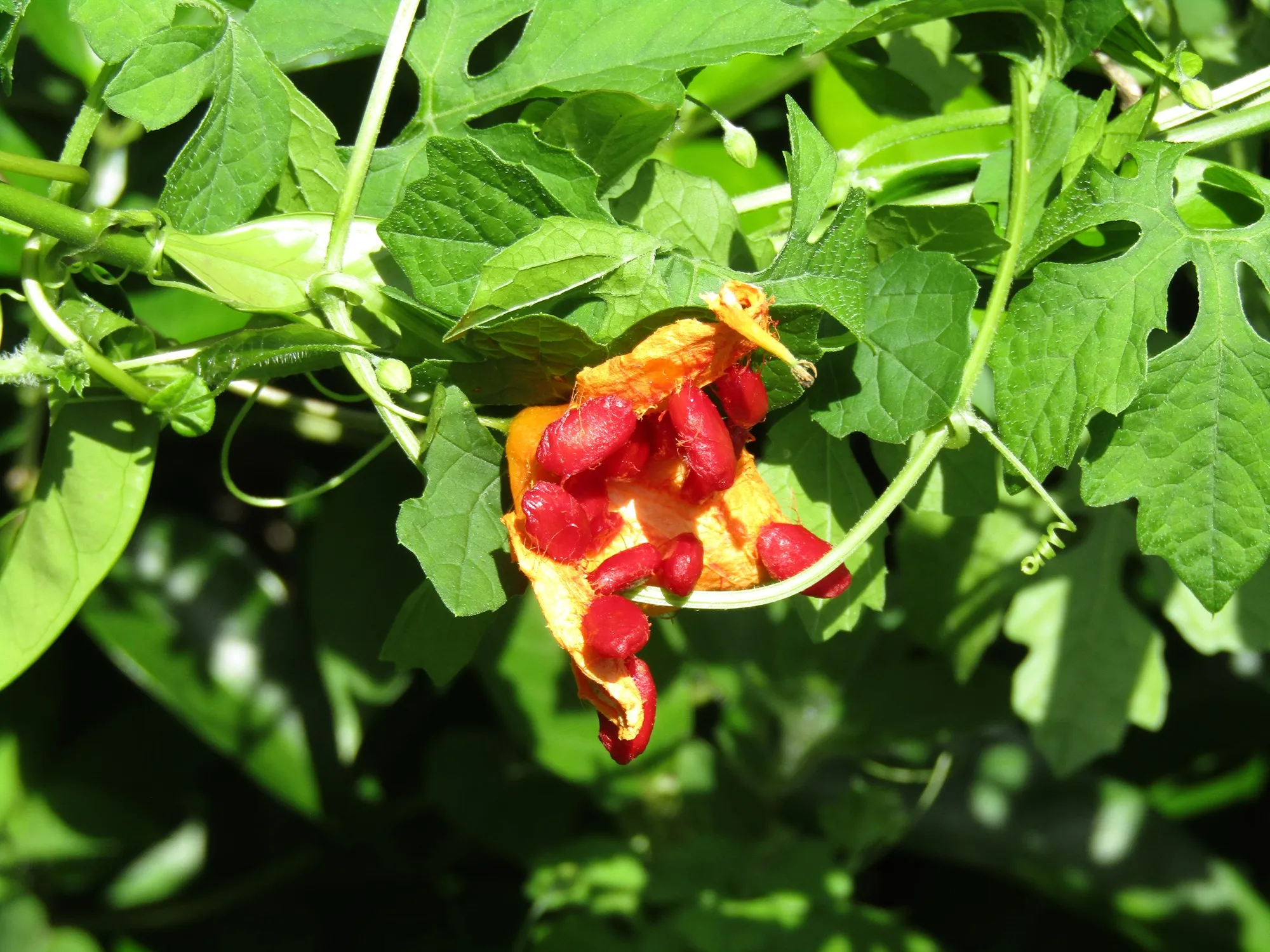
Q: A quick-growing vine with yellow flowers that eventually produces orange knobby fruits with red seeds is overgrowing my shrubs. What is a good control?
Read more Miss Manners: My amusing stories don’t amuse the love of my life. Is she too sensitive?
A: Many gardeners are dealing with this invasive vine known as balsam pear or balsam apple. It grows from seeds, usually spread by wildlife and quickly produces vining growths with deeply lobed and attractive leaves. The fruits and leaves should be considered poisonous, but they are reportedly edible if harvested at an early stage and properly prepared. Regretfully, there is not an easy control of this vine. But there is good news. Usually most of the vining growths form from a few rooted portions. If you find where the vine enters the ground and pull it loose, you normally eliminate the plant — which quickly dries and shrivels. It can be left to decline or pulled from the shrubs.
Q: My ginger plants were killed in the freeze and have all regrown. As soon as shoots get a few inches to a foot tall, something chews them so they eventually droop over and die. What is causing the damage?
A: Naughty squirrels are likely at fault. I had this same experience a few years ago with ornamental gingers and squirrels. Most likely, other rodents can do this, so rats could be chewing on your gingers, too. In my case the chewing lasted only a few weeks, and they then moved onto something I guess they liked better. You might try a repellent applied to the young ginger shoots — or if you expect rats a few traps.
Plant Doctor: Foliage of Joseph’s Coat brings understated color to your garden
Q: I have a couple of old roebelinii palms, with ends of some green fronds turning brown. Is this just old age or an issue I can do something about?
A: Older fronds of any palm may start to brown from the ends, but sometimes this is culturally related. If the fronds are old, and the new ones are healthy, this is likely normal decline. If many of the fronds, young and old, are affected the palm may not be receiving adequate water or nutrients. Palms are drought tolerant but grow best when they have water during hot dry weather. To prevent the brown ends, make sure the palms have water every week or two from rains or irrigation. Also, apply a palm fertilizer of an 8-0-12-4mg analysis in March, May and early October.
Q: Our beautiful mango tree died from the cold weather last winter, but is producing green leaves from near the ground. Will this tree regenerate to bear fruit?
A: Regretfully recovering shoots of the mango tree in your email photo did not look the best. Most likely, all or at least a portion, are going to decline due to rot in the lower trunk areas. It appears the growth is so close to the ground, and on a previous offshoot, that all may be from below the graft. This usually produces a tree with an inferior quality fruit. You can leave the growths and possibly train one shoot to become a new tree. But my recommendation is to obtain a new tree that produces a desired variety bearing the tasty fruits you remember in two to three years.
Q: I have a serious infestation of what appears to be a cottony scale on my large geranium that’s planted in a pot on the pool deck. I have tried several natural insecticides. What is a better control?
Read more Endorsement: Varied experience gives Moore Russell the edge for Orange mayor
A. Most likely your white coverings on the geranium leaves are mealybugs. Natural controls of soaps, horticultural oils and similar can be effective, but you have to be persistent and hit the insects with sprays. This likely means checking the undersides of leaves and lower stem portions, and maybe spraying weekly for several weeks. You might take the plant outside in the shade and give it a good spraying. When dry you can move it back to the pool deck. Other traditional insecticides, with synthetic pyrethroids or systemics, would likely give more immediate control when applied as directed on their label.
Are you a Central Florida gardener? Here’s your to-do list heading into August
Q: My family is looking forward to planting a fall garden. When should we start the vegetables?
A: Actually, fall gardens start in August with the warm-season vegetables. Use the next few days to till the garden site and mix in organic matter and composted manure with sandy sites. Then around mid-month add transplants of tomatoes, peppers and eggplants. Seeds of cucumbers, squash, beans and corn are also sown at this time. You have until mid-September to plant the warm-season crops, then in October begin the cool season plantings.
Q: We hung several orchids received as gifts under our trees, and they appear to be making new growth. Should we be fertilizing the plants?
A: Make your orchids feel at home, and maybe encourage some blooms too, with regular feedings during the warmer months. You can use a water-soluble orchid fertilizer or similar product found at your local garden center. Mix it at the label rate and apply it to the plants every other week. If you would rather take some of the work out of feedings, new slow-release granular fertilizers are also available to spread over the growing medium in the orchid pots following label instructions. Continue the feedings into the fall to encourage good growth and more flowers.
Q: Several of our containers of peace lilies have flowers turning green to brown. Should they be cut off?
A: Unsightly peace lily tops eventually shrivel and decline, but when they are a distraction, remove them from the plants. Cut the long stems way back among the foliage so there are no brown portions exposed. If needed, now is also a good time to divide and increase peace lilies — also know as spathiphyllum. They make great container or in-ground plants for the warmer times of the year. Plants are hardy until freezing.
Tom MacCubbin is an urban horticulturist emeritus with the University of Florida Cooperative Extension Service. Write him: Orlando Sentinel, P.O. Box 2833, Orlando, FL. 32802. Email: [email protected]