
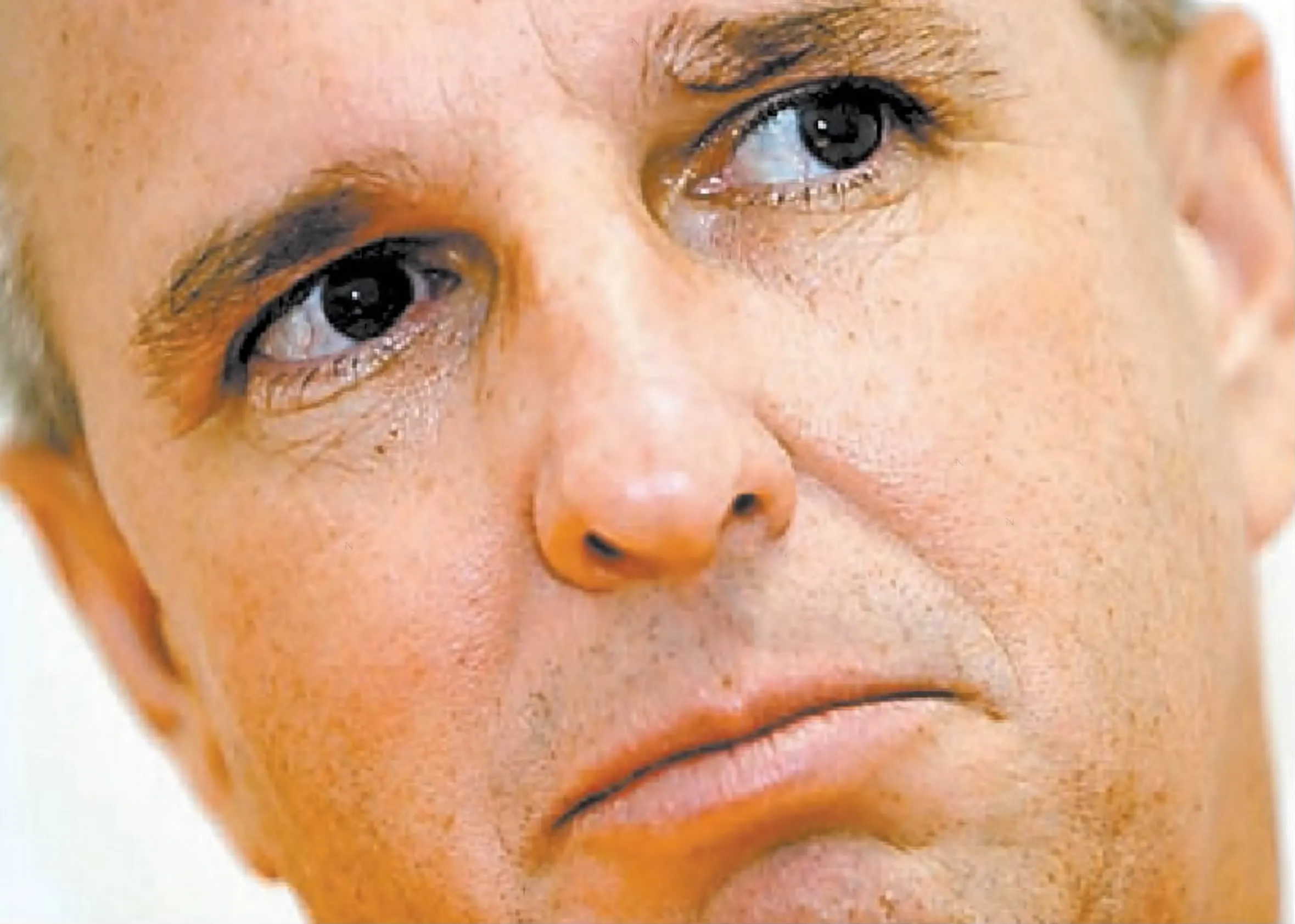
Even before Gov. Ron DeSantis signed his death warrant in February, the case of James Duckett — the former Mascotte police officer convicted in 1988 of murdering 11-year-old Teresa McAbee — had almost completely fallen apart. Two of the key witnesses against him were credibly accused of false testimony. Most of the physical evidence had come under doubt as well. Courts have since learned that prosecutors withheld significant evidence from the defense.
Read more Which paintballs should I get?
But what has happened over the five months since that warrant was filed should disgust and frighten anyone who believes Florida’s criminal court system should be primarily focused on justice.
Editorial: James Duckett could be days from death. Why his case still haunts many
Justice has been absent in this case, almost from the start. A few facts are not in dispute: On the evening of May 11, 1987, Duckett (a rookie on Mascotte’s five-person police force) was patrolling State Road 50 for speeders. He pulled into the parking lot of a Circle K convenience store and noticed Teresa talking with an older teen at a time when both should have been at home. He talked to each of them and then, he said, told Teresa to go home — she lived just a short walk away. Later, after her mother reported that Teresa had not come home, he collected a picture of her to create a “missing” flyer. It’s a story corroborated by most of the witnesses present at the Circle K and the adjacent laundromat.
The next morning, a fisherman discovered Teresa’s body at nearby Knight Lake, and Duckett quickly became the sole suspect.
He is scheduled to face execution at noon Tuesday. Hours later, Dominick Occhicone is set to die in a rare double exeution.
Weak from the start
An editorial published Thursday covered the myriad flaws in the prosecution’s case, including credible suspicion that the only eyewitness who claimed to have seen Teresa get into Duckett’s patrol car had been flattered, coaxed and bullied into false testimony by police. The other key witness was an analyst in an FBI lab who testified that a single pubic hair found in Teresa’s clothing almost certainly came from Duckett. Later, an FBI review revealed that the analyst exaggerated or falsified positive matches in nearly every case he touched.
If the standard “innocent until proven guilty” means anything, Duckett must be considered an innocent man. There simply isn’t enough remaining evidence to convict him.
But Florida’s appellate law has a cruel twist. Once he was convicted by a jury, the burden shifted to Duckett to prove his innocence. He’s been trying to do that for nearly 40 years.
There was one avenue left to explore — the possibility that, somewhere among all the physical evidence that’s left from the trial, enough DNA evidence remains to clear up this mystery once and for all. If Duckett really committed this heinous crime, his DNA will condemn him more loudly than an entire chorus of prosecutors and cops. But if he is innocent — if labs find male genetic material on Teresa’s clothing that doesn’t match his — then four decades of lies will explode, spattering blame across a wide blast radius.
That includes current office holders, and people whose names will be on ballots this year.
That is a powerful reason to block a DNA comparison from ever taking place. And the state did everything in its power to stop testing in 2003, the first time Duckett tried to have genetic testing performed. When the remaining evidence was finally examined, they found only a few samples. That included a slide containing liquid that appeared to include sperm. It was deemed too degraded to be tested.
The science of DNA testing has come a long way in the past quarter-century. Science has gotten much better at finding DNA evidence,and developed tools that can extract much more information from very small, broken samples of DNA.
Hope, or a trap?
After DeSantis signed a death warrant and set Duckett’s execution for March, the question of that sample re-emerged. It was an obvious first reach for Duckett’s defense team.
Surprisingly, prosecutors agreed to the testing — something Duckett has a right to under state law. That may be why Duckett’s defense team decided to focus on the DNA on the slide, rather than expanding their request to include a re-examination of Teresa’s clothing and other items found at the scene.
If so, they walked into a trap.
It was quickly determined that the Florida Department of Law Enforcement wasn’t capable of performing the latest and most accurate DNA testing, An FDLE official suggested two other labs, including a Texas company, Othram, considered to be one of the best in the nation at this kind of cold-case comparison. Their website lists dozens of cases where Othram has identified crime victims and perpetrators this year alone. In April, James Uthmeier, who’s currently filling out Ashley Moody’s unexpired term as state attorney general, announced a partnership with Othram to solve some of Florida’s colder cases. “Othram is leading the nation, a company that has proven success when it comes to advanced forensic DNA analysis,” Uthmeier told the Florida Phoenix.
But even as Uthmeier was inking that deal, attorneys who worked for him were doing everything in their power to keep Othram from inspecting the Duckett slide.
There were other labs qualified to do the kind of analysis the FDLE recommended. But prosecutors didn’t want to use them either.
Instead, they pushed to hire a Deerfield Beach facility owned by DNA Labs International, or DLI. That lab was not capable of performing the accurate comparison needed to confirm or deny a match between degraded evidence from a cold-crime scene and a known sample from a suspect. In fact, the DLI lab specialized in looking for evidence of kinship between two people.
Read more Led by Griezmann, new-look Orlando City hosts conference-leading Nashville
Prosecutors told the court that they were concerned about timing, ignoring a promise by Othram’s founder that his lab could complete testing just as quickly as DLI. Othram would also be able to conduct the data analysis needed to complete the matching process.
Both sides knew that any testing of the degraded slide would consume the entire sample. They also knew that once the DNA extraction process was complete, DLI would not be able to analyze the raw data to reach a definitive answer.
Did the state really want to test this sample — or just destroy it? Their actions suggest an answer to that question.
Indecent haste
And why didn’t Lake County Circuit Judge Brian Welke shut them down? Welke was so pedal-to-the-metal on this case that — after clearing the way for prosecutors to send the slide to DLI — he signed an order denying Duckett’s request to have a qualified lab examine DLI’s raw results.
The Florida Supreme Court had finally had enough. Or so it seemed. In May, a 6-1 majority tersely pointed out the obvious: The state can’t claim to have followed the law until someone actually looks at the data DLI extracted.
But it wasn’t the only time justice was trampled in the evident rush to get Duckett’s execution back on track. There were multiple hearings where defense attorneys weren’t summoned until hours — sometimes minutes — before they started, and then blocked from presenting evidence that the state was about to send the sole remaining sample of prepared DNA to a lab that was not qualified to handle it.
And it’s entirely possible that the sample was mishandled. Two labs looked at DLI’s data and determined that there was no conclusive evidence either way. But there might have been, if the right procedures had been used to extract that data.
That puts Duckett and his attorneys in a hellish dilemma. By any precept of justice, courts cannot reward the state for botching — perhaps deliberately — the way the slide was handled. But neither can the state simply declare him innocent and let him go. There is no evidence of his innocence. At the state’s behest, the sample (or the evidence?) has been destroyed.
The last chance
That’s when Elizabeth Wells, the attorney who’s represented Duckett for decades, hurled her Hail Mary. There are multiple items of clothing and other items from the murder scene remaining. Just as the science of comparing DNA has advanced, so has the science of finding it: Archaeologists can now extract human DNA from the dirt of thousand-year-old graves in sufficient quantities to describe how humans have evolved in that time.
She’s asking the Florida Supreme Court to approve further testing. It would be the only way to counteract the significant injustice created when the state deliberately sent the slide to a lab unequipped to handle it.
But she’s not stopping there. Thursday afternoon, Wells and her colleagues at the state-operated law firm that represents death row inmates asked the U.S. Supreme Court to determine that the late stages of Duckett’s case have been so egregiously mishandled that the nation’s highest court must act to stop his execution and order further testing. The 91-page petition includes even more jaw-dropping allegations, including a claim that prosecutors never shared information (taken from a notebook Duckett was carrying the night Teresa disappeared) that could have led to an alibi.
(this graf is not changed) But she’s not stopping there. Thursday afternoon, Wells and her colleagues at the state-operated law firm that represents death row inmates asked the U.S. Supreme Court to determine that the late stages of Duckett’s case have been so egregiously mishandled that the nation’s highest court must act to stop his execution and order further testing. The 91-page petition includes even more jaw-dropping allegations, including a claim that prosecutors never shared information (taken from a notebook Duckett was carrying the night Teresa disappeared) that could have led to an alibi.
This may well be Duckett’s only hope — because Friday morning, the Florida Supreme Court hopped back on the party line. In a sickening 10-page order, the court simply said “time’s up.” There is to be no redress for the state’s egregious actions that ensured the destruction of the best evidence remaining in this case.
This decision indelibly stains the reputations of all court officials involved: Uthmeier, 5th Judicial Circuit State Attorney Bill Gladson, Welke and the Florida Supreme Court. They have created a valid suspicion that no DNA testing would have been permitted if the conclusion was ever in doubt.
But they can’t change reality. After the events of the past five months — the murder of logic, the repeated disdain for fundamental concepts of justice — there is only one fair resolution: Postpone Tuesday’s execution. Allow the additional testing. After four decades of lies, step aside and pray that enough truth is left to say, with clarity and finality, that Duckett is innocent or that he is guilty.
If Duckett’s case becomes precedent, it will gash a bleeding hole into the idea that innocence still matters in America. For the sake of justice, the nation’s highest court must step in, stop the execution and demand one last quest for truth
.The Orlando Sentinel Editorial Board consists of Opinion Editor Krys Fluker, Executive Editor Roger Simmons and Viewpoints Editor Jay Reddick. Use [email protected] to contact us.
Read more UCF position preview: Knights see plenty of potential in new specialists
Embed from Getty Images