
Two fatal shootings by Immigration and Customs Enforcement officers — one July 7 in Houston and one July 13 in Maine — prompted the Trump administration to pause most vehicle stops. Just before that policy was announced, a third man died after ICE agents initiated a stop in St. Augustine.
Read more Discover delicious recipes in these top Mediterranean diet books
That pause was short-lived.
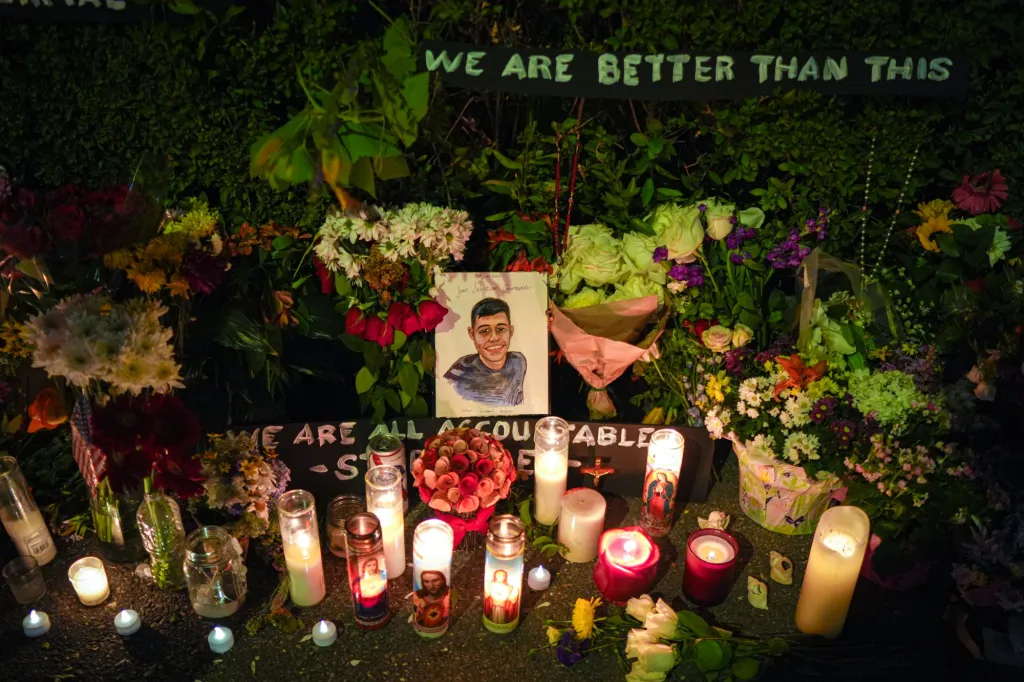
In the Texas and Maine stops, ICE officers shot men in their vehicles after agents attempted to stop them during immigration operations. (Neither man was the intended target of the operations, according to subsequent reporting.) The man who died Tuesday in St. Augustine, who has only been identified as a 28-year-old Mexican national, was running away from agents and was hit and killed by a large truck. Wednesday evening, more than a hundred people gathered in a vigil to mourn him and protest ICE policies.
Halting most such operations was a prudent first step, and one that should’ve allowed for a thorough assessment of how immigration enforcement is being carried out. Donald Trump, of course, is not known for prudence.
“We CANNOT give up one of I.C.E.’s most important and effective Crime Fighting tools, THE TRAFFIC STOP!” Trump posted online Wednesday morning, less than 24 hours after the pause was implemented. The White House subsequently confirmed that he had overturned the temporary suspension.
How foolish.
ICE didn’t begin using vehicle stops by accident. They are often an efficient way to apprehend someone without entering a home or a workplace. But when a tactic repeatedly becomes associated with fatal confrontations, responsible law enforcement has an obligation to ask whether those benefits still outweigh the risks, and whether changes can reduce those risks.
The three deaths presented a moment to cool the temperature, to compile and take stock of evidence, and to exercise restraint and good judgment. A tall order and naive expectation for an administration that prefers a sledgehammer for most policy matters.
Calling for a brief pause was hardly a radical or anti-enforcement position, and pushback did not come solely from Democrats. Sen. Susan Collins, a Maine Republican who is up for reelection this year, urged a pause in non-urgent vehicle stops.
In her statement, posted on X, Collins rejected any calls to disband ICE and maintained the importance of immigration enforcement, also calling for an impartial investigation into the Maine shooting so we get all of the facts. Collins also noted that the agent in the Maine shootingwas not wearing a body camera, despite $20 million in recently enacted funding to expand DHS use of the devices.
The same was true in the Houston shooting. DHS has repeatedly promised broader body-camera deployment, a pledge it repeated this week.
The absence of body-camera footage only reinforces why the pause made sense. Before resuming a tactic that has produced multiple fatal encounters, investigators and the public deserve full clarity as to what happened.
Advocates have repeatedly called for universal body-camera usage among ICE agents. Yet here we are again, with enforcement surges in other cities yielding fatal incidents in which we are missing critical footage of the events before, during and after the incidents; footage that’s essential evidence helping officials determine what went wrong.
Instead, we’re left to rely on piecemeal video from doorbell cameras, phone recordings and other surveillance devices.
Read more Achieve better cooking results with these top-rated Hamilton Beach microwaves
Body-camera footage could have provided investigators with crucial evidence for evaluating the sharply conflicting accounts.
In Houston, 52-year-old Lorenzo Salgado Araujo was shot and killed while driving in a vehicle with three other construction crew members as they headed to work, according to his family. DHS says Araujo rammed into a law enforcement vehicle and failed to comply with commands. Two of Araujo’s companions say that’s not true, and it was law enforcement that hit their vehicle.
These are not minor details — they’re potentially the difference between justified force and unjustifiable actions.
The Houston and Maine shootings were not unprecedented. The New York Times reported that since January 2025, at least 22 people have been fired upon by ICE agents, six have died and nearly all of the fatal shootings involved people in vehicles. Meanwhile, at least eight people have been killed after their attempts to run away from agents put them in another vehicle’s path.
The administration’s reported goal of 2,000 arrests per day makes careful review of enforcement tactics even more important. Numerical targets can create pressure to prioritize volume over deliberation, making oversight all the more essential.
We had hoped this vehicle pause was a sign that leaders saw the need to take a beat and de-escalate, possibly even going so far as to reassess certain elements of enforcement strategy.
Even border czar Tom Homan initially framed the pause not as a retreat from immigration enforcement but as an opportunity to ask basic questions.
“Is there something that we could have done better? Is there any training that could be improved? Or simply is ICE doing their job and bad things happen when people don’t comply with law enforcement officers?” he asked in an interview with Fox News.
Without body camera footage and time to reevaluate, there won’t be adequate answers.
This editorial originally appeared in the Chicago Tribune. The Sentinel sometimes republishes editorials that reflect our overall point of view. The Orlando Sentinel Editorial Board consists of Executive Editor Roger Simmons, Opinion Editor Krys Fluker and Viewpoints Editor Jay Reddick. Contact us at [email protected].
Read more Argentina and Spain will play for the World Cup trophy and, in a first, the winner gets rings