
Many films draw inspiration from a filmmaker’s life, but few offer an intimate glimpse into a person’s life as Liz Sargent’s “Take Me Home” does.
Read more 6 springs in 2 days: A Florida road trip reveals the state’s freshwater treasures
For Sargent — who grew up as one of seven children adopted by her parents alongside four biological children — the narrative feature-length film presents a deeply personal look at caregiving, disabilities, the complexities of the medical system and the intricacies of family life in suburban Florida.
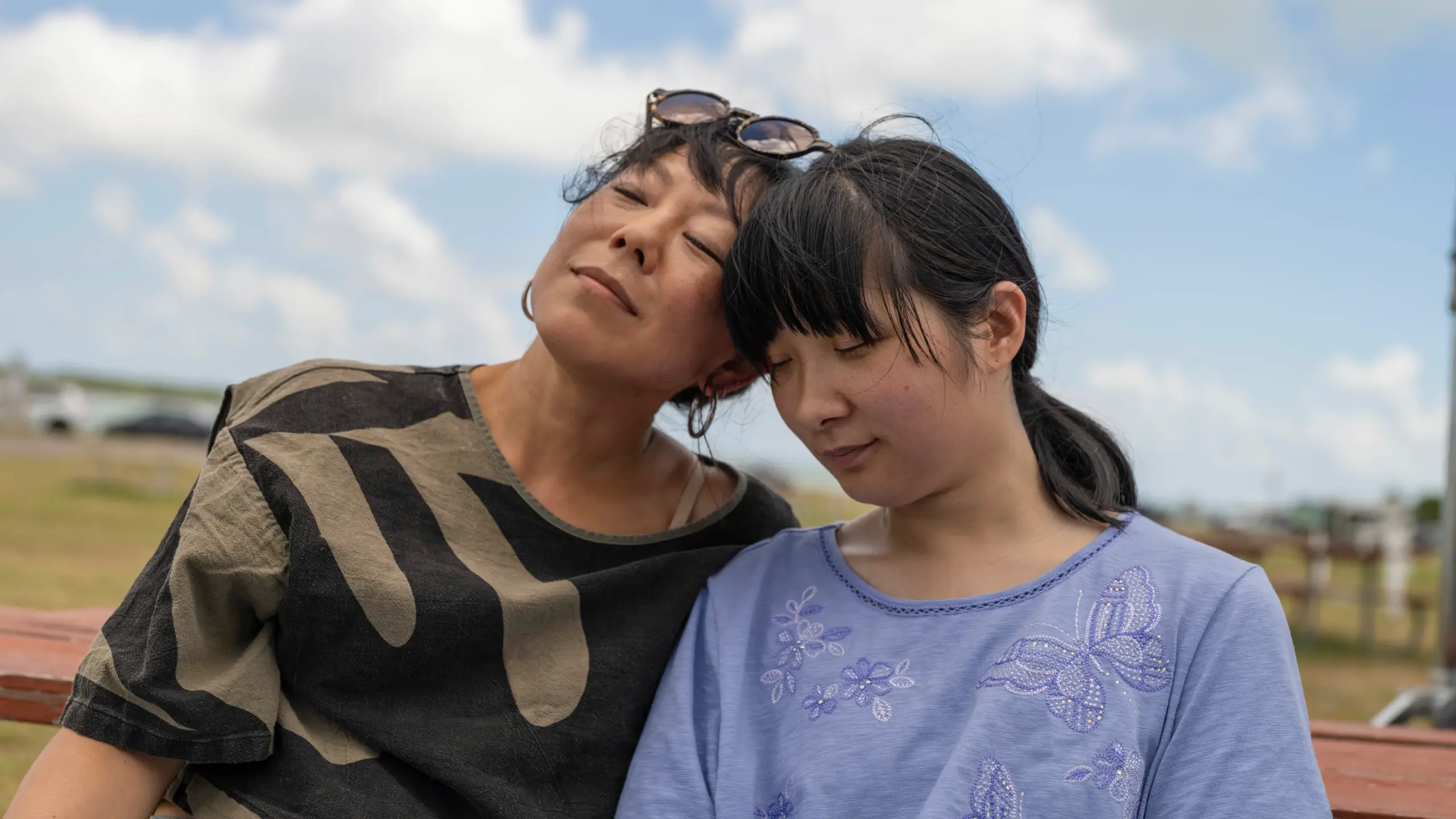
It’s also set in the family’s real East Orlando home and stars the filmmaker’s sister, Anna Sargent, 37, who has cognitive disabilities. While there are actors who play Liz’s parents, Bob (Victor Slezak) and Joan (Marceline Hugot), and sister Emily (Ali Ahn), the fictional story is very much rooted in the reality the filmmaker shared with her real sister growing up.
“There was a time in my 20s where I just felt this extreme anxiety about what the future held for my family, for my parents, and for my youngest sister — but also where I belonged with my own hopes and dreams and goals,” Liz Sargent said. “I was drowning in the medical system trying to fight for my sister who has mental illness and getting her health care, and finding guardianship for Anna, and thinking about my parents aging out of their role as caregivers … It became this film of capturing that moment and talking about how we make those decisions and what’s available in this country.”
Filming in Florida was an intentional choice because it’s the environment that shaped the family.
“We shot in August. It’s the worst. It’s the hottest. But the downpours are sort of magical in a way,” Liz Sargent said. “Suddenly it disappears, and there’s this beautiful light that shines through, and everything’s glowing around it from the water. I feel like there’s something about that Florida that I wanted to capture, like this is the American dream. There’s also the harshness of the environment and these people trying to survive within it.”
“Take Me Home” began its journey as a 16-minute short film that premiered at the prestigious Sundance Film Festival in 2023. After screening at dozens of film festivals across the country, including the Florida Film Festival, Sargent was awarded a $1 million production grant through the Tribeca Film Festival and AT&T Untold Stories.
Within a year, the short film transformed into a feature-length story that premiered at the Sundance Film Festival in January, winning Sargent a screenwriting award, then went on to have its international premiere at the Berlin Film Festival and its New York Premiere at Tribeca.
Starting Oct. 16, “Take Me Home” comes to Enzian Theater for a week of screenings during the film’s limited theatrical release.
Read more Feel like running away? This show’s for you | Review
In the 90-minute feature, Anna must learn how to navigate the world, her relationship with her sister and her father’s memory loss, all in the wake of losing her mother.
On set, a disability producer, an acting coach and an improvisational approach were pieces of an environment constructed to help Anna thrive. Part of this was supported by Caring Across Generations, an advocacy organization dedicated to shifting the narrative and public policy of caregiving to make support more accessible.
“We were able to provide some grant funding to the film in order to make sure she had a caregiver, an accessibility producer that trained everybody else to work with Anna in the way that she needed to be worked with, and also an acting coach to really work in a personalized way to help Anna prepare for all of her scenes,” said Lydia Storie, an executive producer on the film and director of culture change for Caring Across Generations. “Having that in place allowed for her to deliver an award-winning performance.”
As the film has reached new audiences, Sargent has discovered how universal its themes are, especially for the estimated 130 million people in the U.S. who find themselves in caregiving roles. At a special screening at Bonnet Springs in Lakeland, where the film’s final scenes are set, Sargent’s parents saw the film for the first time.
“I think it was very moving for them to get to be in an audience with people and understand that their personal struggles, like the intimate details that I’m sharing about our lives, are normalized. There’s a vulnerability that we all have,” Liz Sargent said. “It was beautiful to see people come up to them afterward and talk to them about their own care stories.”
While the film’s middle section shows the tension arising from financial instability and uncertainty about the future, the final act reveals hope for what the future could look like for people who need care and a place to belong.
“It is possible to create a world where we can all thrive and have our needs met. What I want is for people to identify and fall in love with Anna. I think that kind of love and protection is what’s going to change the way we vote and interact in this world,” Liz Sargent said, with Storie adding: “When I watch this film through to the end, I see this vision of what can be when we recognize that all of us deserve better. A more supportive and inclusive future will be better for all of us.”
Find me @PConnPie on Instagram or send me an email: [email protected]. Stay up to date with our latest travel, arts and events coverage by subscribing to our newsletters at orlandosentinel.com/newsletters.
Read more Potential Democratic candidates race to respond to AI threat amid Trump’s dismissals