
The countdown is on for where the new U.S. Space Academy will call home — and Florida leaders are throwing the state’s name in the ring.
Read more Two Ross stores in same I-Drive shopping plaza? A tourist’s dream, experts say
“We strongly believe Florida is uniquely positioned to host this important institution,” a bipartisan letter from the state’s congressional delegation argued.
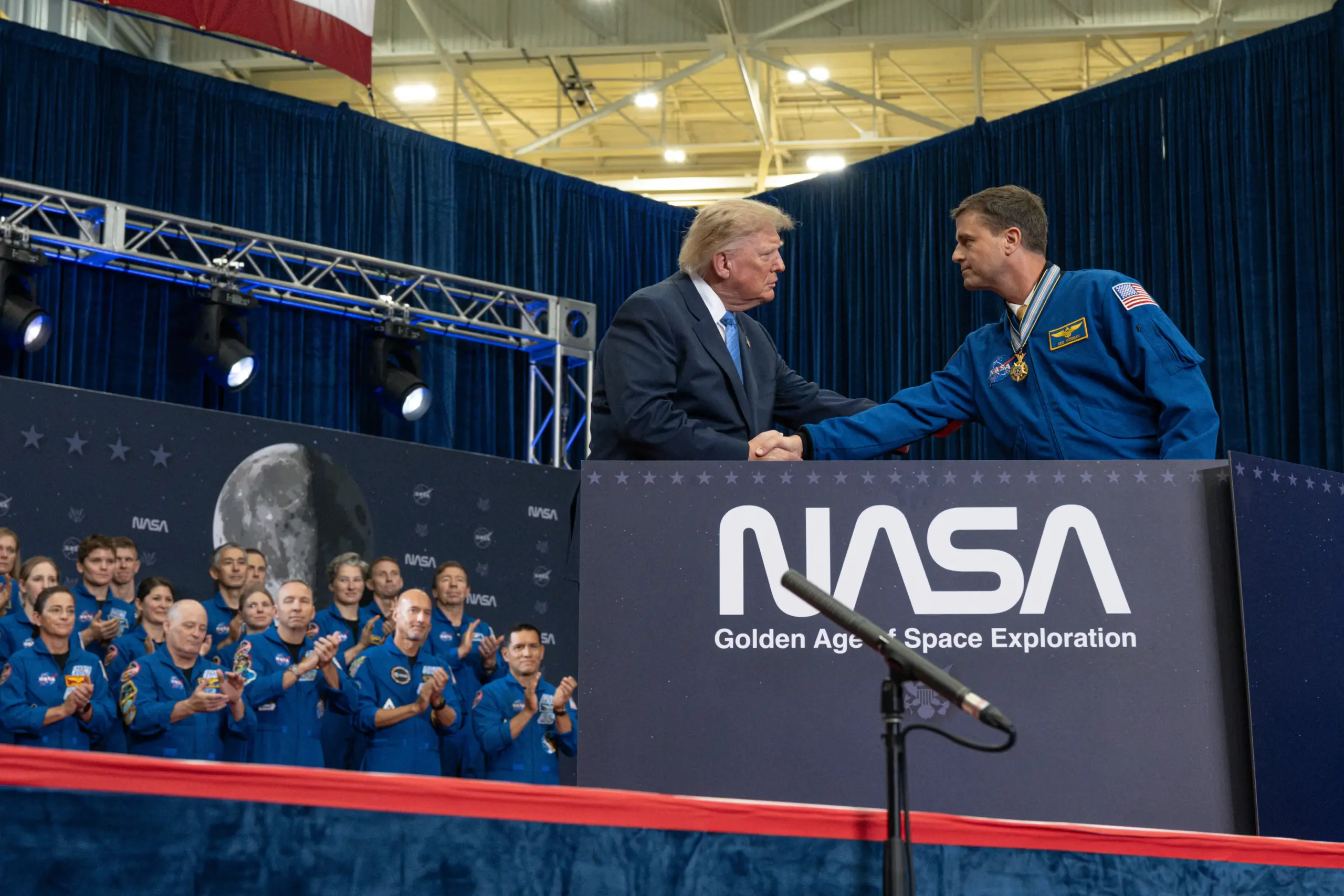
President Donald Trump signed an executive order on Aug. 28 for the creation of the new federal service academy, similar to those for armed forces such as the U.S. Military Academy in West Point, N.Y. and U.S. Air Force Academy near Colorado Springs, Colo.
The new academy’s goal would be to educate “astronauts, scientists, engineers” and others “capable of advancing American interests in space,” Trump’s order said.
The order calls for a presidential commission chaired by NASA Administrator Jared Isaacman to give its recommendations within 120 days for the physical location of the academy along with governance framework, service obligations for graduates and legislative requirements.
Since the announcement, Florida stakeholders have been making their pitches to bring the academy to the state where the majority of U.S. space launches take place.
Florida’s congressional delegation sent an official letter to Trump and Isaacman making their case.
“Florida offers a climate in which Space Academy students could pursue rigorous academic study, conduct research through our state’s universities, learn from NASA and Space Force personnel, engage directly with commercial space companies, and gain firsthand exposure to the nation’s launch and space operations,” the delegation states.
Florida, it adds, hosts “an expansive and increasingly interconnected space ecosystem” that includes NASA, the United States Space Force, the Department of Defense, “and a rapidly expanding commercial space industry.”
“From launch providers and spacecraft manufacturers to satellite companies, defense contractors, and emerging space-technology firms, Florida’s private sector represents the range and scale of capabilities that will define America’s future in space,” the delegation states. “These capabilities directly align with the mission outlined in the Executive Order.”
Read more In Hope Florida scandal, Florida shorted $800,000, grand jury says
The state’s congress members also touted Florida’s immediate access to operational space activities, but also the newly formed Florida University Space Research Consortium, which combines the powers of the University of Central Florida, University of Florida, Embry-Riddle Aeronautical University, Florida Tech as well as other state institutions.
The Consortium is the state’s official group that manages space-related research and education, “providing a strong foundation for academic collaboration, advanced research, and partnerships with a national Space Academy.”
While they touted the Space Coast as the hub of aerospace activity, the delegation also pointed out the other areas of the state with growing support that would be beneficial partners with a Space Academy, including operations at Eglin Air Force Base and Tyndall Air Force Base in the Panhandle, Naval Air Station Cecil Field in Jacksonville and Homestead Air Reserve Base in South Florida.
“The Space Academy envisioned in the Executive Order should serve the entire nation,” the delegation states. “Establishing the Academy in Florida would connect students from across the country with the institutions, professionals, and operational capabilities that are shaping America’s future in space.”
The letter was signed by Republican U.S. Sens. Ashley Moody and Rick Scott, 19 of the state’s 20 Republican U.S. Reps. and four of the seven Democratic U.S. Reps.
Notably, two Central Florida congress members, Republican U.S. Rep. Cory Mills, who lost his party primary, and Democratic U.S. Rep. Maxwell Frost, did not sign the letter.
Earlier in the week, Brevard County’s Economic Development Council also touted the area, asking specifically for the academy to set up shop on the Space Coast.
In her letter to Isaacman, EDC President & CEO Lynda Weatherman said there would be no better place for the academy to call home.
“Few regions have played a more significant role in America’s journey of exploration, innovation, and discovery,” Weatherman said. “The case for the Space Coast is grounded in its extraordinary capabilities that exist here today, creating an environment unlike any other in the nation.”
Read more Goofy Shakespeare romp serves both pratfalls and pitfalls | Review