
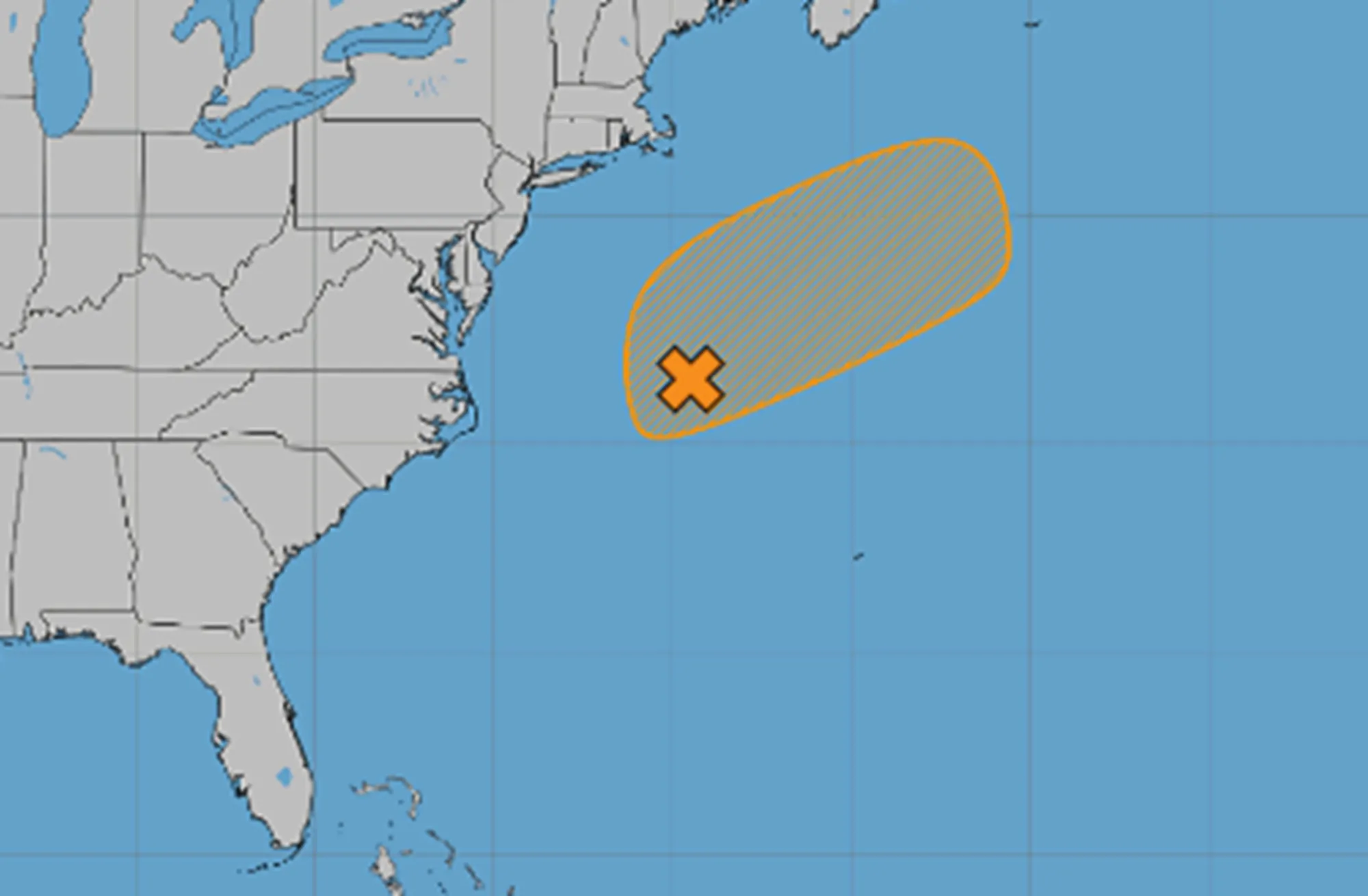
The National Hurricane Center continued Tuesday to keep an eye on a system off the U.S. East Coast with the potential to develop into a more dangerous storm.
Read more Florida puts 77-year-old man to death for a deputy’s killing in its 18th execution this year
As of the NHC’s 8 p.m. tropical outlook, a storm-force, nontropical area of low pressure, which had formed Sunday night, was located a few hundred miles off the North Carolina coast with some shower and thunderstorm activity, mostly west of its center.
“Over the next couple of days, the low could gradually lose its frontal features while it moves slowly north-northeastward over the Gulf stream, allowing the system to briefly develop subtropical
characteristics,” forecasters said.
The system is then expected to accelerate northeast away from the eastern U.S. later in the week.
“Environmental conditions are expected to become unfavorable for additional subtropical or tropical development,” the NHC said.
Its proximity to the coast, though, means high winds, dangerous surf and coastal flooding are possible over the next few days along portions of the U.S. East Coast.
The NHC gave it a 40% chance to develop in the next seven days.
So far, the 2026 hurricane season has produced nine named storms: Arthur, Bertha, Cristobal, Dolly, Edouard, Fay, Gonzalo, Hanna and Isaias.
Read more Magic set to open NBA season against Hawks as Wagner provides health update
The next name on the list is Josephine.
After landfall yesterday evening as a hurricane, Isaias has weakened to a post-tropical cyclone as it moves inland.
The storm continues to bring heavy rain and strong winds across the Southern Appalachians and Southeast today. pic.twitter.com/sxGBcefvVJ
— CIRA (@CIRA_CSU) October 10, 2026
Only Isaias has reached hurricane strength during what has been a very slow Atlantic season amid effects from a strong global El Niño weather pattern. Isaias made landfall on Oct. 9 near Destin on Florida’s Panhandle as a Category 2 hurricane.
Hurricane season began June 1 and runs through Nov. 30, but the height of hurricane season runs from mid-August through mid-October.
The National Oceanic and Atmospheric Administration in August had updated its seasonal forecast to expect between seven and 13 named storms this year. Of those, two to six would become hurricanes.
An average year would see 14 named storms and seven hurricanes, with three of those growing to Category 3 strength or higher.
Read more Videos captured fight leading to teen’s death, Orange deputies say in plea for witnesses