
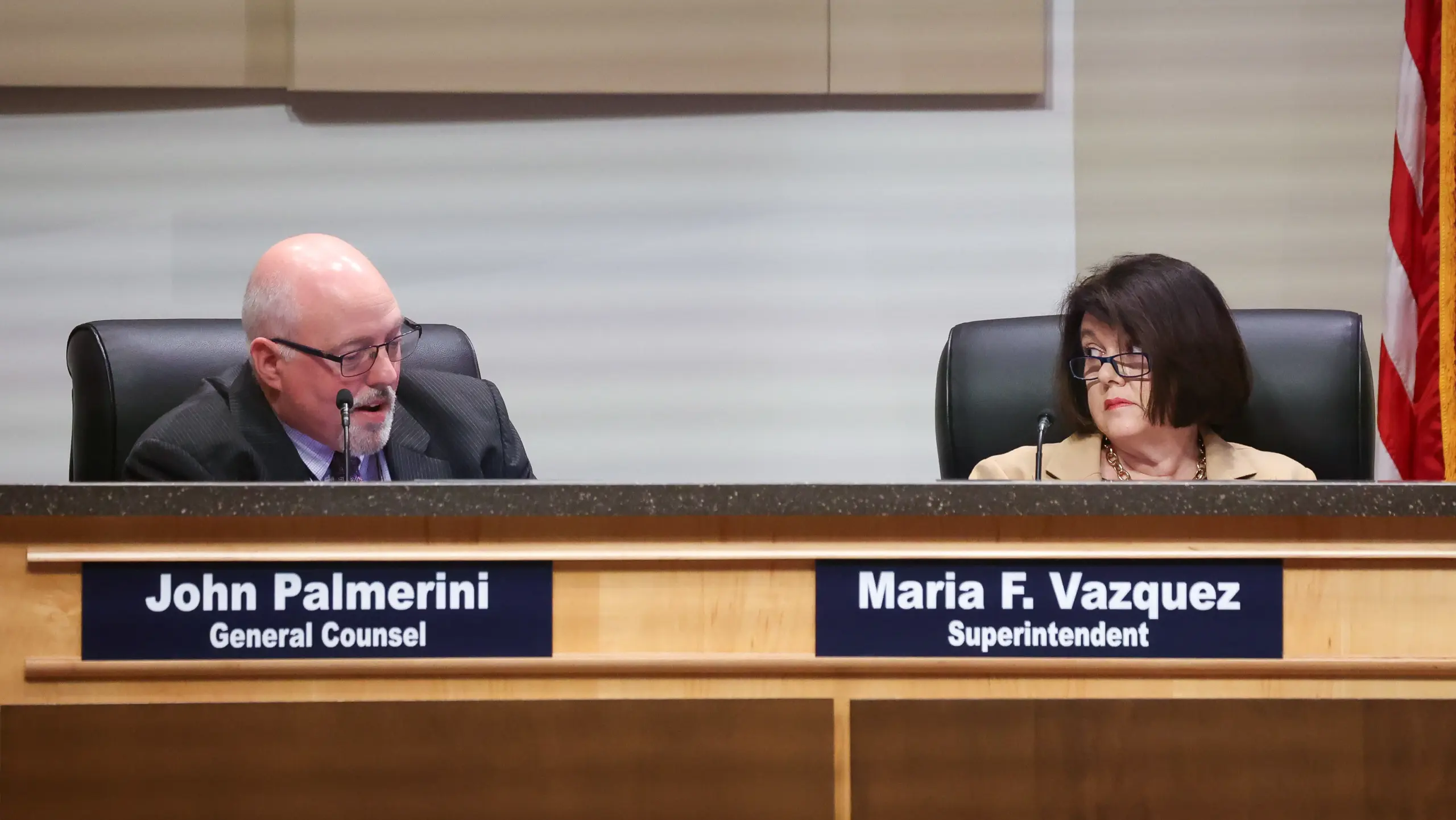
The Orange County School Board approved its annual budget Tuesday evening, a spending package that is $400 million smaller than last year’s and could mean layoffs are coming as the district grapples with the impacts of declining enrollment.
Read more It’s more than books, DVDs: You can now borrow things at Seminole libraries
Though Florida hiked per-student funding this year, that increase doesn’t offset the loss of almost 8,000 students — and the subsequent drop in state money — or the higher prices of bus transportation and school food this year, officials said.
The district said last week that it is trying to avoid laying off teachers but with the enrollment loss almost double what was projected, some instructors could lose their jobs. In a memo to staff and families, OCPS said last Wednesday it needed to cut even more than planned from its already leaner $5.78 billion budget because its enrollment was down by more than 7,600 students.
“It is a very trying time. It is a very difficult time for our district,” said Superintendent Maria Vazquez at Tuesday’s meeting.
OCPS operates more than 200 schools and enrolls about 170,000 students. This year’s enrollment losses are concentrated in elementary and middle schools, so the district slashed about $42 million from elementary school budgets and $16 million from middle school budgets, documents show.
Principals submitted revised budgets for their schools to the district on Tuesday, but they will not be finalized until Sept. 17, according to a timeline the district sent to the teacher’s union.
The bulk of a school’s budgets pays for teachers’ salaries, and many school principals chose not to fill positions this summer as they waited to see what enrollment would be when classes started in August, Vazquez said. But others were not as conservative with hiring.
Clinton McCracken, the president of the district’s teachers union, said the superintendent needs to look at cutting spending at district headquarters not on school campuses.
“Budgets reveal priorities. If students truly come first, start looking for savings farthest from those students,” McCracken said.
District officials blame declining birth rates, the popularity of Florida’s state-funded voucher program — which provides scholarships for private schools or homeschooling services — and the country’s immigration crackdown for the smaller number of students now attending public schools.
Students who use vouchers essentially take their per-pupil funding with them, and this year that equates to a loss of another $34 million, OCPS officials said.
Board member Stephanie Vanos said the funding cuts to school budgets prompt a cycle where schools aren’t equipped to best serve students, causing parents to leave public schools which in turn causes more funding cuts.
“Not having the funding that we need in a school directly impacts the experiences that people have in the school,” she said.
Read more Ballots discounted for late postmarks surged in Washington and Oregon after Postal Service changes
To save money, the district will reduce spending on “facilities acquisition and construction” by about $467 million. OCPS closed seven schools last year because of declining enrollment and also decided to pause new school construction for at least the next five years.
The district’s budget, though leaner than last year’s, benefits from its one-mill referendum tax, which is projected to bring in $255 million this year, said Judith Padres, the district’s senior executive director of the office of management and budget.
The referendum tax is up for renewal in November, and if it doesn’t pass, the district would need “significant reductions to staffing, programs and services,” she said.
The Legislature has put a statewide proposal on that same ballot that would eliminate some property taxes, and OCPS officials fear it will make Orange voters unwilling to support the local tax that has passed easily in past years.
Board member Angie Gallo said the district should look into ways to lessen its reliance on that voter-approved funding.
“We are way too reliant on that millage right now. If we were to lose the millage … it’s going to be like a gut punch to this district,” Gallo said.
Vazquez agreed, saying losing the one-mill referendum would be “catastrophic” to the district’s finances.
The statewide ballot proposal, called Amendment 3, shields schools from those cuts, but could still impact their budgets. Officials are worried, for example, that it will leave law enforcement agencies with less money and, therefore, mean more of the cost of putting officers in schools will be shifted to OCPS.
If Amendment 3 is approved by voters, “there is no way that this does not cost us millions of dollars,” said board member Maria Salamanca.
The district is also struggling to afford its share of employee health insurance benefits, which tally $20 million a month.
This year, the district is pushing for a new healthcare model in an effort to alleviate a potential, and “unsustainable,” $145 million budget shortfall. But the teachers union says the district’s healthcare proposal passes much of the burden on to teachers, and that most employees would end up taking home less money because they’d pay far more for insurance.
The two sides remain at an impasse over the insurance issue.
Vazquez said passing on some of the cost increases was unavoidable.
“We’ve looked under so many rocks. We have evaluated different plans. We’ve looked at different structures. There is no way around it. We are in a deficit when it comes to insurance,” Vazquez said.
Read more Osceola County to invest $5 million in arts and cultural facilities