
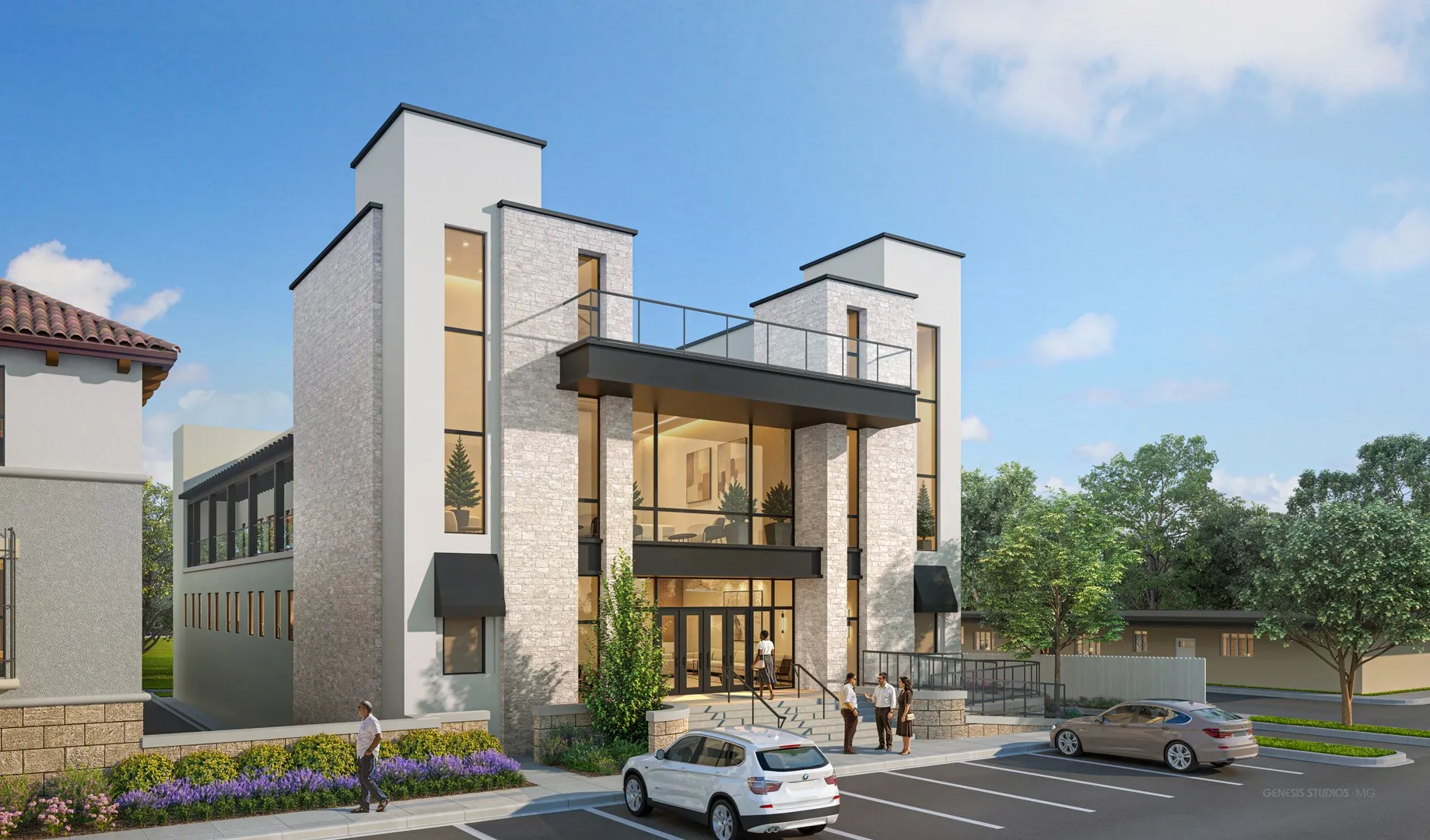
Two Winter Park commissioners backpedaled on their initial support for building the city’s first synagogue Wednesday night, putting the project on hold.
Read more Asking Eric: I’ve been treated shabbily and then gaslighted
The City Commission voted 4-1 to table the second and final vote required to approve the conditional-use request for Chabad of Greater Orlando to redevelop .61 acres downtown for an 80-seat synagogue, delaying it until their Oct. 28 meeting.
Mayor Sheila DeCiccio made the motion and was supported by Commissioners Warren Lindsey, Elizabeth Ingram, and Craig Russell, with Commissioner Kris Cruzada dissenting.
At the Aug. 28 meeting Ingram and Russell had joined with Cruzada to advance the project, but Wednesday Ingram was the first to suggest delaying it.
She said she still had concerns about parking, traffic, noise generated by events on the rooftop venue, but added that the elevated outdoor playground — and its small size — planned in back for the daycare was her biggest concern. The playground area of 525 square feet would be surrounded by a 4-foot barrier with an 8-foot clearance for the private drive below.
“I almost feel like a hypocrite for approving it,” Ingram said. “I don’t want to vote no on this because I do want to see Winter Park have a synagogue … so I want to table it to see if there’s any other collaborating or whatever we can do.”
The congregation has been meeting for about two years in rented space on North Park Avenue since a fire blamed on an electrical malfunction heavily damaged its Maitland campus.
Rabbi Dovid Dubov, director of operations at Chabad, said Thursday the congregation remains fully committed to working with the city to secure approval of the project. He asked for continued community support, as well.
“This project holds deep significance,” Dubov said. “It will ensure that Jewish residents enjoy the same religious freedoms as other faith communities, and the city’s downtown, including access to child-care services.
Before commissioners voted he told them he’s simply asking for the same opportunity other faith communities have and deserve — a place to call home.
“And I think the honest truth is that we have reached the point where we have extended ourselves as far as we reasonably can to make this work,” Dubov said.
The proposal for 210 E. Morse Blvd. would replace El Cortez Apartments’ three existing buildings with five attached townhome units and a three-story synagogue. The synagogue would include worship space, educational and support areas, administrative offices, an underground parking garage, a rooftop gathering area, and a religious daycare for up to 60 children.
Cruzada said he supported the proposal but had his own concerns about traffic, parking and water retention, among others. But he emphasized how its backers have made numerous concessions to get approval, to their potential detriment. He cited caps on daycare enrollment as an example.
Read more Ask a real estate pro: Can landlord keep most of security deposit for ‘repainting and cleaning’?
“It’s complicated, yes. We do have high standards, yes. I’d like to uphold those standards if we can,” he said. “I’m hoping that we can reach a consensus to move on this or try to find away to move on it in the near future.”
However, Mayor DeCiccio said the development as proposed was just too intensive for the site. She said the developer and synagogue might have to eliminate the rooftop venue, daycare or townhomes — or limiting it to the synagogue along.
“For this proposal to work at this location, the developer and synagogue, in my feeling, must scale back,” she said. “There’s so much going on on .6 acres — that’s half an acre.”
A group of close to 30 people who spoke at the meeting, including members of the congregation and those living around the site, were almost evenly split between supporters and those opposing it at the proposed location.
Doug Sangster, who lives next door to the site, said he understands the desire for a synagogue in the city but opposed the current plan.
“We went through probably a year of disruption from the Methodist Church across the street because traffic would back up at that corner … they’d lay on their horn minute after minute after minute to try to get through the problem,” said Sangster, an architect who’s worked on many religious projects over the decades.
Commission approval in the first hearing was subject to conditions such as no amplified music or outdoor speakers; rooftop events, noise and lighting must end by 10 p.m.; rooftop and exterior lighting must be shielded to prevent spillover; the city must approve synagogue expansion above 80 seats and daycare enrollment beyond 60.
After that hearing, the project’s backers agreed to additional conditions: vehicle queues associated with daycare pickup and drop-off must stay contained to the property; only one event or service at a time and none during daycare hours; excluding activities tied to religious services, the roof deck shall not be used for events more than four days a week; a maximum initial daycare capacity of 50 children; and all employees must part onsite.
In August the city’s planning and zoning board had voted unanimously to advance the project to the commission for approval.
Rebecca Wilson, a Lowndes Law attorney representing the project’s backers, said they have worked tirelessly to address concerns on a host of issues.
“I want to be clear, we don’t necessarily agree with all of the concerns, but we wanted to show a good-faith effort in adding these conditions to make sure the city was in a position to enforce all of the promises we made,” Wilson said
Read more New partners: Open Scene finds home at A&H Museums of Maitland