
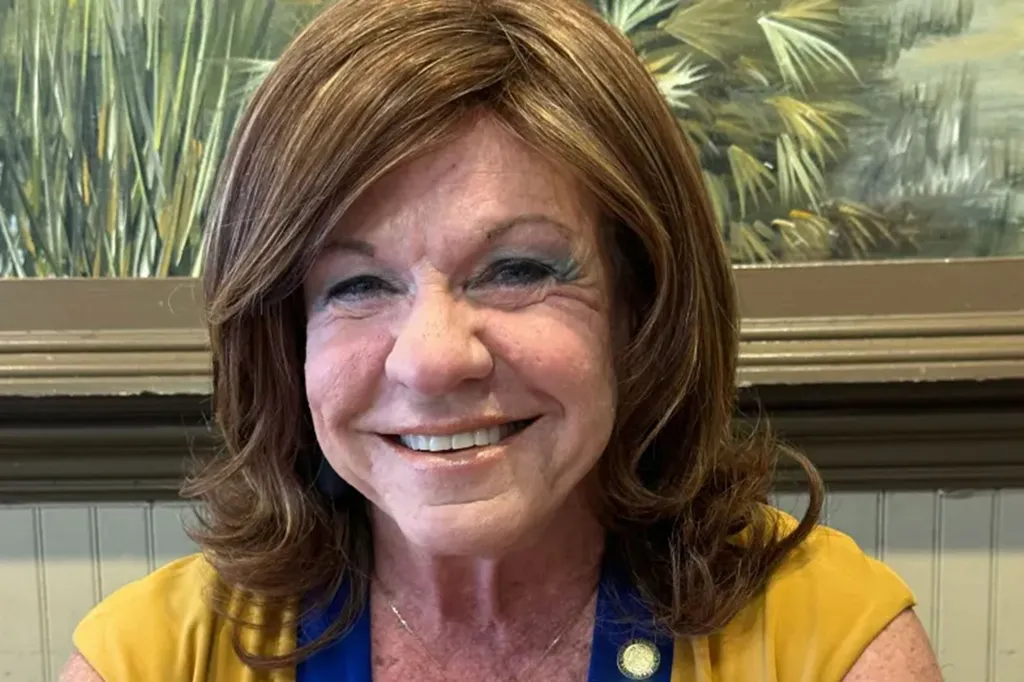
TALLAHASSEE — Five state election workers contradicted the testimony of Rep. Paula Stark’s treasurer in court Wednesday, insisting the state lawmaker clearly failed to meet the requirements to win a spot on the 2026 ballot.
Read more Artemis II astronauts return to Florida for 1st time since historic launch
The state officials said Stark, a two-term Republican from St. Cloud who wanted to run again for the Florida House, is not on the ballot because her campaign did not turn in all the required paperwork before noon on June 12, the deadline for the 2026 candidate qualifying period.
Her treasurer disputed that, saying he turned in the paperwork, including the Form 6 financial report, but a clerk erroneously handed it back to him. There is no evidence of a time-stamped form, however, filed with the state’s Division of Elections.
A week after she was bumped, Stark sued the state to try to get back on the ballot. If she can’t convince a judge she’s right, the seat will end up represented by a Democrat, as two candidates from that party are the only qualified candidates.
Although candidates for Florida office regularly run afoul of the rules, Stark’s situation is an extraordinary snafu involving a political incumbent.
Joel Davis, the treasurer who is also Stark’s partner, told a judge in Leon County Circuit Court that he turned in the paperwork and said Stark should be on the ballot. He blamed a commotion in the office for the lack of a time stamp.
But the five workers who worked the counter at the state elections office that day said they could not recall helping Davis or handing back to him, or anyone else, a financial disclosure form. They also said the commotion happened earlier in the day and didn’t match Davis’ description.
Judge Joshua Hawkes, an appointee of Gov. Ron DeSantis, said during the online court hearing that he would take all their testimony under consideration and issue his ruling as soon as possible given the short time constraint. The primary is Aug. 18.
Stark sued the state to get back on the ballot and require the Orange County and Osceola County election supervisors to close the August primary. Since Stark did not quality, the Democratic primary is open to all registered voters because, without a GOP candidate, that election will decide a winner.
Stark named the Orange and Osceola supervisors of elections in her lawsuit because they are responsible for printing and mailing out ballots for her legislative district. They objected to her petition to close the primary because they have already printed ballots for all registered voters in the district and mailed them out to overseas and military voters.
House District 47, which Stark has represented since 2022, has 91,027 registered voters in Osceola County and 16,667 voters in Orange County. Osceola County elections officials said they paid a third party vendor almost $50,000 to print primary ballots and planned to spend nearly $30,000 to mail them out. Orange County said it spent $85,000 printing primary ballots and will spend $43,000 to mail out the vote-by-mail ballots.
To grant the relief Stark is seeking, both counties would have to scrap the existing ballots, redesign and reprint them and mail them out in time for early voting, which begins Aug. 3 in Orange County and Aug. 7 in Osceola County.
Read more Judge orders E. Jean Carroll be paid $5.8M after jury found Trump sexually abused and defamed her
The supervisors told the court via Zoom it would be too late to scrap those ballots, print new ones, test them and mail them out in time to meet legal deadlines.
Officials for both counties said they couldn’t recall a universal primary being canceled after it had gotten under way with ballots printed and some mailed out.
In a brief closing statement, Richard Coates, Stark’s lawyer, said that by Davis’ account all the correct paperwork was filed when he handed it to the clerk and didn’t need to be time-stamped.
“It was filed when it was received,” Coates said, adding that the Form 6 was also filed the night before with the state Ethics Commission, as Stark had done in past years.
Voters are entitled to an election, he said, and they are entitled to vote for the candidate of their choice.
But Ashley Davis, an attorney for the elections division, said there is no evidence that Stark’s treasurer filed the Form 6 with the agency, as required by law. “The receipt is evidenced by the time stamp,” she said in her closing statement.
Each election office staff member confirmed that they didn’t receive a Form 6 for Stark, Davis said. “It’s the candidate’s responsibility,” she said.
Even if Stark could show a legal basis for the court to put her on the ballot and close the primary, Davis said, “the court should deny it because it is too late.”
The state workers also testified that they couldn’t recall a disturbance in the third floor elections office lobby or reception area at the time Joel Davis said he turned in Stark’s paperwork around 11:30 a.m. He said the commotion caused delays among the candidates and workers.
The workers recalled an altercation with a candidate filing his paperwork between 8 a.m. and 9 am.. That candidate began shouting, and they called security to calm him down and have him removed and ultimately called Capitol police, who removed him around 10 a.m. They described him as a short man with brown hair and brown eyes wearing a white shirt. He was not wrapped in an American flag as Joel Davis had described.
Read more Transgender teen drops out of Irish Dance meet in Orlando
That man did not return to the elections office, they said.