
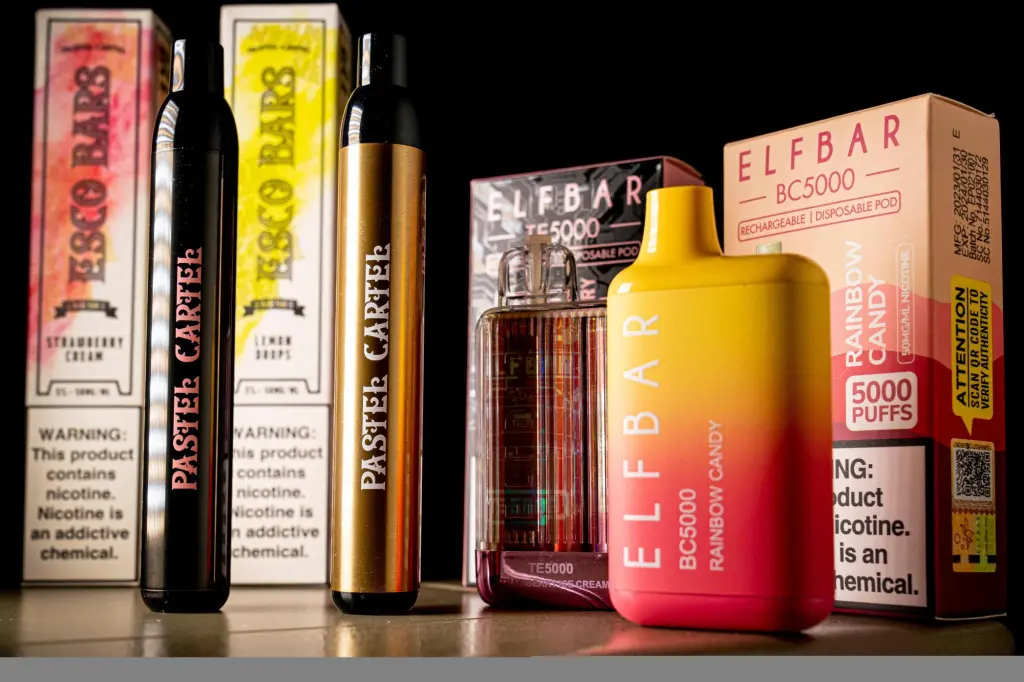
Dr. Marty Makary, the former chair of gastrointestinal surgery at Hopkins who recently resigned as commissioner of the U.S. Food and Drug Administration, drew plenty of criticism from U.S. public-health advocates throughout his brief tenure — including disputes over COVID vaccine policy and his lax approach to “alternative” health products that came dangerously close to legalized quackery. But on the issue that apparantly prompted him to step down, he was right.
Read more The best carry-on luggage to avoid checking bags
Few could have predicted that one of the defining issues surrounding his departure would involve the Trump administration’s push to permit fruit-flavored e-cigarettes.
Makary reportedly opposed the move. President Donald Trump and influential figures within the tobacco industry supported it. Whether this disagreement alone caused Makary’s resignation remains unclear. His media-heavy profile and broader management style likely contributed as well. Still, the flavored-vape issue appears to have become a significant breaking point.
Decades of science back Makary’s stand: Anything that makes young people more likely to consume tobacco (and lord knows what else is ending up in vapes these days) is a bad idea.
Fruit-flavored vapes have long raised serious public health concerns, particularly among pediatricians and addiction specialists who witness firsthand the consequences of youth nicotine addiction. While federal regulators may technically restrict these products to adults 21 and older, reality suggests otherwise. Products marketed with flavors such as “Blue Razz Ice,” “Mango Tango” or “Strawberry Delight” are not designed in a vacuum. Their appeal to teenagers is obvious.
Makary himself referred to them as “cutie-fruity” products, a blunt but accurate description of how these items are often packaged and marketed.
No serious medical authority argues that vaping is harmless. While e-cigarettes may not produce traditional cigarette smoke, they still expose users to nicotine, toxic chemicals and ultrafine particles that can damage developing brains and lungs. Nicotine addiction among adolescents has been linked to impaired attention, memory, mood regulation and cognitive development.
The long-term consequences remain uncertain because society is still living through the experiment in real time.
Read more These piggy banks make saving money fun and easy
What is certain, however, is that flavored vaping products dramatically increase youth interest and experimentation. Public health policy should not ignore that simply because adults may also choose to use these products.
This debate also exposes a broader tension increasingly visible in American public life: the collision between corporate profit, political influence, personal freedom and public health responsibility. The tobacco industry understands exactly where future profits lie, particularly as traditional cigarette use declines. Younger consumers are essential to that future.
Parents should pay attention.
Many teenagers today encounter vaping products that are sleek, discreet, inexpensive, heavily flavored and aggressively marketed online and through peer culture. Unlike earlier generations, many adolescents no longer associate vaping with the dangers traditionally connected to smoking cigarettes. That normalization itself is dangerous.
Makary deserves credit for standing by his medical judgment even amid political and industry pressure. He may have ultimately lost the policy fight, but history may view his opposition far more favorably than many who supported expanding access to flavored nicotine products.
One day, Americans may look back and recognize this moment as another preventable public health mistake, one where short-term political calculations and commercial interests outweighed caution, science, and common sense.
Unfortunately, by then, the damage may already be done.
This Baltimore Sun editorial has been adapted by the Orlando Sentinel. The Sentinel sometimes reprints editorials that agree with our own positions. Send letters to [email protected].
Read more Bosch Dishwasher Vs Whirlpool Dishwasher