
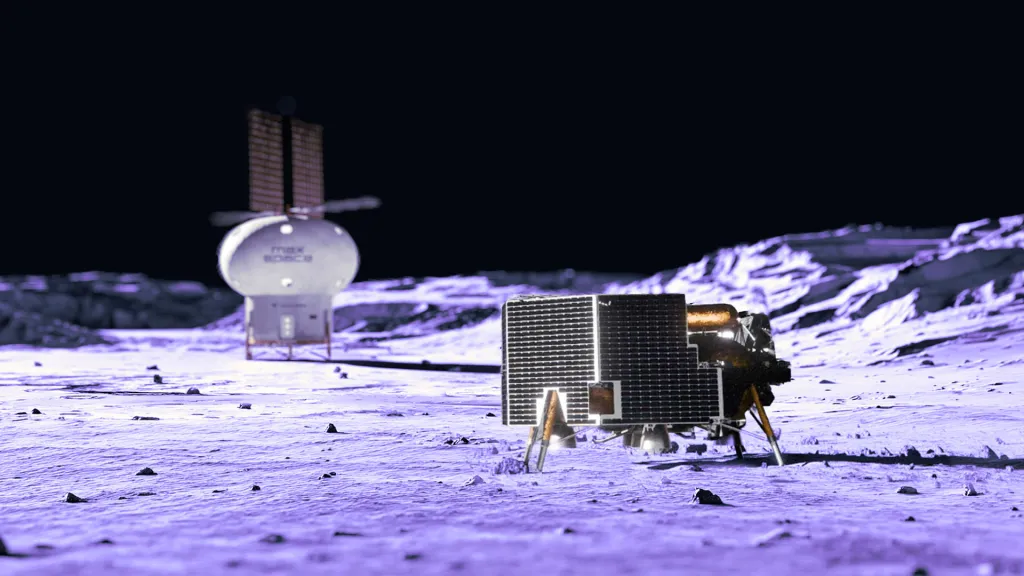
Voyager Technologies announced Tuesday it plans to acquire Astrobotic Technology, the company that’s vying to become the next to stick a lander on the moon.
Read more Florida Legislature poised to vote on DeSantis property tax overhaul
Pittsburgh-based Astrobotic is on track to launch its Griffin lander this year, slated to fly on a SpaceX Falcon Heavy on what would be the company’s second attempt to fly a lander to the moon.
Astrobotic, founded in 2007, also has a hand in lunar power and reusable rocket projects. Denver-based Voyager’s acquisition is an effort to expand its ability to provide a full suite of lunar hardware and operations capability and cash in on what is expected to be a lucrative lunar economy in the future.
“We are building the infrastructure foundation that will make America’s permanent presence on the moon a reality,” said Voyager Chairman and CEO Dylan Taylor in a press release. “Achieving that vision requires robust operational systems that match the resilience necessary for critical, repeatable missions. With Astrobotic, Voyager is now a lunar platform that will have capability at every infrastructure layer needed to put Americans on the lunar surface and keep them there.”
The $300 million transaction is expected to close by early July 2026, subject to regulatory approvals.
NASA recently outlined its roadmap for its moon base on the lunar south pole and the first missions under what the agency had previously announced would include $40 billion in additional investment into the 2030s.
Astrobotic already has a foothold in NASA’s plans. It had already attempted on lunar landing mission in 2024 with its Peregrine lander under NASA’s Commercial Lunar Payload Services (CLPS) program. That lander ultimately did not make it to the moon, but the company’s larger Griffin lander is on track to launch before the end of the year.
Read more Despite explosion, Blue Origin CEO says New Glenn will fly before end of year
Including the CLPS missions, Astrobotic has won more than 60 NASA, Department of Defense and commercial technology contracts worth more than $600 million.
Voyager’s release said it intends to “accelerate investment to scale Astrobotic’s lunar and reusable rocket programs in support of America’s moon base plans.”
Voyager also recently invested in the company Max Space, which designs expandable habitat architecture. Combined, the company has now touts its ability to provide lunar mission management, communications and propulsion; surface delivery from Astrobotic’s two landers; surface power through an Astrobotic solar distribution system called LunaGrid; long-duration habitation from its Max Space investment; dust mitigation with Voyager’s clear-dust repellent coating; and in-situ resource production.
“Astrobotic was built to prove that commercial companies can deliver to the moon,” said Astrobotic CEO John Thornton. “Joining Voyager gives that mission the scale and long-term commitment it has been building toward for nearly two decades. Our team, our technology and our homes in Pittsburgh and Mojave remain at the center of what we are building, and now we have a partner with the breadth of capabilities and resources to realize a continuous presence on the moon.”
Once the deal is complete, Astrobotic’s full portfolio will transition to Voyager, and Astrobotic’s moon base headquarters in Pittsburgh will become the center of Voyager’s lunar program. Astrobotic also has a propulsion and test campus in Mojave, California.
The Griffin lander is close to flight readiness and will be launched from Kennedy Space Center. Also a CLPS mission, Astrobotic recently announced launch is targeting late 2026. It seeks to deliver its main payload, Venturi Astrolab’s lunar FLIP rover headed for the moon’s south pole.
Read more Best Toilet Seats