
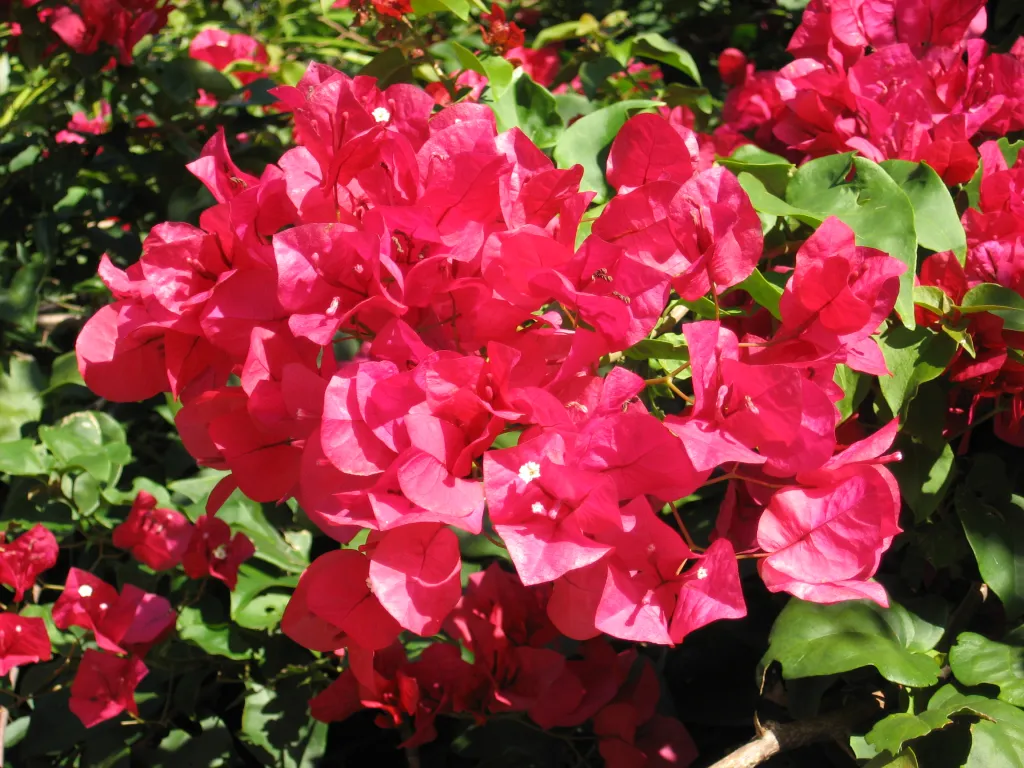
Q: Our four bougainvillea shrubs are losing leaves badly. They are fertilized and watered regularly, though not overly. We sprayed them with neem this morning, although we haven’t seen bugs. Please help.
Read more Orlando Sentinel turns 150 years old today. This is our story.
A: Cold February weather was not kind to bougainvilleas. Some were killed to the ground and others suffered varying limb damage. A photo with your inquiry indicated the smaller leaf-bearing twigs were damaged and turning brown. This is likely the cause for leave loss as the twigs totally decline. You can let nature run its course and allow the limbs to decline on their own, before new shoots fill the voids, or do some pruning to remove as much of the dead and decline as possible. Application of a fungicide labeled for ornamental plants may help prevent further fungal activity. In either case, your plant should recover to produce the colorful display you remember — but most likely not until fall or winter.
Q: I have a 20-year-old desert rose that I had thought was dead, but it started putting out growth on one side of the root ball. The old growth is mushy right up to the root ball. I hesitate trying to remove the mushy old growth and don’t know what to do. Can you give me some guidance?
A: Get rid of the mush. Go ahead and scoop or trim it out until you find solid plant tissue. The rot is not good for the desert rose and could harbor a fungus to continue the decline. After the clean-out, apply a fungicide spray to help reduce fungal activity. Try to keep the wound free of water so it can dry and heal. Do keep the soil moist and make a fertilizer application with a slow-release product.
Plant Doctor: Tall-growing spider flower can add striking background to your garden
Q: Our red maple tree has developed several dead but small limbs. Do they need to be removed?
A: Red maples are good trees for moist home landscapes. After all, they do call these swamp maples for a reason! In drier landscapes the trees struggle a little, and seem to become more susceptible to fungal organisms affecting their limbs. It would be best to remove the declining or dead limbs as soon as they are observed. Remove the affected portion back to healthy joints or trunks. It may be best to have a certified arborist take a look at your tree and recommend needed care. The arborist can also remove the needed limbs if out of easy reach.
Q: We are seeing many Norfolk Island pines that appear to be dying. How long should residents wait for them to recover?
A: Many gardeners have been asking the very same question about the decline of Norfolk Island pines. These are not true pines, but more tropical look-alikes that are much less hardy. They are cold sensitive and obviously damaged by freezing weather. But there still may be hope for some recovery. Look closely and you might notice green in many of the limbs and sprouts from the trunks. The total extent of the decline is still to be determined, but for sure there is going to be lots of limb and needle loss. Most Norfolk Island pines are likely to recover, but not be the attractive tree forms you once enjoyed. Trunks are likely to be barren, with growth mainly from the upper portions. Give affected trees more time to begin sprouting new growths, and then decide if you want to keep them as landscape features.
June is arriving, here’s the to-do list for Central Florida gardeners
Q: We have pineapple plants that have been good producers, but now only yield small fruits. How do we get the big ones again?
Read more History center exhibit showcases Orlando Sentinel’s story, community connection
A: Pineapples producing for three or more years commonly show a reduction in fruit size as they naturally expand the cluster of plants. You might try maintaining a monthly fertilizer application, March through October, to see if this helps grow bigger fruits. Usually the best way to renew the vigor of a planting is by removing some of the new plants to start a fresh pineapple patch.
Q: I have grown a 3-foot tall avocado tree that needs to be moved to another area of the landscape. Can I move it now or is there a better time?
A: Success of moving any tree-type plant is very low during the hot summer months. Even though this tree is small, it’s likely to be dug with almost bare roots. This means it has lost most of the small and important roots. Perhaps it would be best to let this tree grow into late fall or winter and then make the move during the less-stressful time of year. Even then it might be best to transplant the small tree to a container to give it some shade and good care for awhile before planting in the landscape.
Q: We have several beds of amaryllis bulbs that normally produce lots of blooms. This year they produced good green leaves but few blooms. Did the cold affect them?
A: Maybe there was cold damage to the flower buds, but most amaryllis seen locally have flowered as normal. More likely there is a cultural problem — like the plants being overly crowded after years of growth or bulbs sinking too deep in the soil. Plants, like people, do like to take a rest sometimes, so your plantings may need time off from flowering. Plants have to store a certain amount of energy to support good flower bud development. Keep the bed moist spring through fall and apply a slow-release fertilizer in March, May and early October to support good growth and flower bud development for next year.
Q: We are going to solarize our planting beds to control nematodes. Do we work in organic matter before or after treatment?
A: Heating up planting sites to bake out pests is called soil solarization, and is best performed when beds are ready for planting. Do add all organic matter needed to improve the soil prior to treatment. Then thoroughly moisten the site and cover with clear plastic for six to eight weeks during summer. Hopefully this raises the soil temperature to approaching 140 degrees Fahrenheit. After the solarization treatment is complete, the beds are ready to plant with minimal disturbance.
Tom MacCubbin is an urban horticulturist emeritus with the University of Florida Cooperative Extension Service. Write him: Orlando Sentinel, P.O. Box 2833, Orlando, FL. 32802. Email: [email protected].
Read more National Park Service ranger dies after falling into a crevasse on Alaska’s Mount McKinley