
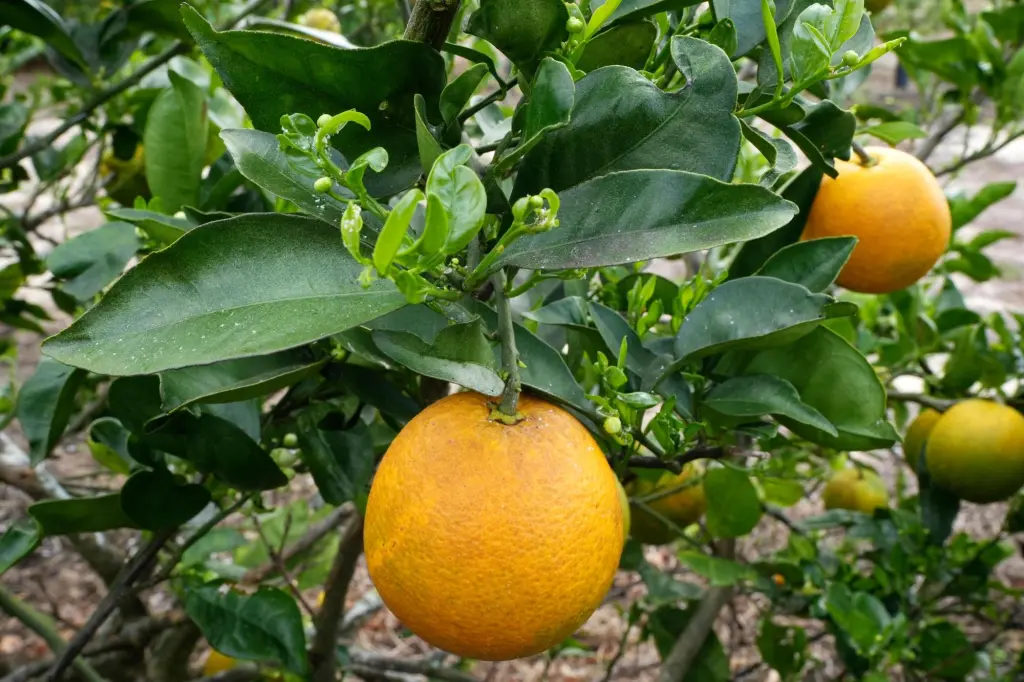
My great-grandfather planted his first citrus trees in Florida soil more than a hundred years ago. I’m the fourth generation of my family to produce the crop for which our state is known so well. But a bacterial disease threat will continue to wreak havoc on our groves and give foreign competitors a big advantage unless we act quickly. If we’re not careful, it’s going to be a death sentence for the state’s entire citrus industry.
Read more Hurricane center continues to track system that could form in Gulf
Citrus greening has eviscerated Florida’s citrus production over the past two decades. According to the University of Florida Emerging Pathogens Institute, Florida citrus production has fallen by 94% between the 2003 and 2023 growing seasons. Florida citrus acreage declined from nearly 749,000 acres in 2004 to approximately 275,000 acres in 2024. More than 90% of citrus acreage and over 80% of citrus trees are now affected by the disease.
Citrus greening has no cure. Once a tree is infected, it’s gone. And the damage goes far beyond the groves themselves. Thousands of acres have been abandoned or sold off, growers and processors have been forced out of business, and the jobs, local economies, and way of life that citrus built in Florida over more than a century are disappearing with them.
But there is a ray of hope. The U.S. Environmental Protection Agency (EPA) recently approved CarriCea T1, a first-of-its-kind CRISPR gene-edited citrus rootstock that disrupts how the bacteria interact with the tree without introducing foreign DNA or changing the fruit. It means a tree is better equipped to fight the disease from the inside out. Because the tree itself resists infection, growers can reduce chemical sprays, lower costs, improve working conditions and help stabilize the supply of Florida citrus. With 200,000 CarriCea T1 trees already moving through nursery pipelines, this isn’t a distant promise. It’s within our reach.
CarriCea T1 is the kind of innovation that’s only accessible when our regulatory agencies are evaluating new science-backed tools and making them commercially available in a timely manner. I’m grateful to EPA Administrator Lee Zeldin and the scientists at EPA who made that happen. Approval of CarriCea is proof of something important: When the regulatory system functions the way it’s supposed to, American growers win.
Read more Legislature sweeps Florida Forever funding to rural conservation program
But that work can’t stop, or even slow down. The continued availability of innovative pesticides isn’t an abstract policy question. It’s a reality for farmers across this country. Pesticides are difference between a profitable harvest and a devastating loss. It’s food security. It’s the economic sustainability of the men and women who feed this nation, and it’s keeping American agriculture competitive.
And right now, our competitors aren’t waiting for us. Brazil and other agricultural powerhouses routinely bring new pesticides to market faster than the United States does. That’s not just a farming issue. It’s a national competitiveness issue, one that extends well beyond the field to affect domestic food security, rural economies, and America’s standing in global markets. This competitive gap is costing American growers and American food consumers.
That’s why I’m asking the EPA, lawmakers, and other regulatory agencies to meet their regulatory timelines and provide American farmers with access to the innovative pesticides we need to compete. Innovation is the engine of American agricultural competitiveness, and we cannot afford to let that engine stall. Pests and diseases evolve. If our solutions don’t do the same, we will continue to lose ground we may never get back.
Read more Fragrance lab opens in Winter Park as perfume category booms
Paul Meador is the president of Everglades Harvesting in Hendry County.